What is Shaker Furniture 1850?
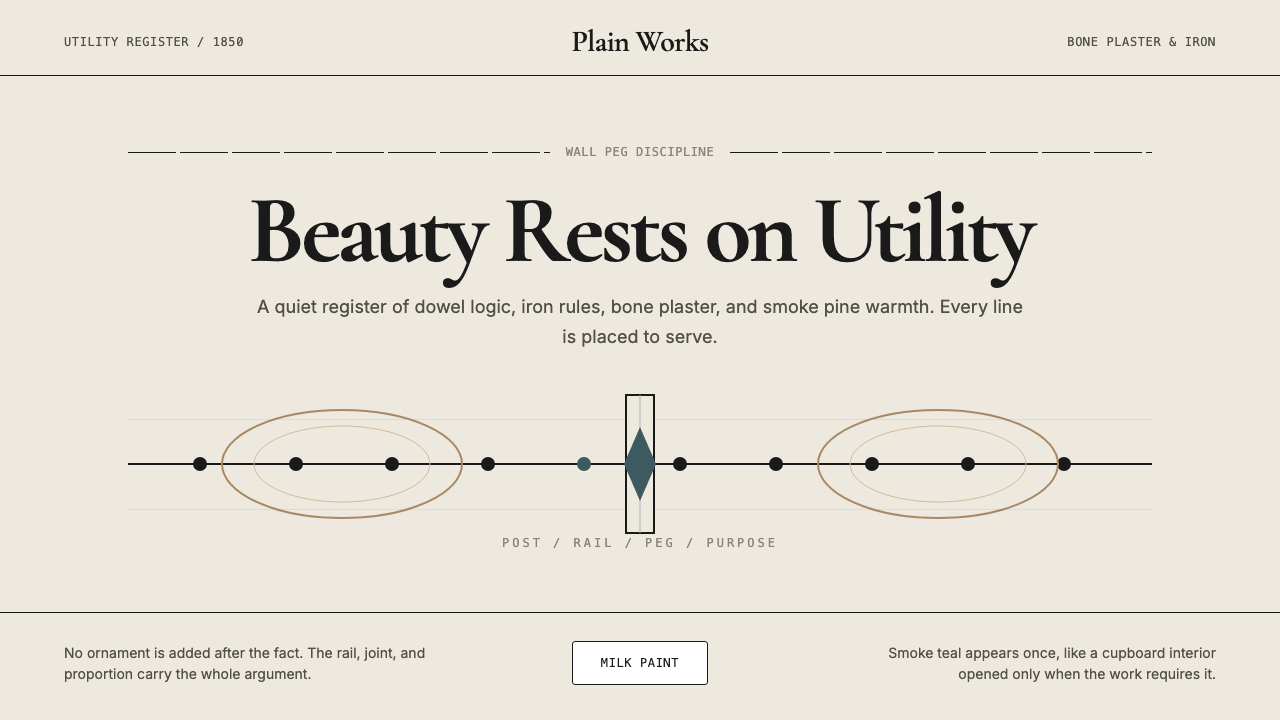
Shaker furniture distilled an entire theology into joinery — every dovetail and wall-peg a declaration that usefulness and beauty are not opposites but the same thing seen clearly.
Shaker Furniture 1850 in brief
Shaker Furniture 1850 is a design aesthetic rooted in the communal craft tradition of the United Society of Believers in Christ's Second Appearing — known as Shakers — who established workshop communities across the northeastern and midwestern United States between the late eighteenth and early twentieth centuries. Their furniture, cabinetry, and domestic objects share a visual language of spare geometry, joinery-forward construction, and a palette drawn from natural materials and milk paints: warm wood tones, bone-white plaster, ironwork black, and a quiet smoke-teal accent.
The style is defined by what it refuses as much as by what it includes. There are no carved decorations, no inlaid patterns, no turned flourishes on legs or posts that exist purely for show. Every curve in a Shaker chair back is there because it supports the sitter; every drawer pull is placed where the hand falls naturally. This discipline was not aesthetic minimalism in any modern sense — it was a moral position. The Shakers believed that vanity in craft was a form of spiritual corruption, and that honest work spoke for itself.
As a digital design system, Shaker Furniture 1850 translates these principles into screen-native terms. The warmth of smoke-pine wood becomes a background tone with grain and depth but without ornamentation. Bone plaster becomes a near-white surface for text and content. Ironwork black anchors type and structural elements with the weight of forged metal. The single smoke-teal accent — drawn from the milk-paint pigments the Shakers mixed themselves — plays the role the Shakers reserved for their simplest color: a signal of care, applied sparingly.
Where does Shaker Furniture 1850 come from?
The Shakers trace their origin to a small dissenting Quaker group in Manchester, England, in the 1740s. Ann Lee, who became known as Mother Ann, led a splinter community that emphasized ecstatic worship — the 'shaking' that gave them their popular name — and a doctrine of communal living, celibacy, and equality between men and women. Fleeing persecution, Ann Lee brought eight followers to America in 1774, landing in New York and establishing the first American Shaker community at Niskayuna (later Watervliet) in 1776.
The Shaker movement reached its peak membership in the mid-nineteenth century, with communities stretching from Maine to Kentucky. The major furniture-producing villages — Mount Lebanon in New York, Hancock in Massachusetts, Pleasant Hill in Kentucky, Sabbathday Lake in Maine — each developed their own subtle variations within the broader Shaker idiom. Mount Lebanon, the spiritual center of the movement, became the reference point against which other communities measured their work, and Brother Robert Wagan's chair-making operation there in the 1870s produced the first commercially distributed Shaker furniture, sold through catalogs to the outside world.
The craft tradition was shaped by theological necessity. Because Shakers practiced celibacy, they depended on converts and orphans taken in from the surrounding world. This meant constant renewal of skills through teaching, and a corresponding emphasis on transferable method rather than individual artistic genius. Furniture-making was documented in Millennial Laws — community regulations that addressed everything from the height of chair rails to the colors approved for paint. These regulations were not merely prescriptive; they encoded a theology of simplicity that held that any excess, however small, represented a turn away from God.
The milk-paint system deserves particular attention. Shaker communities mixed their own pigments from skimmed milk, lime, and earth oxides, producing colors that were saturated but never glossy — flat, breathable surfaces that absorbed light rather than reflecting it. The smoke-teal associated with many Shaker interiors was not a single standardized color but a family of blue-greens that varied by village and by batch, held together by a shared commitment to quietness. When Shaker furniture began attracting serious collector attention in the early twentieth century, and then scholarly study from the 1930s onward, this color register became one of the most recognized signatures of the tradition.
What defines the Shaker Furniture 1850 look?
Palette
The Shaker palette is narrow and grounded in material reality. Warm wood tones — the smoke-pine family — provide the dominant background field, ranging from pale honey to deep amber depending on species and finish. Bone plaster white serves as the primary neutral for walls, content areas, and text backgrounds. Ironwork black anchors type and hardware with the weight of actual iron. A single smoke-teal accent, drawn from the milk-paint tradition, is used sparingly: on one element per composition, never two. Saturation throughout is low to medium — these are colors that have absorbed light, not colors that emit it.
Form and Geometry
Shaker forms are defined by their purposiveness: every shape exists because it is the most efficient solution to a functional requirement. Chair backs taper to reduce weight without sacrificing rigidity. Oval boxes nest because the finger-joint construction, unique to Shaker practice, allows lids to flex with seasonal humidity changes. In digital application, this translates to a geometric vocabulary that is rectilinear at its base — straight edges, right angles, rectangular containers — with curves appearing only where they serve interaction or legibility. Nothing rounds a corner for visual comfort alone.
Texture and Surface
The Shaker surface is flat but not cold. Wood grain runs through it; milk paint has a slight variance in tone across a brushed field. In digital translation, this means surfaces carry subtle texture cues — not simulated three-dimensionality, but the low visual noise of a material that has been worked by hand. The bone plaster field reads slightly warmer than pure white; the smoke-pine wood reads slightly cooler than polished amber. The result is a warmth that comes from material memory rather than from decorative addition.
Typography and Hierarchy
Shaker communities produced their own printed ephemera — seed packets, catalog pages, musical notations for worship songs — in a style that was plain to the point of severity: generous margins, no ornamental borders, text set in modest proportions with clear distinctions between heading and body only by size. Digital work in this tradition uses type as the primary organizational instrument. Hierarchy is established through scale and weight alone; no decorative rules, no color blocks, no icon badges differentiate levels. The result is a reading experience that feels considered and calm.
Joinery as Ornament
In Shaker furniture, the visible join is never hidden — it is the decoration. Finger joints on oval boxes, through-tenons on benches, wooden pegs in place of metal screws: these structural solutions are displayed with pride because they demonstrate the quality of the making. In digital work, this principle translates to exposing structural decisions: visible grid lines used as design elements, transparent overlays that reveal layout logic, component states that show rather than hide their construction. The honesty of the structure becomes the visual statement.
Negative Space
Shaker rooms were not sparse by accident — every community had a peg rail running the length of each wall, and chairs, brooms, and tools were hung there when not in use, keeping the floor clear. The floor was the space; the peg rail was the storage system. This logic of clearing the primary field to its essential state informs the digital palette: generous margins, wide line spacing, elements that breathe rather than crowd. The emptiness is not absence but the quality of a room prepared for use.
Color as Restraint
The single accent rule — one smoke-teal element per composition — is perhaps the most demanding aspect of this style and the most distinctive. Shaker communities used color carefully because pigments were resources; wasting paint on surfaces that did not require differentiation was wasteful. In a digital layout, the discipline of a single accent forces every design decision to be clear about what deserves the user's primary attention. The accent marks one thing: the action to take, the status to notice, the element that differs from the rest. Everything else earns its place through structure, not through color.

Who shaped Shaker Furniture 1850?
Mother Ann was the foundational figure of the Shaker movement in America, and her theological framework — that simplicity was next to godliness, and that vanity in any form was a spiritual failing — underwrote everything the Shakers made. She died in 1784 before the great workshop communities were fully established, but her doctrine of 'hands to work, hearts to God' became the animating principle of Shaker craft for the next century. The design aesthetic that bears the Shaker name is, in a direct sense, a material expression of her theology.
After Ann Lee's death, Lucy Wright led the Shaker movement for nearly forty years, overseeing the expansion of communities from New England into the south and midwest. Wright was a practical administrator who standardized practices across the dispersed communities — including craft practices. Her leadership coincided with the formative period of the Shaker visual vocabulary, and her insistence on consistency and community-wide standards helped produce the coherent aesthetic that later generations would study as 'the Shaker style.'
Wagan led the chair-making operation at Mount Lebanon from the 1860s through the 1880s, transforming it from community craft into a small commercial enterprise. Under his direction, Mount Lebanon Shaker chairs were standardized into numbered sizes, produced in quantity, and sold through catalogs to buyers outside the community. This commercialization was controversial within the movement — it meant making for profit rather than for use — but it also preserved the Shaker aesthetic long after the community could have otherwise sustained it, and it introduced the style's spare elegance to a wider American market.
Bertha Lindsay served the Canterbury Shaker Village in New Hampshire through most of the twentieth century, one of the last eldresses of a living Shaker community. Her stewardship represents the tradition in its twilight — a period when the communities had shrunk to a handful of members but continued to maintain their workshops, their buildings, and their commitment to honest making. Lindsay's later life coincided with the scholarly and museum revival of interest in Shaker design that began in the 1960s, and she became one of the primary voices through which the tradition explained itself to the outside world.
Though not a Shaker himself, Andrews was the scholar who almost single-handedly created the modern understanding of Shaker material culture. Beginning in the 1920s, he and his wife Faith collected Shaker furniture and documents, collaborated closely with living Shaker communities, and produced the foundational texts on Shaker design — most importantly 'The Community Industries of the Shakers' (1932) and 'Religion in Wood' (1966). Andrews argued that the Shaker aesthetic was not just attractive but coherent — that it expressed a theology — and this framing transformed how designers, collectors, and the public understood what they were looking at.
How do you use Shaker Furniture 1850 today?
Shaker Furniture 1850 transfers naturally to screen-based work because its underlying logic — material honesty, functional form, unhurried space — is not tied to any specific medium. The challenge in applying it is maintaining its discipline when the temptation to add, vary, or elaborate is constant. Every decision to add a second accent color, soften a shadow into a gradient, or introduce a decorative motif breaks the style's contract with itself. The best applications are those that commit to the system completely and trust the structure to carry the weight.
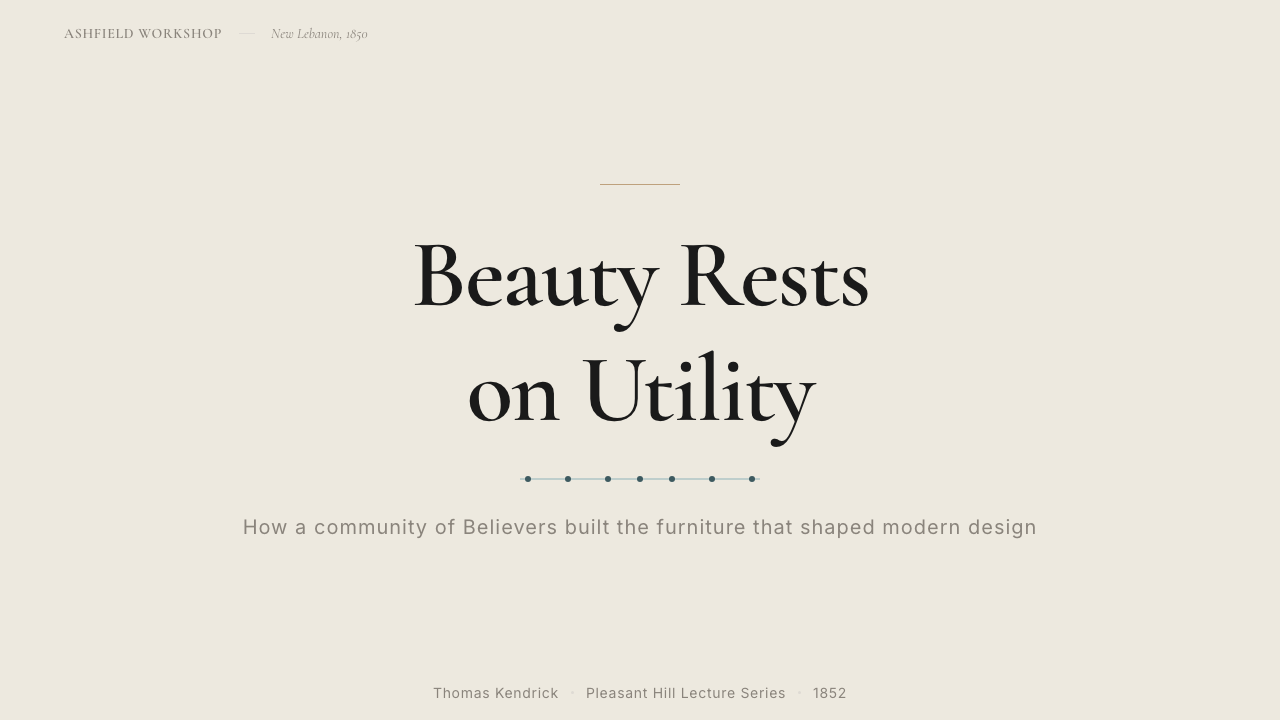
For presentation slides, this style rewards simplicity of layout with warmth of reception. A cover slide might place a title in a generous left margin against a smoke-pine wood ground, with a single bone-plaster content block and one teal line marking the page's organizing axis. Content slides work best with a clear two-zone layout — a narrow heading column and a wide body column — with no decorative elements between sections. Data slides in this style treat charts as objects: bar charts become arrangements of wood-toned rectangles, with a single teal bar indicating the value of primary interest. The absence of gridlines and axis labels beyond the minimum necessary gives the data the same quiet authority as a well-made piece of furniture.
For web interfaces, the style is particularly strong for products that need to communicate craft, heritage, or considered quality: independent studios, editorial publications, premium goods, or any service where the act of making is part of the value proposition. Dashboard applications benefit from the smoke-pine warm tones as a sidebar or panel background against bone-white content areas, with ironwork black for all type and interactive elements. Pricing pages carry the style's moral clarity well: spare typographic hierarchy, no visual clutter around the cost figures, and a single teal element to indicate the recommended tier. Navigation is typographic, relying on weight and scale rather than icons.
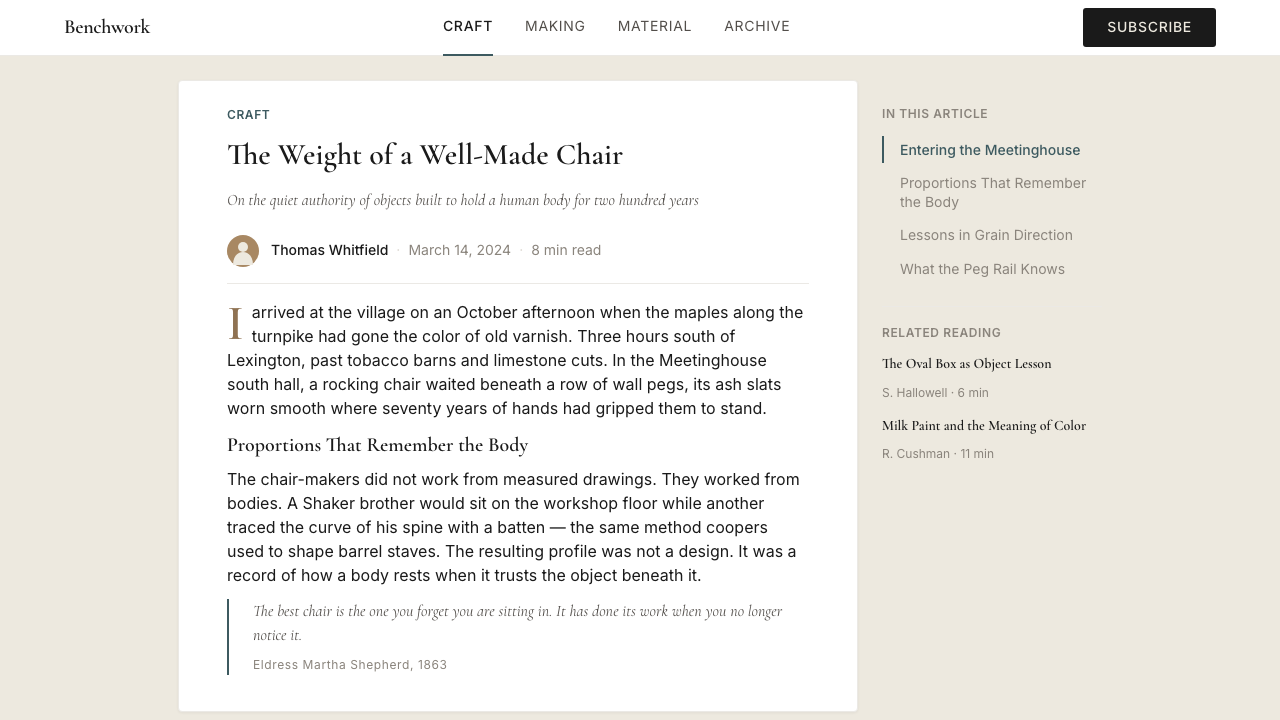
For editorial and marketing work, Shaker Furniture 1850 supports long-form reading comfort in a way that fewer digital styles do. The warm wood tones reduce eye strain over extended reading sessions in a way that pure white backgrounds do not. A long-form article page in this style uses the smoke-pine tone for the full-page background, bone plaster for the content column, and generous margins that function like the clear floor space of a Shaker room — not wasted, but prepared. Marketing pages work well with alternating full-width blocks: wood-toned sections for narrative content, bone-white sections for product or pricing information, with the teal accent reserved for a single call to action per page.
A common mistake when applying this style is adding warmth through variety rather than through restraint. A designer reaching for a second wood tone to create visual interest, or introducing a warm amber to complement the smoke-pine, or softening the teal into a sage green underestimates how much of the style's warmth comes from the tension between its few carefully chosen elements. The smoke-pine and bone plaster are warm because the ironwork black is cold; the teal is vivid because everything else is muted. Adding to the palette does not enrich the system — it dilutes the relationships that make it work.
Shaker Furniture 1850 — FAQ
Is Shaker style the same as Scandinavian minimalism?
They share significant visual overlap — both favor spare geometry, functional form, natural materials, and limited palettes — but their origins and governing principles are different. Shaker style is rooted in a specific American religious community and its theology of plain living; the aesthetic is a byproduct of belief. Scandinavian minimalism, as it emerged in the mid-twentieth century, was shaped by secular social democratic values: designing good-quality objects for ordinary people, not luxury goods for the wealthy. In practice, Shaker work tends to be warmer (wood tones, milk paint) where Scandinavian modernism tends toward cooler grays and whites. Shaker is also more architecturally rural in character; Scandinavian minimalism has an urban, industrial refinement. The historical connection is real — Shaker furniture influenced Scandinavian designers through exhibitions and publications in the early twentieth century — but the two are distinct systems.
Why is there only one accent color in this system?
The single-accent constraint reflects a historical reality and translates it into a design principle. Shaker milk-paint pigments were costly and time-consuming to produce, so color was used economically — one color per room, one color per surface category. The teal accent appears in door frames, pegboard rails, and the occasional drawer front: always structural, always singular. In digital application, a single accent forces every layout decision to be deliberate about what deserves emphasis. With two accent colors, a designer can mark two things as important; with one, there is only the most important thing. The constraint is not arbitrary limitation but embedded hierarchy.
Can this style work for technology products, or does it only suit craft and heritage brands?
It works for technology products, but requires a considered translation. The style's values — purposiveness, structural honesty, nothing superfluous — are exactly the values that well-designed software should embody. The visual warmth of the smoke-pine and bone-plaster palette also distinguishes a technology product from the cool grays and flat whites that dominate the category, which can be a genuine differentiator. The risk is incongruity: a heavily animated, feature-dense product sitting inside a Shaker-derived shell will read as a contradiction. The style works best for technology products that genuinely practice restraint — productivity tools, focused utilities, reading applications — where the quiet visual register reinforces the product's actual behavior.
How does Shaker style handle dark mode?
The canonical Shaker palette is light-ground: bone plaster and smoke-pine wood are both warm, relatively pale values. A dark inversion is possible, but it requires care to avoid losing what makes the style work. A dark Shaker mode should use a deep charcoal or near-black based on the ironwork-black family — not a blue-tinted dark as found in many consumer interfaces. The smoke-pine wood tone shifts to a darker, richer amber that still reads as warm wood rather than generic dark brown. Bone-plaster text inverts to remain the warmest light value in the composition. The smoke-teal accent, on a dark ground, needs to shift toward a slightly more saturated value to maintain its presence without becoming garish. The single-accent rule becomes even more important in dark mode, where any second color risks overwhelming the composition.
Is Shaker style appropriate for global audiences, or does its American religious origin make it culturally specific?
The visual language of Shaker design has traveled well beyond its origin context, and the principles underlying it — purposiveness, material honesty, structural simplicity — are not culturally bound. The style resonates in East Asian design culture, which has its own traditions of craft minimalism rooted in very different philosophies; it resonates in Scandinavian contexts for the reasons described above; and it reads clearly in any context where quality of making is a recognizable value. The specific religious origin is not visible in the visual vocabulary itself — a viewer does not need to know anything about Shaker theology to understand what the aesthetic is doing. The origin enriches the style for those who know it, but it does not restrict it for those who do not.
Related design styles
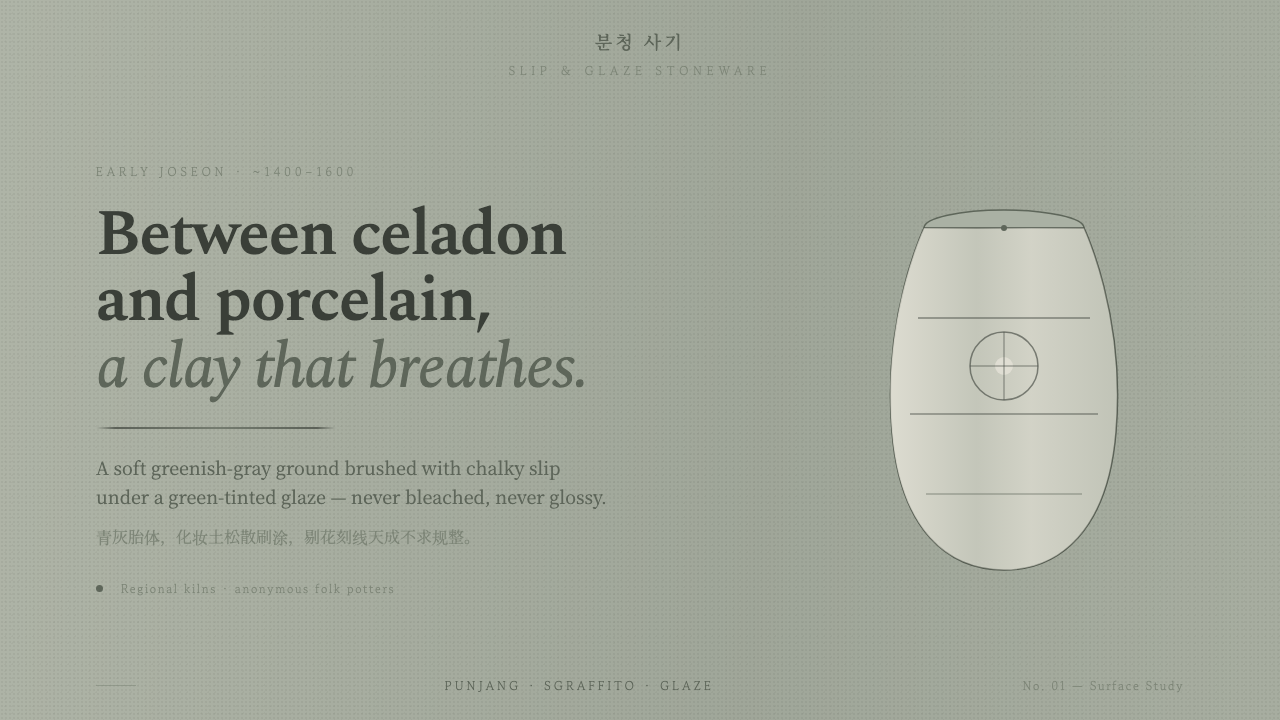 Buncheong Gray Slip WareBetween celadon and porcelain. Greenish-gray clay, chalky slip brushwork, dar…
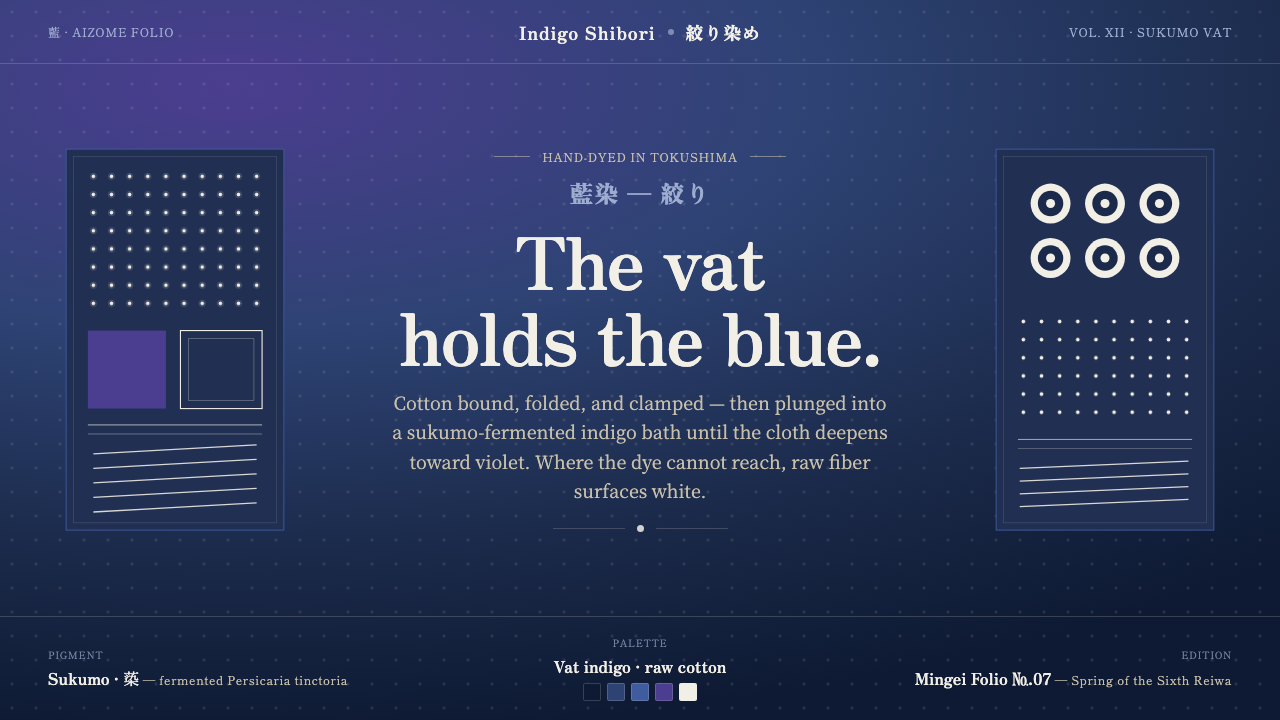 Indigo ShiboriCloth before image. Bound cotton plunged into sukumo vats — raw-white resist…
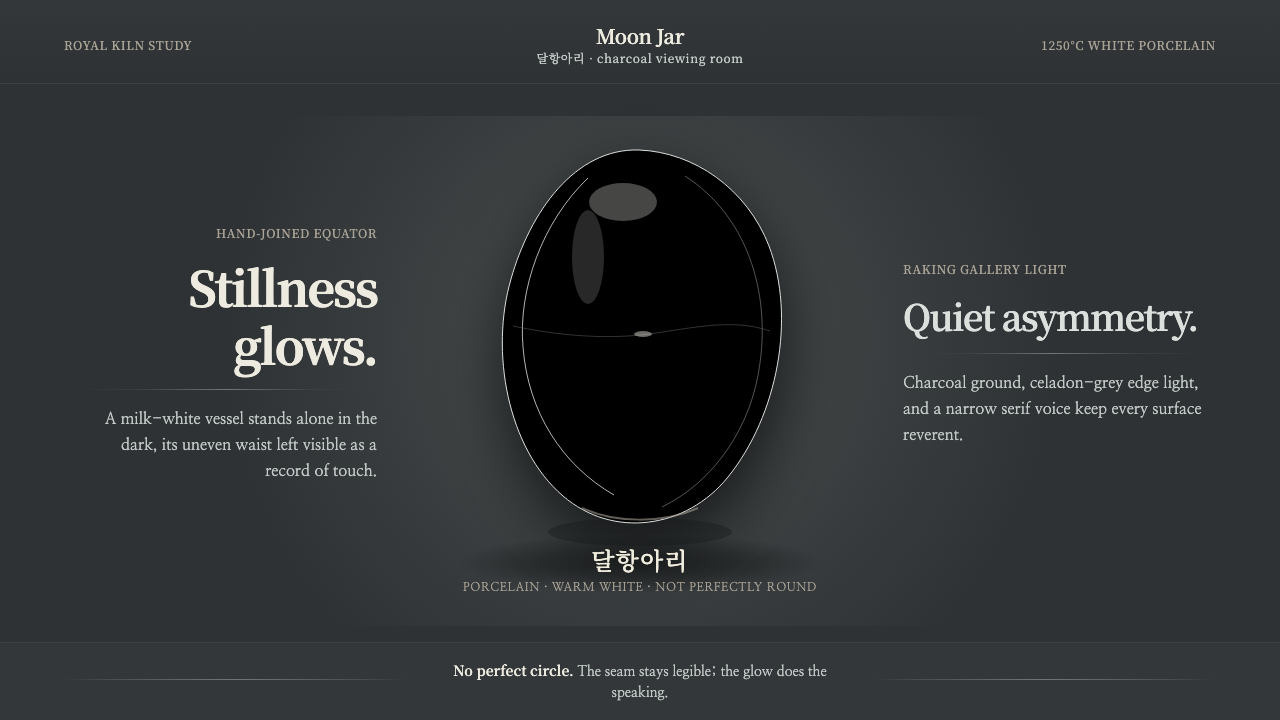 Joseon Moon JarQuiet imperfection glows. Milk-white porcelain floats on charcoal with a visi…
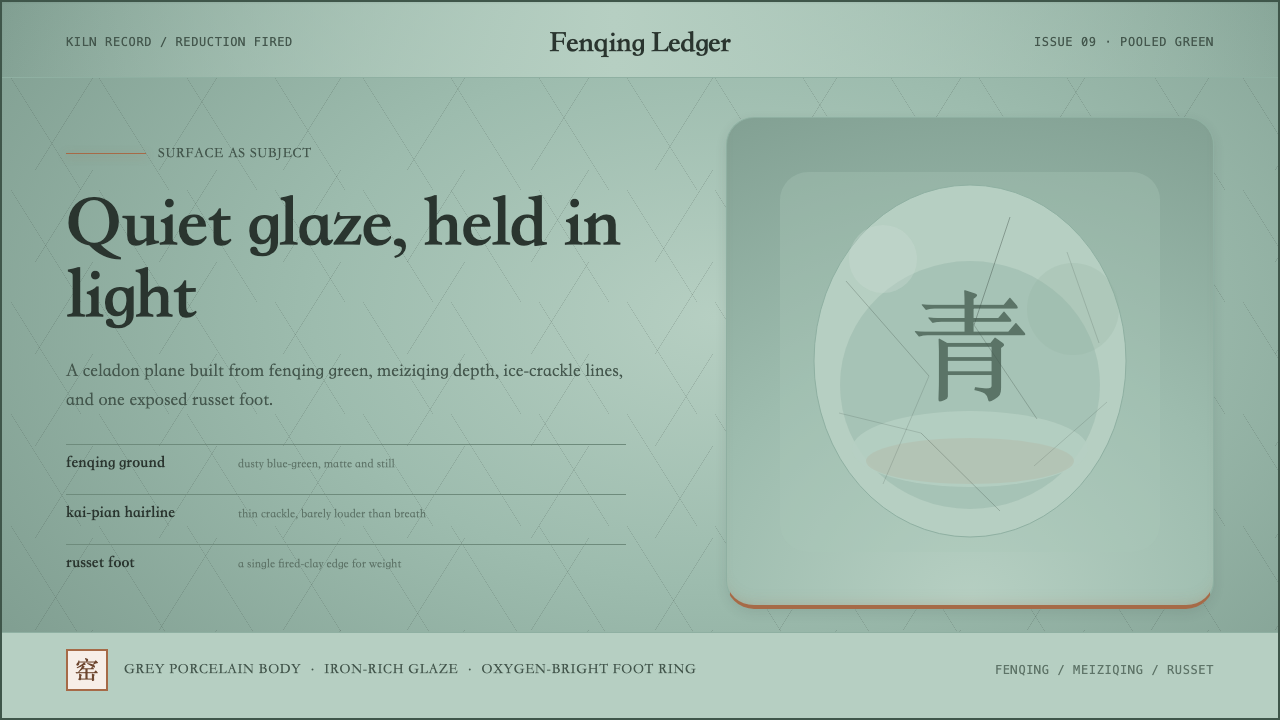 Longquan CeladonQuiet glaze carries the page. Fenqing green, crackle hairlines, and one russe…
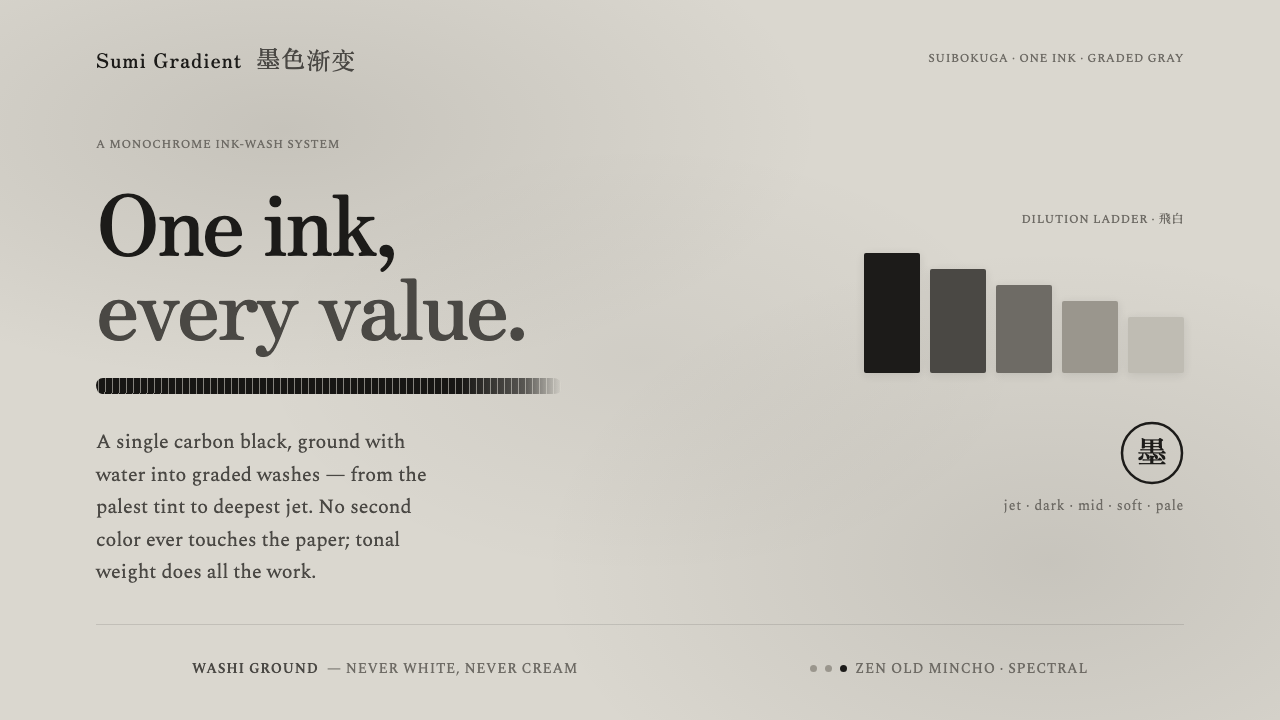 Sumi Grayscale GradientOne ink, every value. A single carbon black diluted into graded grays, marked…
 Afar Nomad TextileWeight lives at the edge. Rust and madder selvedges cut across a quiet cotton…