What is Cadbury Dairy Milk?
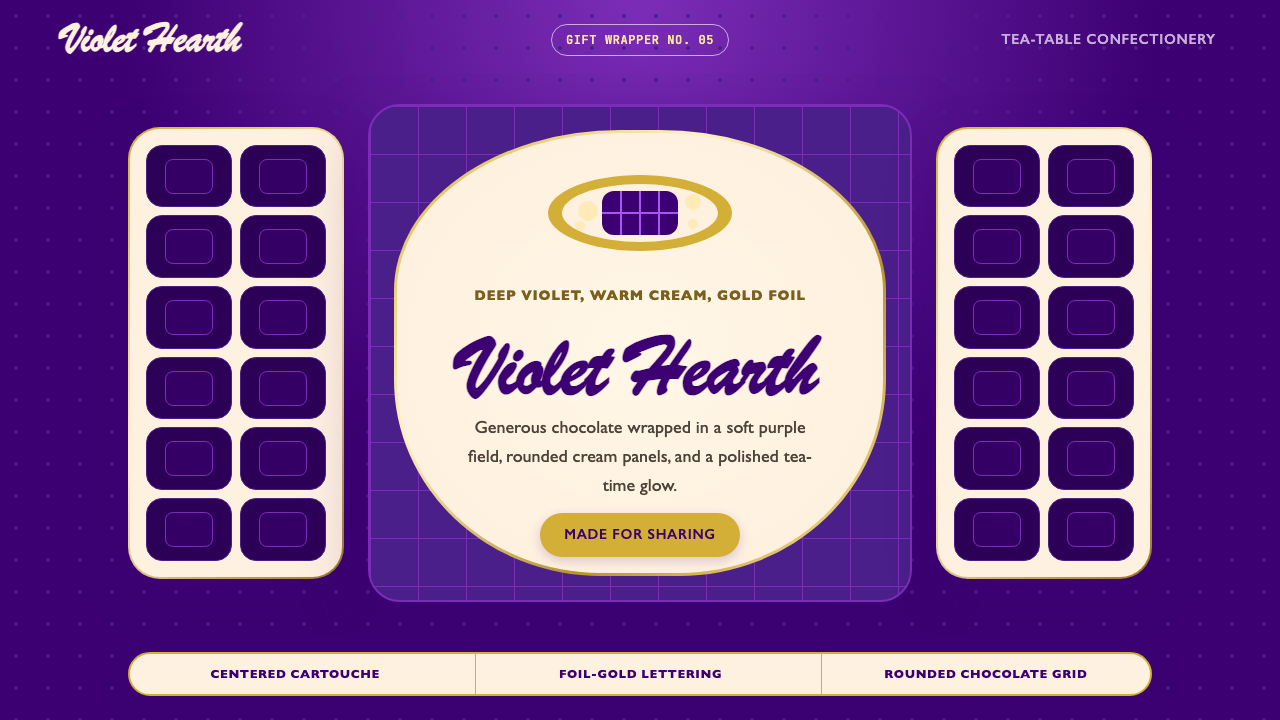
Cadbury Dairy Milk wraps a century of everyday indulgence in the world's most recognized purple — generous, centered, and unmistakably warm.
Cadbury Dairy Milk in brief
Cadbury Dairy Milk is a British confectionery brand whose visual identity has become one of the most globally recognized examples of food packaging design. Its signature is a deep, saturated violet — a purple so specific and so consistently applied that Cadbury successfully trademarked the color in several markets. Around that dominant hue, the brand has assembled a grammar of warmth: gold-foil lettering in a flowing cursive script, rounded cartouche shapes that suggest embrace rather than boundary, milk-splash illustrations rendered in a gouache-like style, and the enduring promise of 'a glass and a half' of fresh milk in every bar.
What distinguishes Cadbury's visual language from most luxury confectionery is its insistence on generosity over restraint. Where premium chocolate brands often use austerity — matte black, thin serif type, wide margins — to signal exclusivity, Cadbury's design is centered, symmetric, and abundant. The purple is saturated rather than muted. The gold is warm rather than cold. The lettering is cursive and hand-drawn in spirit rather than geometric and precise. The overall effect is closer to a grandmother's kitchen than to a boutique atelier: richly colored, familiar, and deeply reassuring.
The brand's design DNA is governed by a few consistent principles: symmetry, roundness, and the pairing of deep jewel-toned backgrounds with cream or gold foreground elements. Unlike design systems that rely on typography or negative space as primary tools, Cadbury leads with color — purple is the message before any word is read. This makes the brand instantly legible at any scale, from a full-size bar wrapper to a small square of foil on an individual piece.

Where does Cadbury Dairy Milk come from?
The Cadbury story begins in 1824 when John Cadbury, a young Quaker, opened a shop at 93 Bull Street in Birmingham, England, selling tea, coffee, and a small range of drinking chocolates. The Quaker faith shaped the enterprise from the start: Quakers were temperance advocates who believed chocolate and cocoa offered a wholesome alternative to alcohol, and John Cadbury framed his product as a vehicle for moral and physical improvement. This origins story — of a principled man selling a nourishing product to working people — would come to color every aspect of the brand's later visual identity, emphasizing sincerity, abundance, and care.
The transition from John to his sons Richard and George Cadbury in 1861 proved pivotal. George Cadbury, a visionary entrepreneur and committed social reformer, recognized that the company's existing factory in the center of Birmingham was inadequate for growth. In 1879 he purchased fourteen acres of land south of the city and built not just a factory but an entire model village for his workers — Bournville. The village included cottages with gardens, schools, and recreational grounds, but conspicuously no public houses. Bournville became internationally famous as an experiment in Quaker industrial paternalism, and the name attached to the brand with lasting cultural weight. When the Cadbury wrapper says 'Bournville,' it invokes not just a factory address but an entire philosophy of dignified labor and social responsibility.
The Dairy Milk bar was launched in 1905 and represented a genuine technical achievement: a higher proportion of fresh milk than had previously been possible in solid chocolate, giving it a creamier, more approachable texture than continental rivals. The launch prompted Cadbury to develop the visual language that would eventually become canonical — the purple and gold pairing that distinguished Dairy Milk from the brand's other chocolate lines. By the 1920s, the purple had become the dominant brand color, and the flowing cursive lettering that characterized the wordmark was settling into the form still recognizable today.
The twentieth century brought significant developments to both the product and the brand's visual life. In the mid-century era of food packaging, the Cadbury wrapper evolved through the conventions of lithographic printing — rich flat colors, bordered cartouches, illustrated vignettes — that gave British confectionery packaging its characteristic warmth. The 'glass and a half' illustration, depicting fresh milk pouring into a bar of chocolate, became one of the most recognizable images in British advertising history, codifying the brand's promise in a single, recurring image. Later brand updates, including work by the design consultancy Bulletproof in the early 2000s, refined the visual system while preserving its essential character: the purple, the gold, the cursive, and the reassuring roundness of the overall composition.
What defines the Cadbury Dairy Milk look?
Color
The defining visual element is a deep, jewel-toned purple — not a pale lavender or a cool blue-violet, but a fully saturated, warm-leaning violet that reads as rich and enveloping. This purple is paired almost invariably with warm gold, which appears in lettering, borders, and foil accents. Cream and white function as relief colors for text and illustration fields. The overall palette is opulent rather than minimal: colors are pushed to their fullest saturation, and the pairing of complementary warm-cool hues — violet against gold — creates visual energy without visual tension.
Typography
The wordmark lettering is cursive in spirit — flowing, connected strokes with a distinctly hand-drawn quality, despite having been standardized into a consistent logotype. The letterforms are rounded at their terminals and generous in their spacing, projecting confidence and approachability simultaneously. Supporting type on packaging tends toward rounded, legible display styles rather than precise geometric sans-serifs or sharp serifs. The overall typographic register is warm and personal, reinforcing the brand's domestic rather than institutional character.
Composition
Cadbury compositions are centered and symmetric — a marked contrast to the asymmetric grid-based layouts that dominate contemporary design. The central element is typically a cartouche or shield shape containing the wordmark, with secondary information arranged symmetrically above and below. This symmetry signals stability, tradition, and trustworthiness, and echoes the composition of Victorian-era trade labels and apothecary packaging that were part of Cadbury's formative context. The centered arrangement also maximizes legibility on a rectangular chocolate bar wrapper viewed at any orientation.
Roundness and Softness
Every element in the Cadbury visual system tends toward roundness: the cartouche corners are curved, the letterforms are rounded, the illustration style favors soft contours, and even the product itself — a chocolate bar — is associated with a grid of rounded, yielding squares. This pervasive roundness is not coincidental. It is a deliberate signal of tactile pleasure, abundance, and maternal care. Hard corners and angular geometry would introduce tension; Cadbury consistently chooses the softer, more embracing form.
Illustration and Ornament
Unlike design systems that eliminate illustration in favor of pure geometry or photography, Cadbury makes illustration a central brand element. The milk-splash image — fresh milk pouring from a glass into a chocolate bar — is the most iconic instance, but the broader visual language includes decorative scroll work, illustrated vignettes, and bordered panels that recall the rich ornamental traditions of Victorian and Edwardian printed ephemera. Ornament here is not considered waste, as it would be in a functionalist design philosophy; it is itself the message, signaling that the brand has time for beauty, detail, and generosity.
Gold as Signal
Gold functions as the brand's secondary language, marking elements of particular importance: the wordmark border, key typographic elements, and the foil wrapping of the bar itself. Cadbury's gold is warm and slightly amber-toned rather than cool or platinum-adjacent, which keeps it in register with the purple rather than contrasting against it too harshly. The use of actual gold foil as a material element in the product packaging reinforces the visual code at a tactile level — this is a brand whose visual promises are backed by material choices.
Symmetry as Trust
The consistent use of bilateral symmetry in Cadbury packaging is a design argument, not merely a stylistic preference. Symmetry has been associated across cultures and centuries with stability, fairness, and institutional reliability. For a food brand making an implicit promise about consistency — every bar will taste the same, every purchase will deliver the same pleasure — symmetrical composition reinforces that promise at a subliminal level. The viewer's eye finds balance immediately, and that effortless balance reads as confidence and dependability.

Who shaped Cadbury Dairy Milk?
John Cadbury founded the business in Birmingham in 1824 as a tea and coffee merchant who also sold drinking chocolate. His Quaker faith gave the enterprise its moral framing: chocolate was positioned as a wholesome alternative to alcohol, a product that could improve the lives of working people rather than diminish them. This founding ethical stance — earnest, generous, socially conscious — became the invisible substrate of the brand's entire visual language, which has always communicated warmth and sincerity rather than cold luxury.
George Cadbury, who took over the business with his brother Richard in 1861, is responsible for the two decisions that most shaped the brand's cultural identity: the construction of Bournville, the model factory village south of Birmingham that became internationally famous as a Quaker experiment in dignified labor, and the continued investment in product quality that led to the Dairy Milk bar's development. Bournville gave Cadbury a story — not just a product — and that story of principled generosity saturates the visual identity as fully as the purple saturates the packaging.
Newbould was among the commercial artists who contributed to Cadbury's mid-century visual language during the era when British poster and packaging art reached its high-water mark. His understanding of color, composition, and the conventions of lithographic printing informed the brand's characteristic pairing of rich flat backgrounds with carefully bounded foreground elements — a technique that gave Cadbury packaging its sense of organized abundance rather than visual chaos.
Bulletproof, a London-based brand design consultancy, undertook a significant visual refresh of the Cadbury Dairy Milk identity in the early 2000s. The work is an instructive case study in brand stewardship: Bulletproof modernized the system's production values and tightened its visual logic without abandoning the purple, the gold, the cursive lettering, or the centered symmetry that had made the brand instantly recognizable across generations. The challenge — updating a beloved mark for contemporary media without erasing the memories of millions of consumers — required a clear-eyed understanding of which elements were structurally essential and which were incidental to period production techniques.
How do you use Cadbury Dairy Milk today?
Cadbury Dairy Milk's visual language is among the most specific and emotionally loaded of any confectionery brand, which makes it powerful as a design reference but demanding in its application. The style communicates warmth, generosity, everyday pleasure, and trusted familiarity — values that are genuinely useful for food and beverage brands, gifting and celebration contexts, children's products, loyalty programs, and any product or service that wants to feel approachable and abundant rather than exclusive and austere. Applied carelessly, the same elements that make the style feel warm can make it feel nostalgic to the point of datedness, or indulgent to the point of excess.
For presentation slides, the Cadbury approach works best on cover pages and section dividers where bold identity is the goal. A cover in this style leads with a deep violet background, positions the title in warm gold or cream lettering at center, and frames the composition with a simple rounded border or cartouche. Content slides should be handled more lightly — a strong accent color in the heading, a cream or off-white field for body text, and restrained use of gold only for the most critical calls to attention. Data slides can carry a purple header bar with white-reversed type, letting charts live on a lighter ground to preserve legibility. Avoid applying the full palette — purple, gold, and cream simultaneously at high saturation — across every slide; the result reads as maximalist rather than branded.
For web interfaces, the style is best suited to contexts where warmth and occasion matter: gifting platforms, food delivery services, event ticketing, or loyalty dashboards. A pricing page in this mode might use deep violet as the featured tier's background, gold as the call-to-action border or button treatment, and cream as the default page ground. Navigation should be kept typographically simple — the visual richness lives in the content areas, not in the chrome. Dashboard widgets can use rounded card shapes with subtle gold border treatments to echo the cartouche motif without overwhelming the data display. Avoid deploying the full ornamental vocabulary — scroll borders, illustrated vignettes — in functional UI; reserve that register for marketing surfaces.
For editorial and marketing work, the style has genuine poster-scale authority. A marketing page in the Cadbury register uses full-width violet sections alternating with cream, centered headline type at generous scale, and the milk-splash or product illustration as a central visual anchor. Email campaigns benefit from the style's print heritage: bordered content panels, gold dividers, and a centered layout that reads cleanly in any email client. Packaging mockups and promotional materials for food products can adopt the rounded cartouche and the purple-gold pairing directly. For social cards and digital advertising, the centered symmetry and bold color contrast reproduce effectively at small sizes — the design was, after all, developed in an era when packaging had to communicate from a shop shelf at a distance.
A common mistake when working in this style is confusing its warmth with permission for visual clutter. Cadbury's packaging achieves its richness through disciplined restraint within a carefully bounded composition — every ornamental element has a position in a hierarchy, and the purple background does the heavy lifting of establishing mood so that the foreground elements do not have to. Designs that add layered textures, multiple illustration styles, competing border treatments, or too many typographic voices simultaneously produce something that reads as nostalgic kitsch rather than as the assured warmth the reference brand achieves. Commit to the centered axis, limit the ornamental vocabulary to one or two recurring motifs, and let the color do its work.

Cadbury Dairy Milk — FAQ
Is Cadbury Dairy Milk's purple a trademarked color, and what does that mean for design work?
Cadbury has successfully registered the specific shade of purple used on its Dairy Milk packaging in several markets, including the United Kingdom and Australia, though legal battles have periodically contested the scope of that protection. For designers, this trademark has no practical bearing on creative work that references or is inspired by the color — trademarks protect commercial use in directly competing product categories, not visual references in design practice. What matters aesthetically is understanding why the color works: it is a warm, fully saturated violet that reads simultaneously as rich and approachable, positioned between the cold blue-violet of corporate dignity and the pink-violet of childhood sweetness. Recreating that emotional register matters far more than matching a precise chip.
Can the Cadbury visual language work in dark-mode digital interfaces?
The historic Cadbury palette is already dark-ground by nature — deep purple is the dominant field, with cream and gold as foreground elements. This makes a direct translation to dark-mode UI more natural than it might be for many other design references. The key consideration is that the purple background must remain sufficiently deep to maintain contrast with cream text and gold accents; if the purple is lightened to accommodate lower ambient brightness, it loses its characteristic richness and begins to read as a generic violet. In practice, a dark-mode Cadbury-inspired interface works best when the background is the truest, deepest purple the display can render, and the foreground elements — type, borders, interactive elements — are rendered in cream, warm white, or gold rather than pure white, which would create too harsh a contrast.
How does Cadbury's style differ from other 'warm heritage' brands like Heinz or Marmite?
All three brands share the broad register of British food heritage — established Edwardian-era packaging conventions, strong single-color fields, and considerable consumer attachment. The differences lie in their dominant hues and compositional logic. Heinz is built around a warm red-tomato red and a distinctive green pickle, with a horizontally banded, label-within-a-label composition that emphasizes product variety. Marmite uses a matte dark brown and a distinctively shaped jar to make the container itself the primary brand asset. Cadbury, by contrast, is defined entirely by its background color — the purple is the brand — and uses a centered medallion composition that implies occasion and gift rather than everyday grocery. Cadbury's vocabulary is the most ornamental of the three, with its cursive lettering and gold foil; Heinz and Marmite are comparatively more utilitarian in their typographic and compositional choices.
Is this style appropriate for premium or luxury positioning?
Cadbury's visual language is deliberately not premium in the contemporary sense — it is generous, democratic, and everyday rather than exclusive, restrained, and aspirational. Premium confectionery brands (Lindt, Valrhona, Compartés) typically signal luxury through austerity: dark matte surfaces, minimal color, precise geometric type, and abundant negative space. Cadbury inverts almost every one of those signals: saturated color, warm ornament, cursive type, and centered composition filled to the edges. That said, 'premium' and 'luxury' are not the same thing, and the Cadbury register can work effectively for brands seeking to position themselves as premium-everyday — quality that everyone deserves, rather than quality available only to a few. Think artisan jam, specialty tea, family celebration cakes, or a subscription chocolate service targeting warmth-seeking consumers rather than connoisseurs.
How do you avoid the style looking like a generic 'chocolate box' pastiche?
The difference between a convincing Cadbury-inspired design and a generic confectionery pastiche lies in compositional discipline and chromatic commitment. Generic chocolate box design typically deploys multiple ornamental motifs in competition, uses a muddied or imprecise purple (one that drifts toward blue or toward red rather than landing at the warm jewel-toned violet that is the reference), applies gold so liberally that it loses its function as an accent, and allows the centered composition to become merely static rather than confidently balanced. To avoid this: commit to one or two ornamental motifs maximum and use them consistently; ensure the purple is fully saturated and warm in its violet tendency; use gold sparingly and structurally; and keep the centered composition taut by giving every element a clear size relationship to every other. The best Cadbury-inspired work looks inevitable — as if no other composition was possible — rather than assembled.
Related design styles
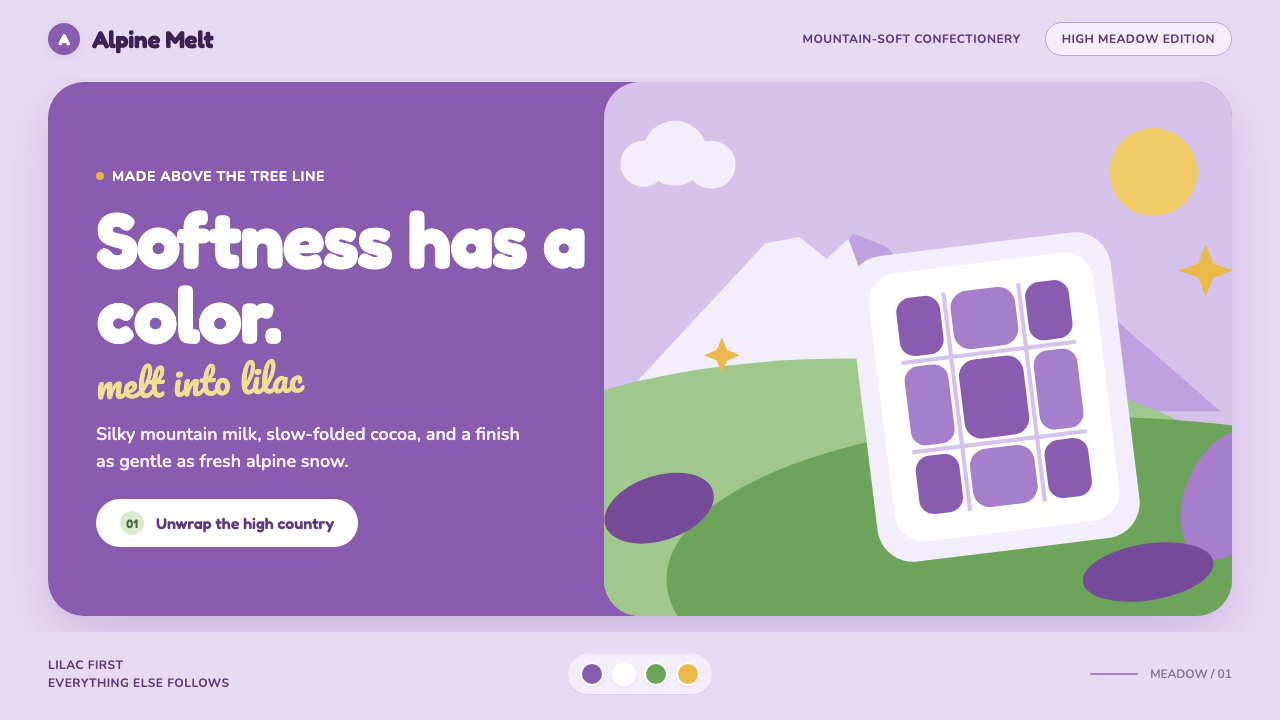 Milka Lilac (1901)Lilac tastes like chocolate. Plump type, snow-white foil and meadow green mak…
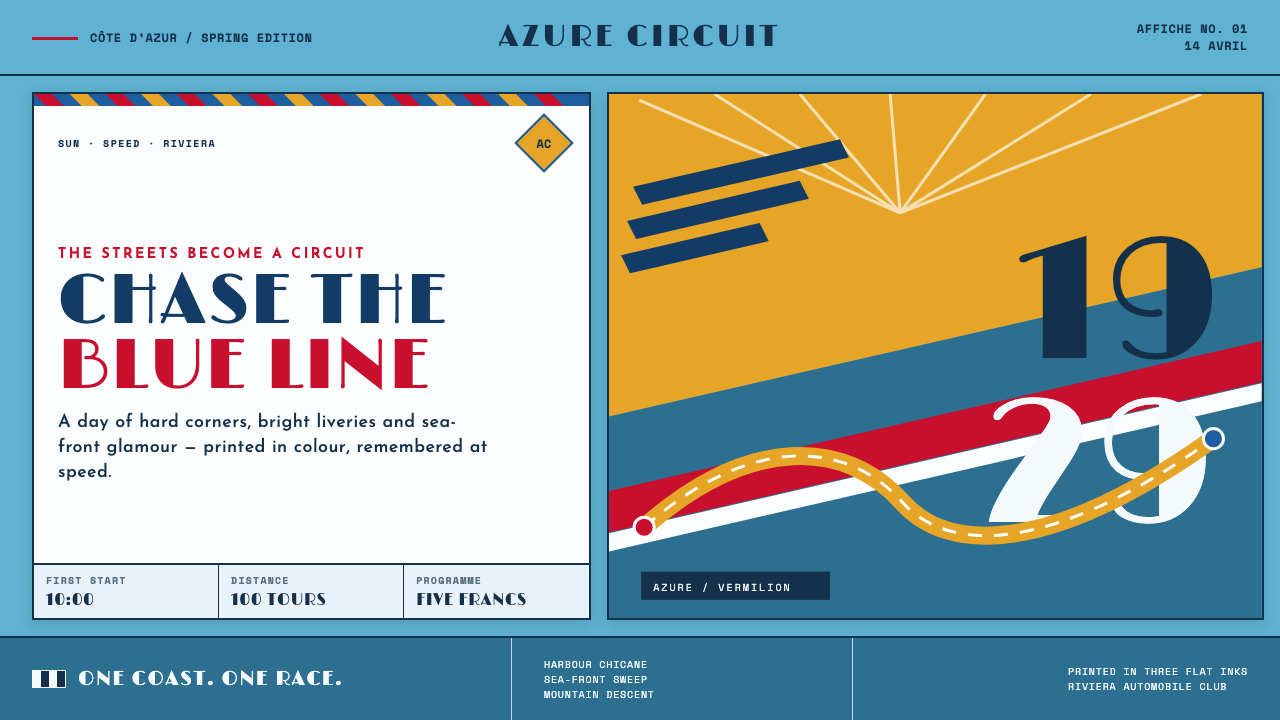 Monaco Grand Prix (1929)Speed becomes glamour. Riviera azure, racing red, and giant Deco numerals cut…
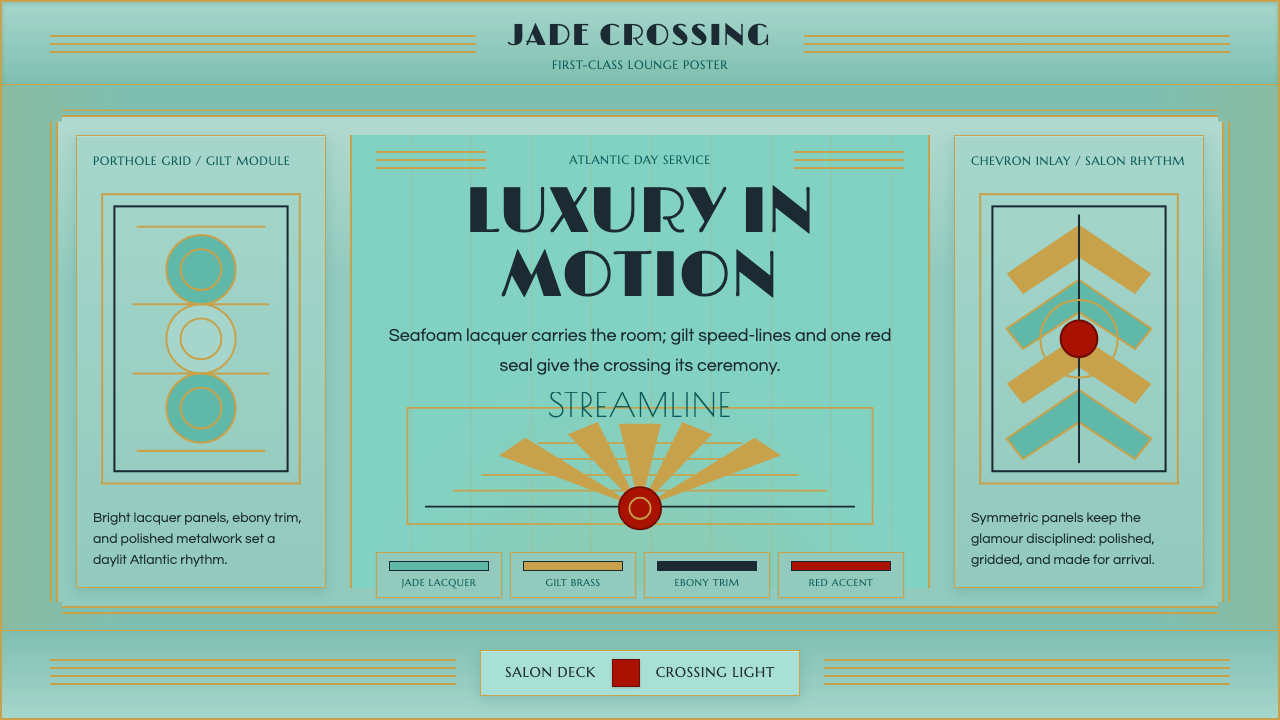 Ocean Liner SeafoamLuxury in motion. Seafoam lacquer, gilt speed-lines, and Deco symmetry frame…
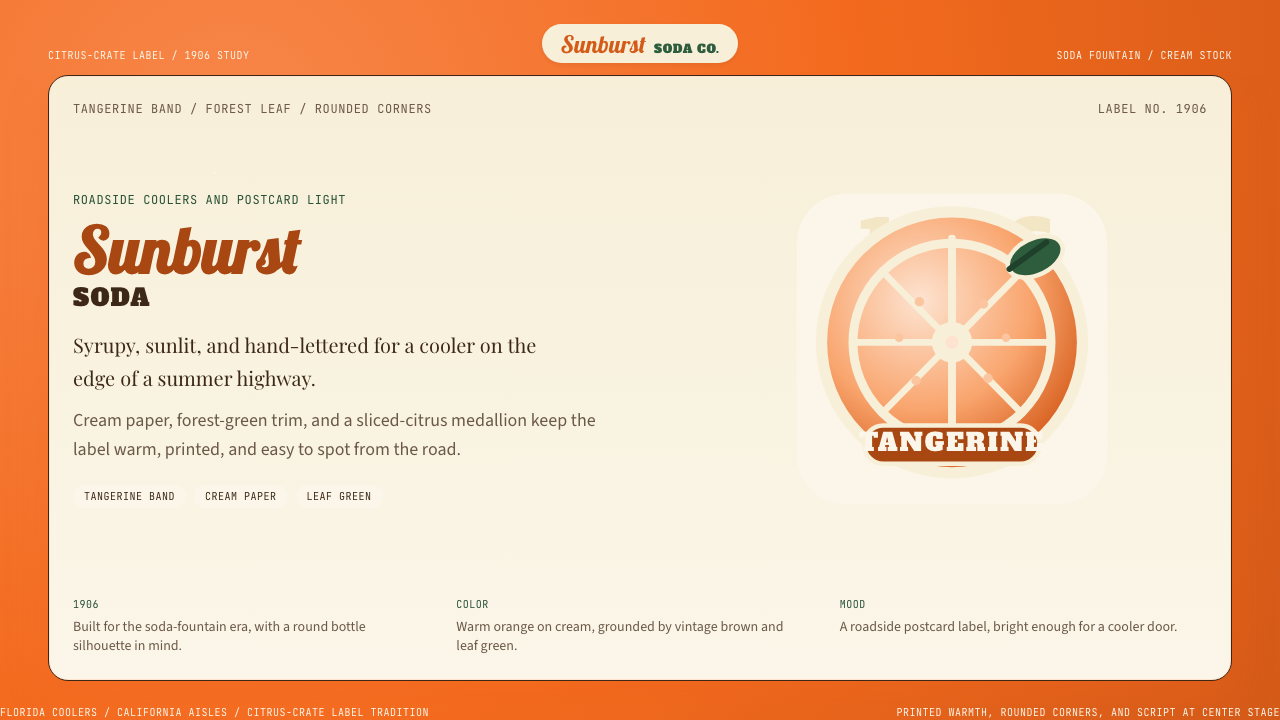 Orange Crush Soda (1906)Syrupy nostalgia. Tangerine, cream, and script make it a postcard label.
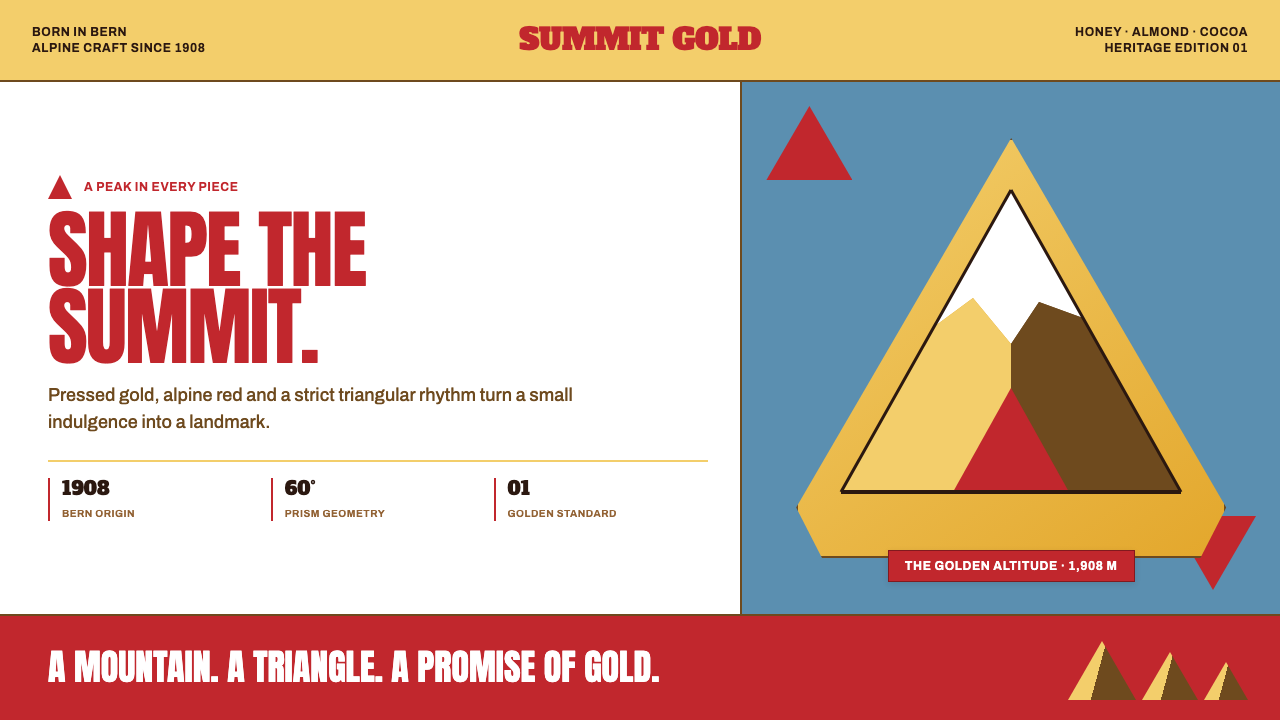 Toblerone Matterhorn (1908)A mountain compressed into a mark. Foil gold, alpine red and strict triangles…
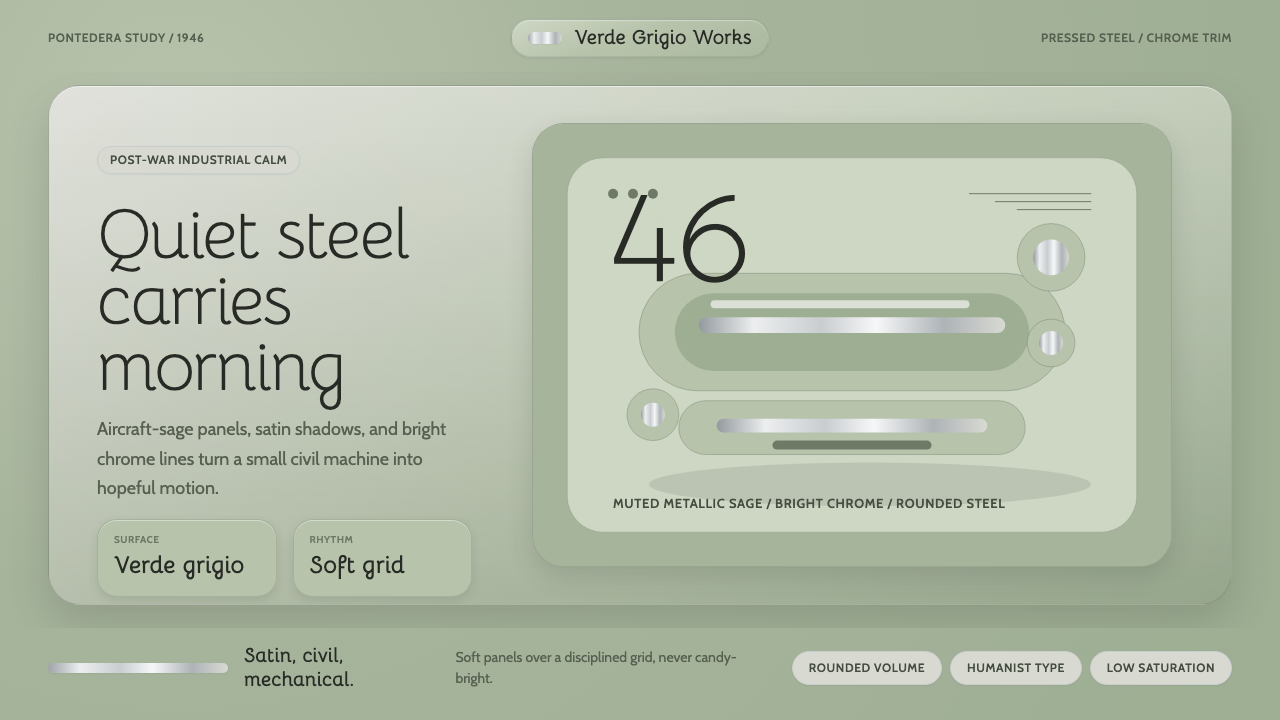 Vespa Mint ScooterHope wears steel. Verde grigio panels and chrome trim keep the optimism restr…