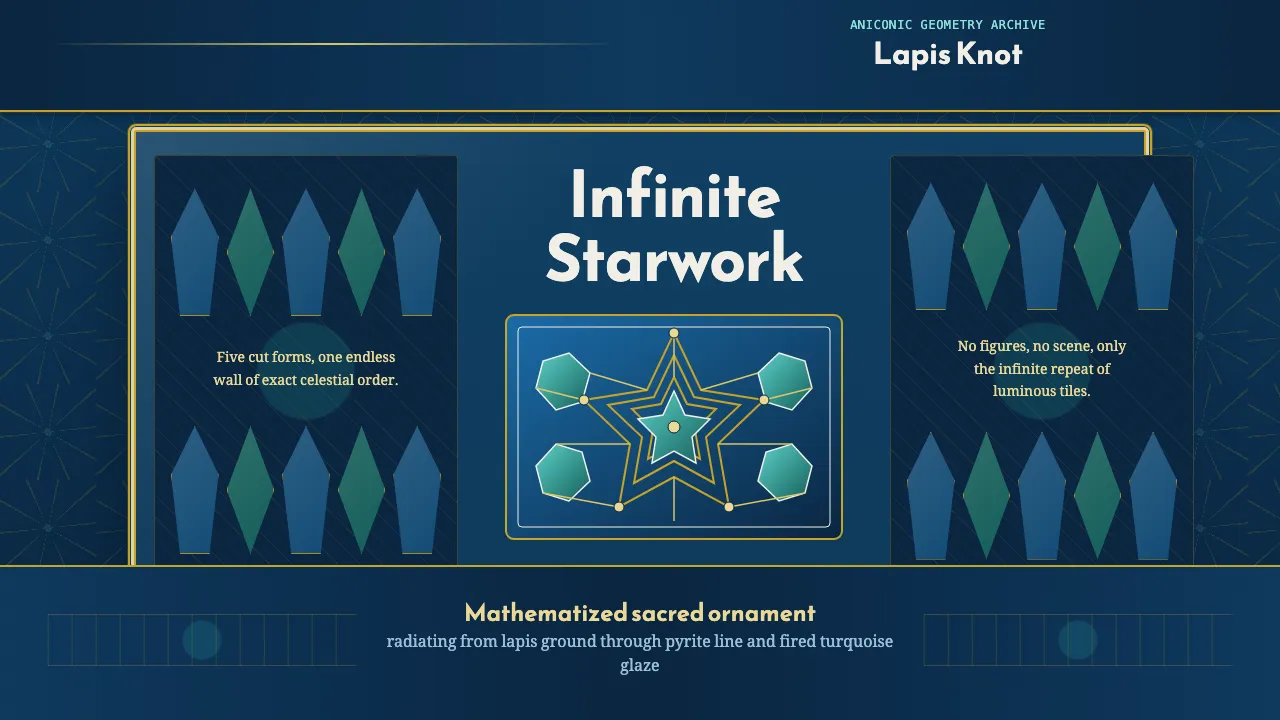
About Islamic Girih Tiles
Girih are the interlaced geometric strapwork patterns of Islamic architectural decoration — star-and-polygon tessellations built from a small set of tiles that repeat without end. On a Persian mosque wall they read as lustrous cobalt-and-turquoise glazed ceramic, the interlacing drawn in gold over a white-line ground.
This is mathematized sacred ornament: lapis-lazuli ultramarine and pyrite gold, exact and seamless. The tradition is aniconic — no figures, only the infinite repeat of decagons, pentagons and radiating stars, locked together with the precision of a geometer's compass.
- Origin
- Persia / Iran and the broader Islamic world
- Era
- Medieval Islamic world; Persian Timurid (1370–1507) and Safavid Isfahan (1501–1736)
- Key figures
- Master craftsmen and geometers of Islamic architectural ornament · Banna'i tilework artisans of Isfahan
- Movements
- Islamic geometric pattern · Girih-tile design · Persian tilework (kashi)
Islamic Girih Tiles design spec
Colors
Typography
The other 11 sections — buttons, cards, spacing, motion, techniques and more — open once you unlock. Download the DESIGN.md or send it to your AI in one click. Unlock once, yours forever.
Sign up nowStyles similar to Islamic Girih Tiles
Also inspired by crafts & folk art, with a close feel.
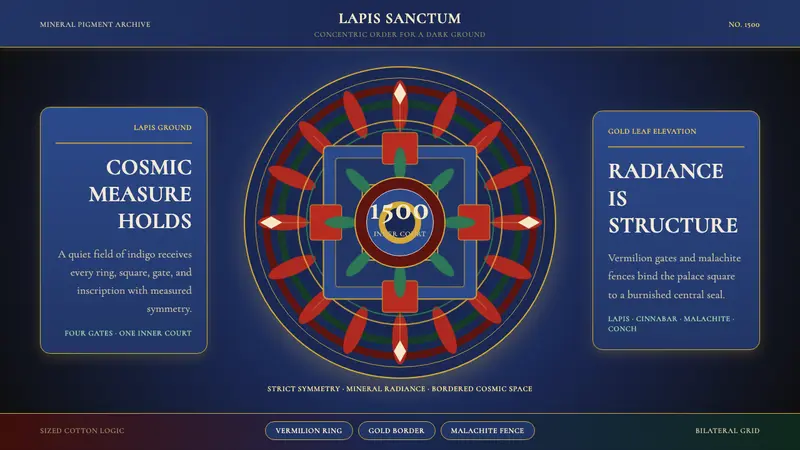 Tibetan Thangka Mandala (1500)Cosmic order, burnished dark. Lapis ground, gold borders, vermilion rings.
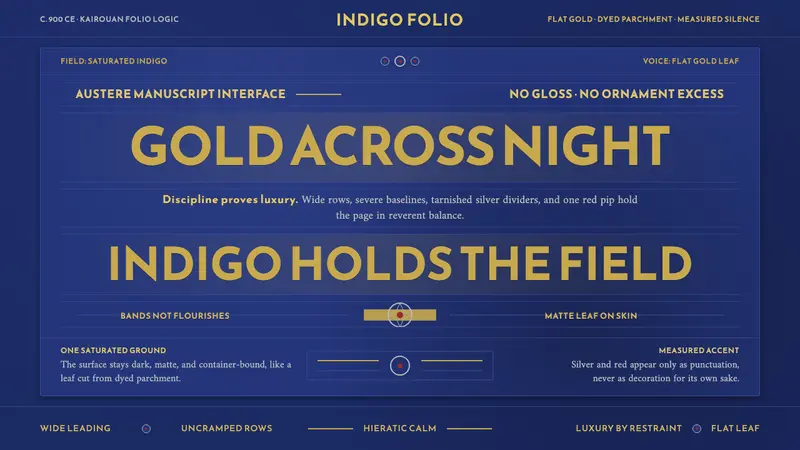 Abbasid Blue QuranLuxury by restraint. Flat gold Kufic bands cross an indigo parchment field.
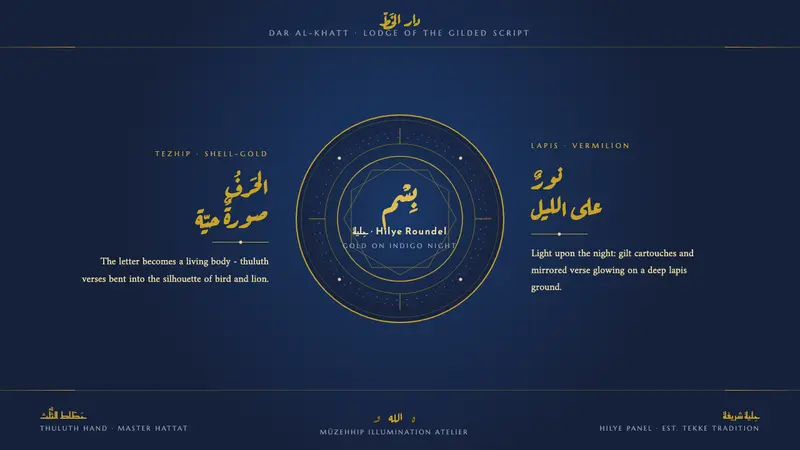 Sufi Zoomorphic CalligraphySacred script made flesh. Shell-gold thuluth on indigo-night grounds, framed by gilt hilye roundels.
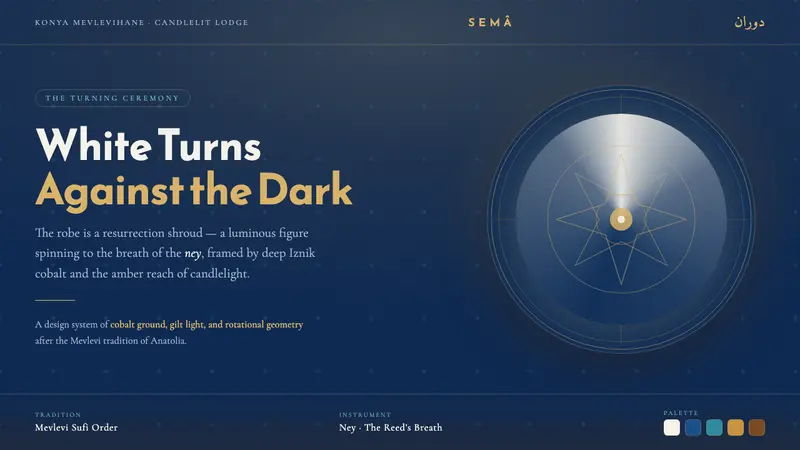 Whirling Dervish SemaWhite is always the figure. A spinning robe sweeps against deep Iznik cobalt, lit amber by candle.