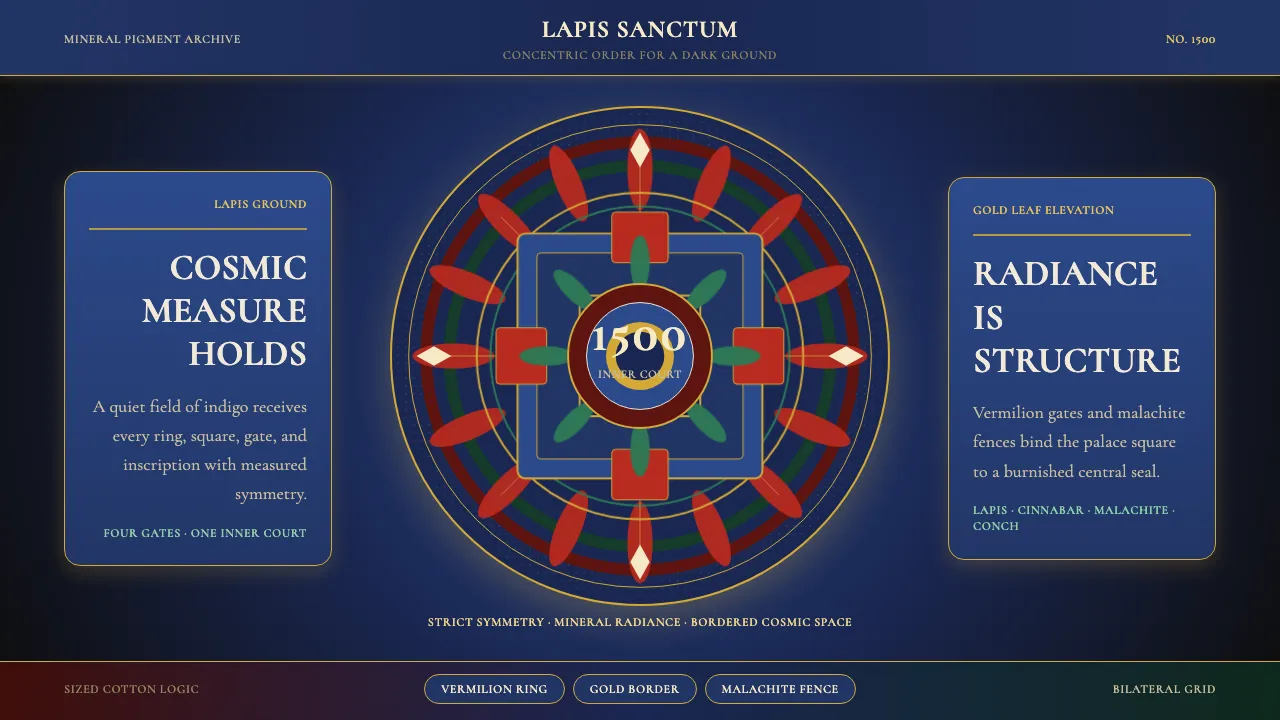
About Tibetan Thangka Mandala (1500)
Tibetan thangka mandala painting is the most geometrically codified sacred-art tradition in Asia. Between the 11th and 17th centuries, monastic ateliers in Lhasa, Shigatse, and Kham produced scroll paintings on sized cotton using mineral pigments — lapis lazuli for deep indigo grounds, cinnabar for vermilion lotus petals, malachite for protective rings, and beaten gold leaf for divine radiance.
Every measurement in a mandala follows canonical iconometric texts: concentric rings of fire, vajra fences, lotus petals, and palace squares with four gates converge on an inner sanctum. This design system translates that cosmological architecture into interface language — deep indigo page grounds, gold-leaf elevation, vermilion action surfaces, and strict bilateral symmetry throughout.
- Origin
- Tibet (Lhasa, Shigatse, Kham), Bhutan, Mongolia, Mustang
- Era
- 11th–17th century (peak 1400–1600)
- Key figures
- Menla Dondrup · Chöying Gyatso · 10th Karmapa Chöying Dorje · David Jackson
- Movements
- Menri school · Karma Gardri school · Vajrayana Buddhist iconography · Kalachakra mandala tradition
Tibetan Thangka Mandala (1500) design spec
Colors
Typography
The other 11 sections — buttons, cards, spacing, motion, techniques and more — open once you unlock. Download the DESIGN.md or send it to your AI in one click. Unlock once, yours forever.
Sign up nowStyles similar to Tibetan Thangka Mandala (1500)
Also inspired by crafts & folk art, with a close feel.
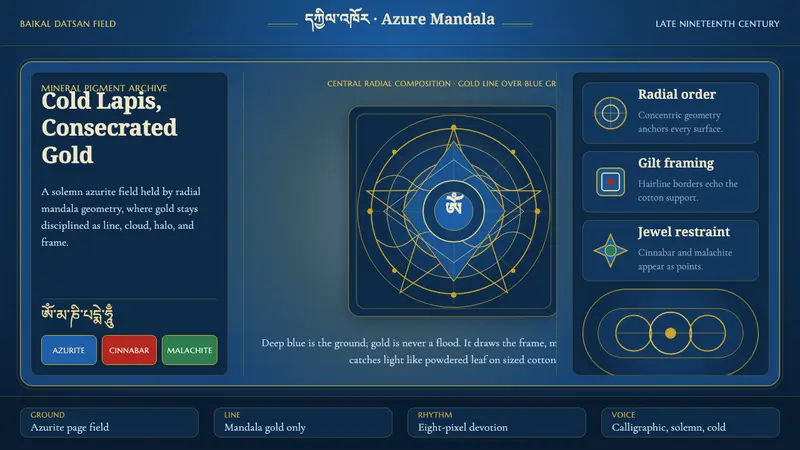 Buryat Buddhist Datsan ThangkaCold lapis holds silence. Gold mandala lines frame a solemn azurite field.
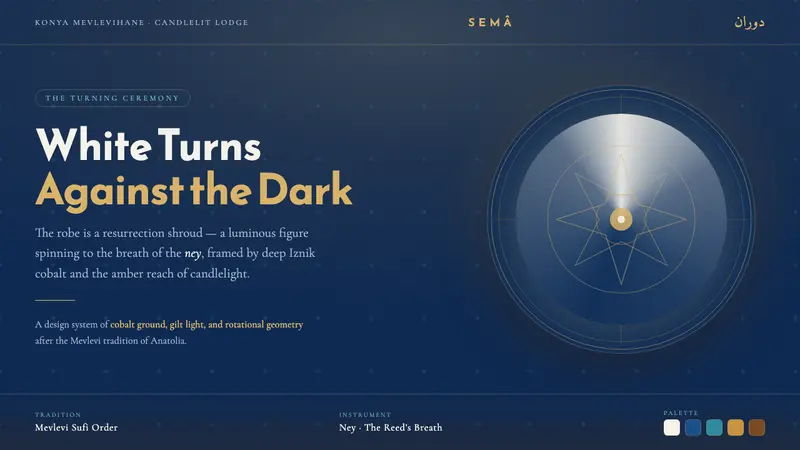 Whirling Dervish SemaWhite is always the figure. A spinning robe sweeps against deep Iznik cobalt, lit amber by candle.
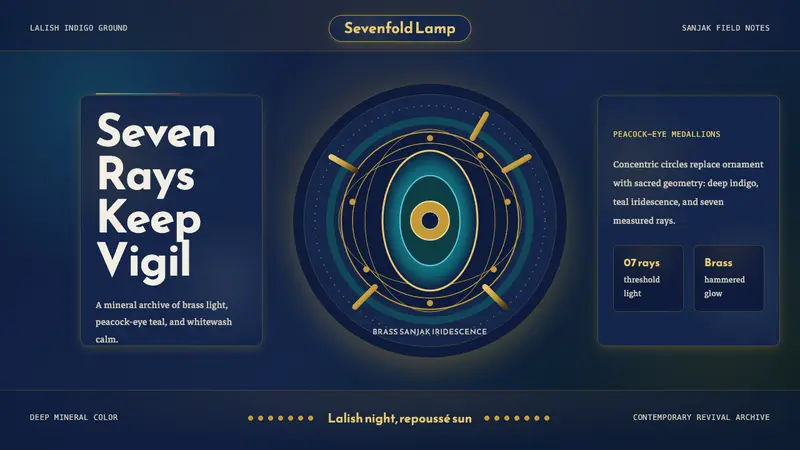 Kurdish Yazidi Peacock & SunSacred geometry glows. Lalish indigo holds brass rays and teal peacock-eye medallions.
 Abbasid Blue QuranLuxury by restraint. Flat gold Kufic bands cross an indigo parchment field.