About Abbasid Blue Quran
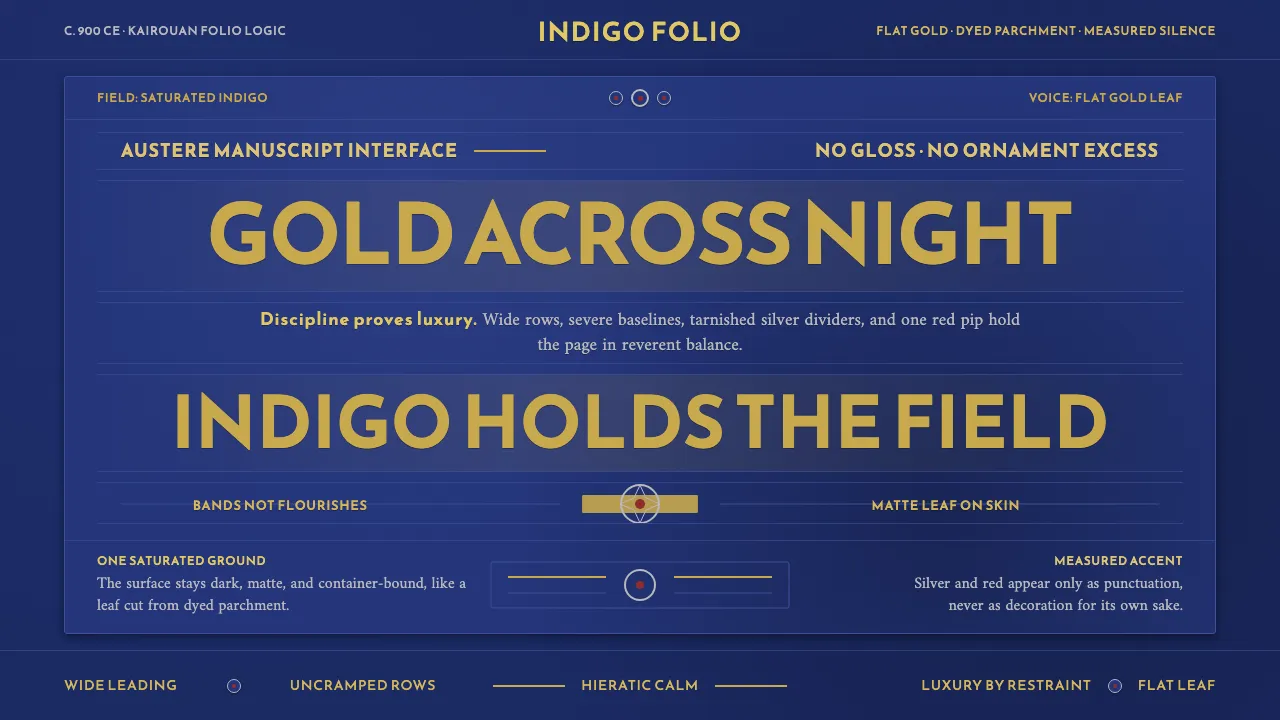
The Blue Quran is one of the most singular objects in Islamic book arts: parchment dyed a saturated indigo, inscribed in flat gold-leaf Kufic with no diacritical points, punctuated by silver rosettes flecked with red. Made in Kairouan around 900 CE, its pages read as bands of gold stretched horizontally across a night-blue field — restraint carried to the edge of severity.
This system translates that manuscript logic into an interface: indigo grounds everything, gold does the speaking, silver and red appear only as measured accents. Type sits wide and horizontal, generously leaded, unornamented. The mood is hieratic and calm, luxury proved by discipline rather than by decoration.
- Origin
- Kairouan, Ifriqiya (present-day Tunisia, North Africa)
- Era
- c. 900 CE (Abbasid / Aghlabid period)
- Key figures
- Aghlabid court scribes · Great Mosque of Kairouan commission
- Movements
- Early Kufic Quranic manuscript tradition · Abbasid book arts
Abbasid Blue Quran design spec
Colors
Typography
The other 11 sections — buttons, cards, spacing, motion, techniques and more — open once you unlock. Download the DESIGN.md or send it to your AI in one click. Unlock once, yours forever.
Sign up nowStyles similar to Abbasid Blue Quran
Also inspired by crafts & folk art, with a close feel.
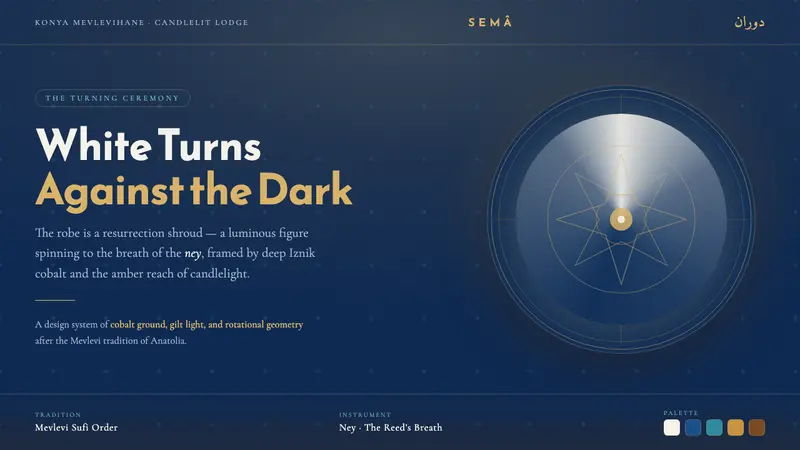 Whirling Dervish SemaWhite is always the figure. A spinning robe sweeps against deep Iznik cobalt, lit amber by candle.
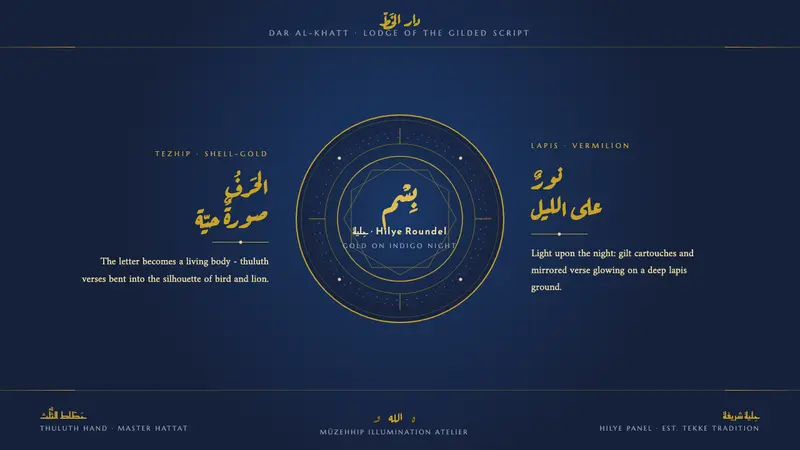 Sufi Zoomorphic CalligraphySacred script made flesh. Shell-gold thuluth on indigo-night grounds, framed by gilt hilye roundels.
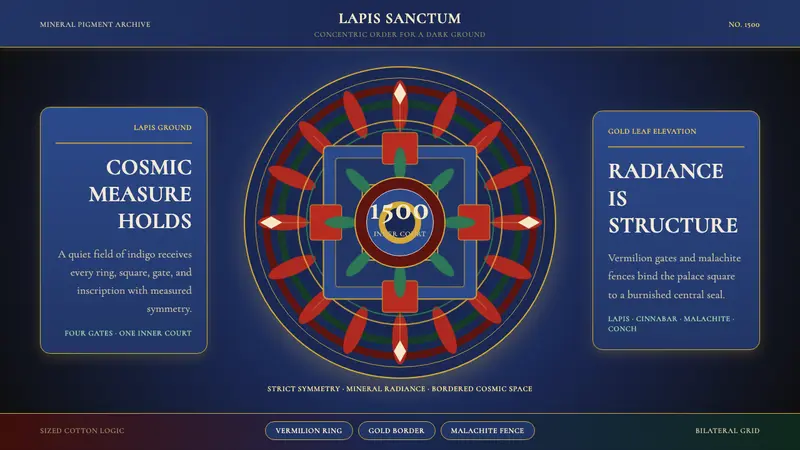 Tibetan Thangka Mandala (1500)Cosmic order, burnished dark. Lapis ground, gold borders, vermilion rings.
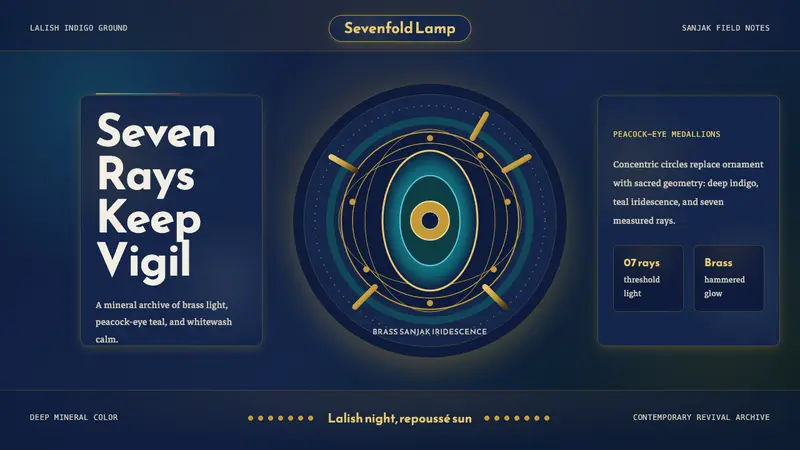 Kurdish Yazidi Peacock & SunSacred geometry glows. Lalish indigo holds brass rays and teal peacock-eye medallions.