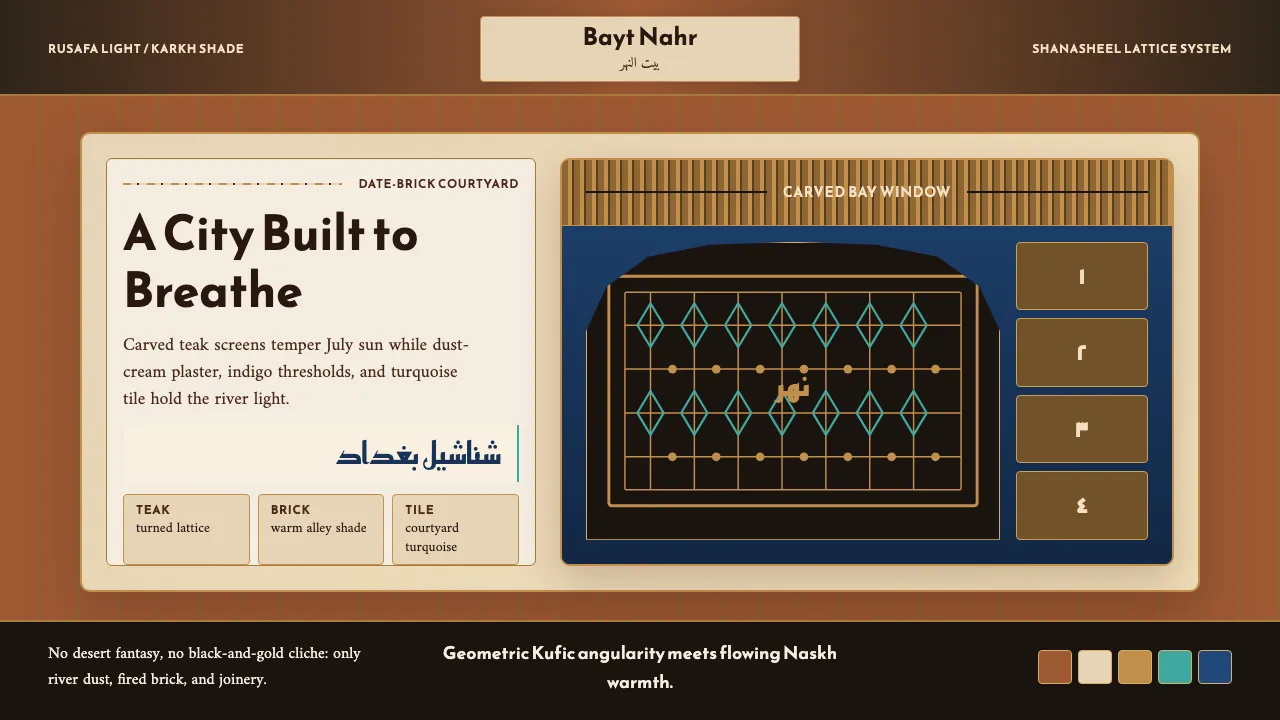
About Iraqi Baghdad Shanasheel House
The Baghdad shanasheel system draws from the carved-wood projecting bay windows that once lined the narrow lanes of Rusafa and Karkh — hand-turned teak latticework so dense it filtered the July sun while letting the Tigris breeze through. Date-brick warmth, courtyard turquoise tile, and threshold indigo define a palette born from river light and dust.
Typography pairs Reem Kufi's geometric Kufic angularity with Amiri's flowing Naskh, honoring two poles of Arabic letterform tradition. Every surface carries the materiality of carved wood and fired brick — not decorative nostalgia, but the structural logic of a city built to breathe.
- Origin
- Baghdad, Iraq — Rusafa, Karkh, Karradat Maryam quarters
- Era
- 18th–early 20th century (peak 1850–1920, Ottoman-Iraqi merchant houses)
- Key figures
- Rifat Chadirji · Mohamed Makiya · Hisham Munir · Talib Rashid
- Movements
- Ottoman-Iraqi domestic architecture · mashrabiya / shanasheel woodcraft · Tigris merchant-house typology · Chadirji documentation
Iraqi Baghdad Shanasheel House design spec
Colors
Typography
The other 11 sections — buttons, cards, spacing, motion, techniques and more — open once you unlock. Download the DESIGN.md or send it to your AI in one click. Unlock once, yours forever.
Sign up nowStyles similar to Iraqi Baghdad Shanasheel House
Also inspired by architecture & places, with a close feel.
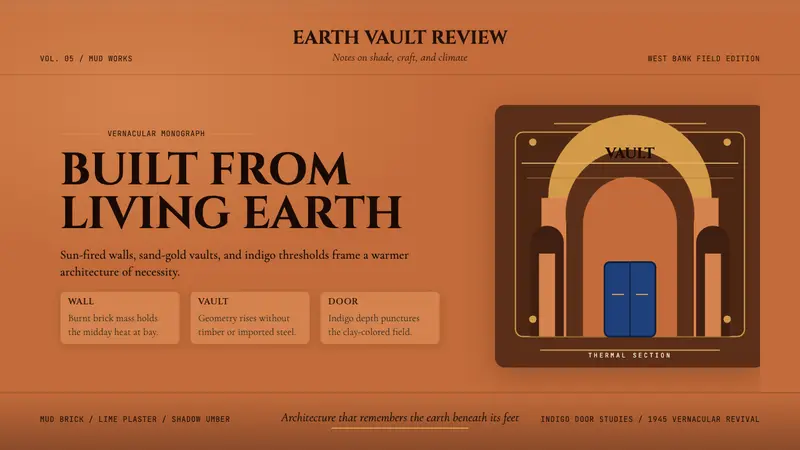 Egyptian Hassan Fathy Vernacular (1945)Earth remembers craft. Burnt brick, sand-gold vaults, and indigo doors carry the warmth.
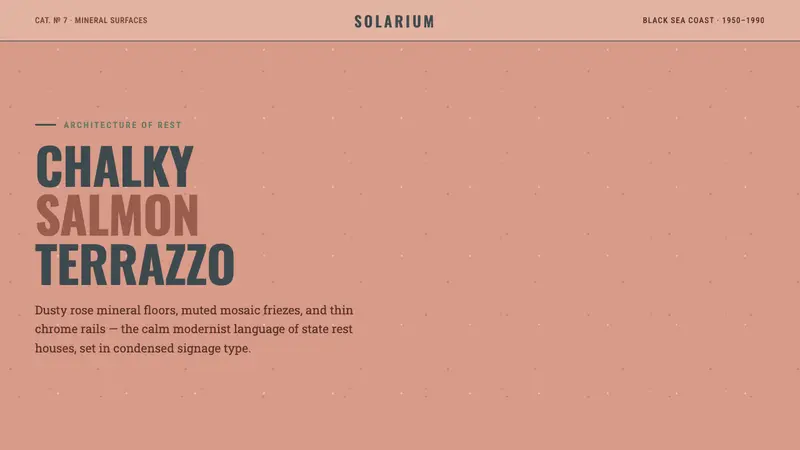 Soviet Sanatorium PinkState calm in stone. Salmon terrazzo, condensed signage, and chrome rails form the grid.
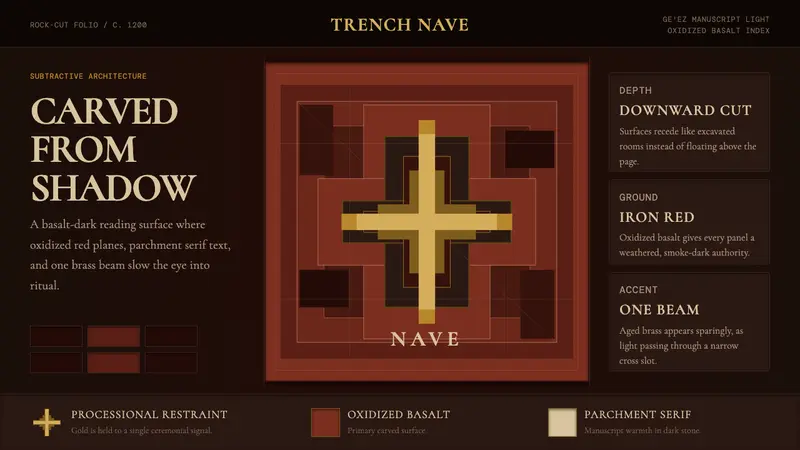 Ethiopian Lalibela Rock-Hewn Church (c.1200)Sacred weight in shadow. Oxidized basalt, parchment serif, and one aged-gold cross beam.
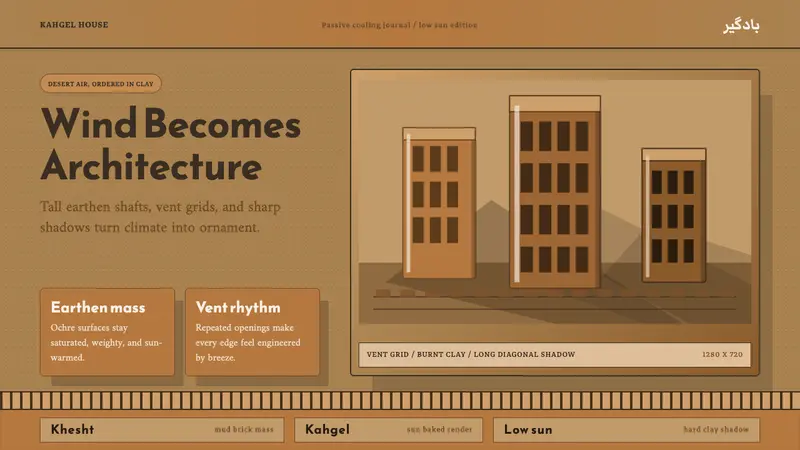 Persian WindcatcherClimate becomes geometry. Adobe ochre, Reem Kufi, vent grids, and hard shadows.