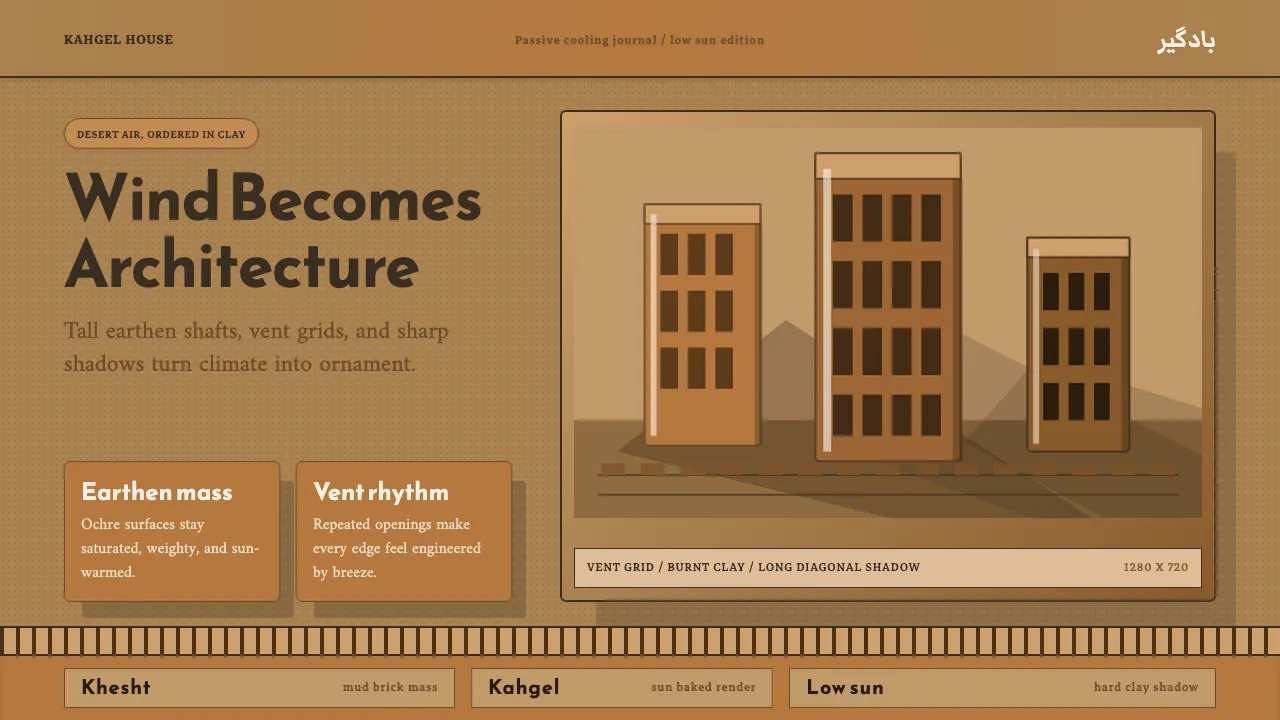
About Persian Windcatcher
Persian Windcatcher takes its language from the bâdgir — the towering passive-cooling chimneys of Yazd, the desert "City of Windcatchers." Sun-dried kahgel adobe, geometric vent grids, and tall vertical shafts catch the breeze and throw long diagonal shadows across earthen rooftops.
The ground is not pale sand but warm, saturated adobe clay that glows golden-brown at low sun. Everything reads as mud-brick mass: heavy towers, repeated vent openings, sharp cast shadow, and the patient orderly geometry of a building made entirely of earth.
- Origin
- Yazd and the Iranian central desert (Kashan, Kerman)
- Era
- pre-1900 (ancient–traditional Persian passive cooling)
- Key figures
- Yazd vernacular master-builders (memar) · Persian khesht adobe-construction tradition
- Movements
- Persian vernacular architecture · passive cooling design · desert mud-brick (kahgel)
Persian Windcatcher design spec
Colors
Typography
The other 11 sections — buttons, cards, spacing, motion, techniques and more — open once you unlock. Download the DESIGN.md or send it to your AI in one click. Unlock once, yours forever.
Sign up nowStyles similar to Persian Windcatcher
Also inspired by architecture & places, with a close feel.
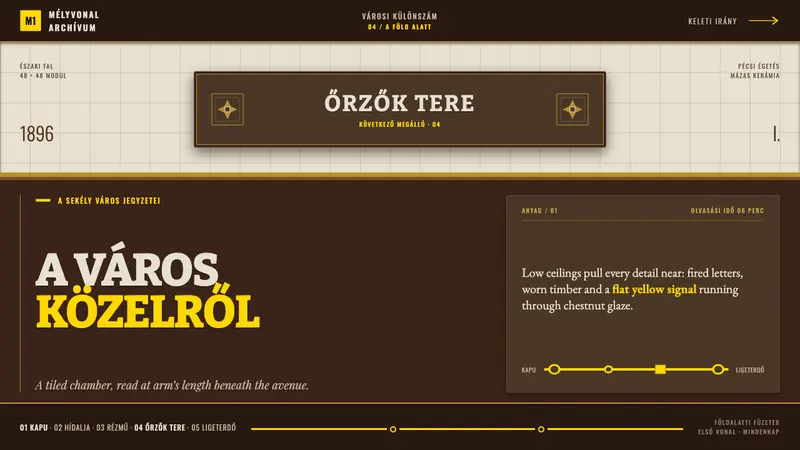 Budapest Millennium LineChestnut glaze turns transit into a room. Fired slab type and flat yellow run in low, wide bands.
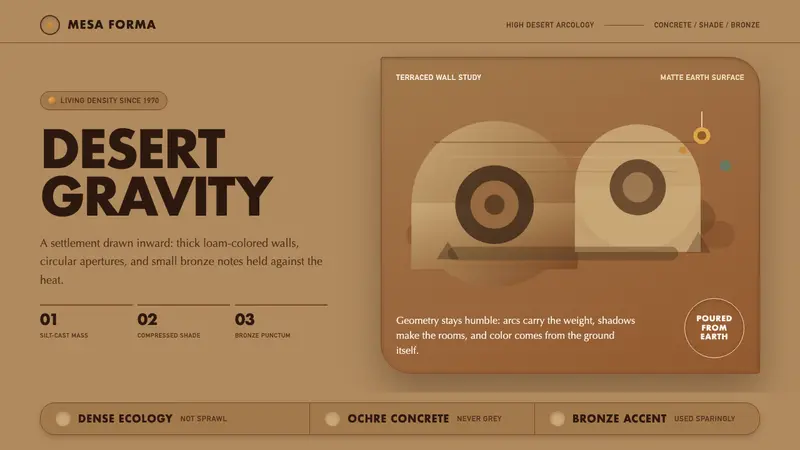 Arcosanti ArcologyArchitecture becomes desert. Ochre concrete, circular apertures, and bronze accents hold the shade.
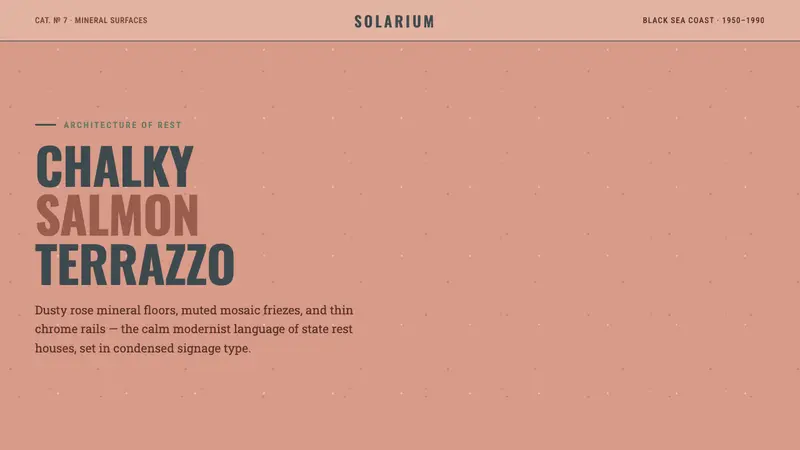 Soviet Sanatorium PinkState calm in stone. Salmon terrazzo, condensed signage, and chrome rails form the grid.
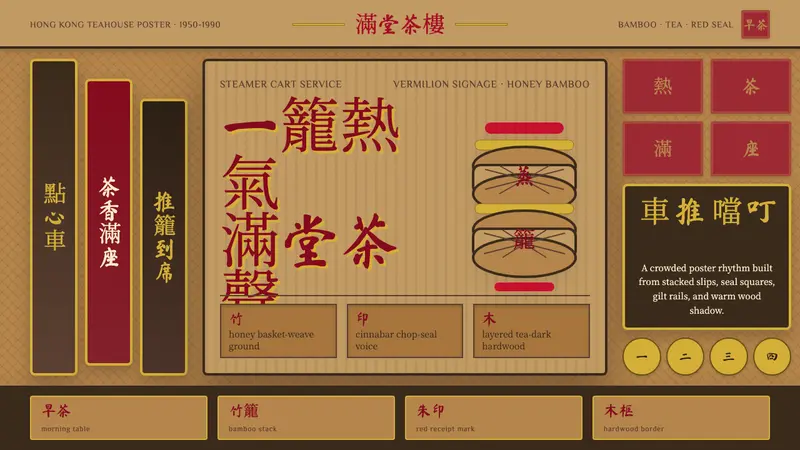 Dim Sum CartWarm clutter sings. Vermilion seals, bamboo weave, and brush type stack like a teahouse cart.