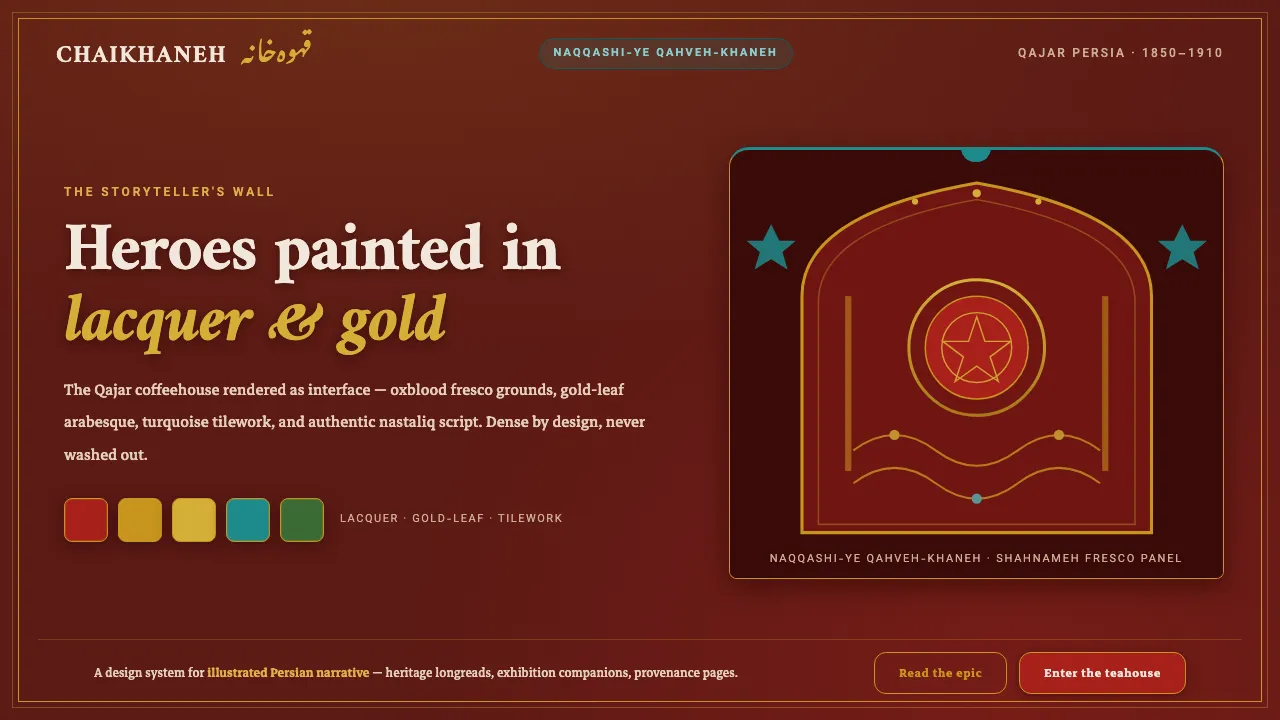
About Persian Teahouse Chaikhaneh
The Persian qahveh-khaneh — the coffeehouse and teahouse of the Qajar era — was a theater of painted epic. Its walls carried naqqashi-ye qahveh-khaneh: sprawling narrative canvases of Shahnameh heroes in lacquer-red armour, painted in a flamboyant, saturated palette over deep earthen-ochre grounds.
This system distills that storyteller's room into an interface: oxblood lacquer grounds, gold-leaf ornament, turquoise tilework, samovar brass, and authentic nastaliq script. Every surface is dense with figures and arabesque — never minimal, never washed out.
- Origin
- Iran (Persia) — Tehran, Isfahan, Shiraz coffeehouses
- Era
- pre-1900 (Qajar dynasty, 1789–1925); naqqashi-ye qahveh-khaneh peak ~1850–1910
- Key figures
- Hossein Qollar Aqasi · Mohammad Modabber · Abbas Boloukifar · Qollar Aqasi school painters
- Movements
- Naqqashi-ye qahveh-khaneh (coffeehouse painting) · Shahnameh narrative fresco tradition · Qajar lacquer and tilework
Persian Teahouse Chaikhaneh design spec
Colors
Typography
The other 11 sections — buttons, cards, spacing, motion, techniques and more — open once you unlock. Download the DESIGN.md or send it to your AI in one click. Unlock once, yours forever.
Sign up nowStyles similar to Persian Teahouse Chaikhaneh
Also inspired by crafts & folk art, with a close feel.
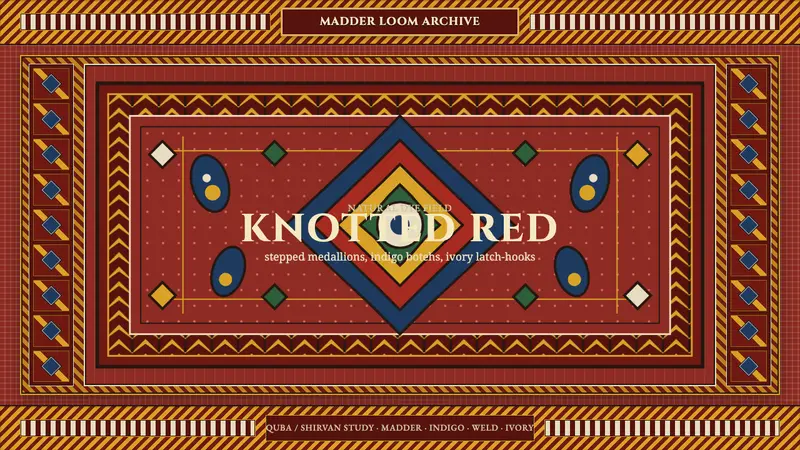 Azerbaijani Quba CarpetRed is the field. Indigo botehs and ivory latch-hooks orbit a stepped medallion.
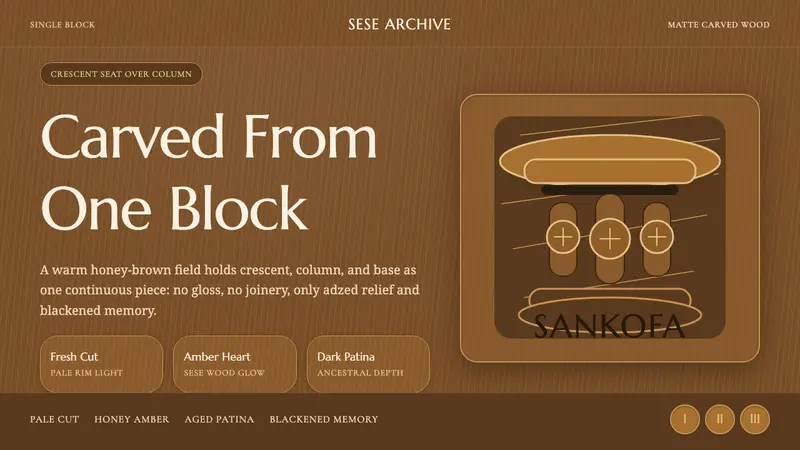 Akan Carved StoolMatte wood carries memory. Honey amber, Marcellus type, and crescent-column relief.
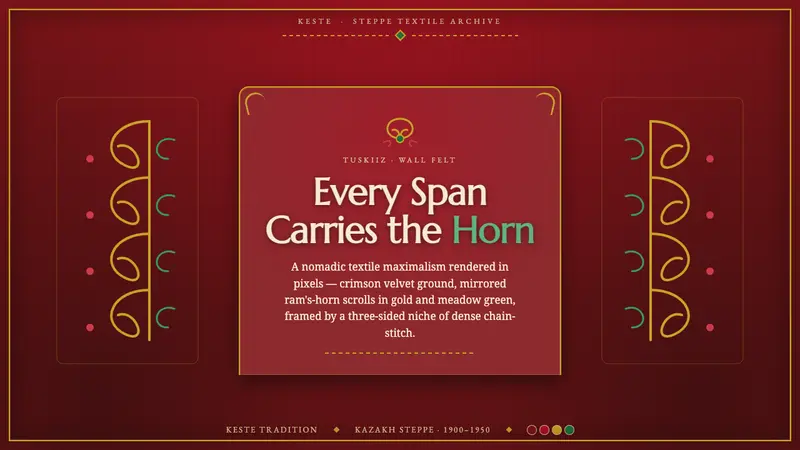 Kazakh Tuskiiz Wall HangingNothing flat, nothing empty. Crimson velvet, gold-green ram's-horn scrolls, a chain-stitched niche.
 Gamelan BronzeCeremony in low light. Bronze circles glow inside red lacquer and gold-leaf frames.