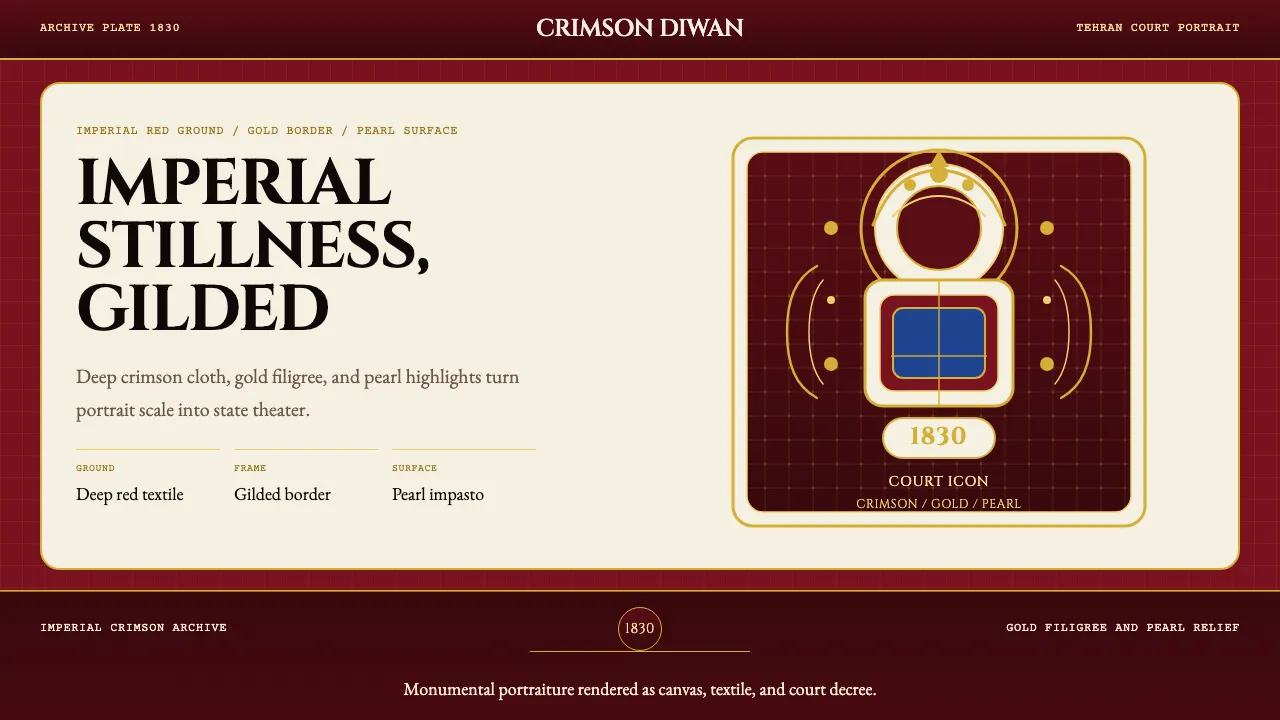
About Persian Qajar Portrait (1830)
Qajar court portraiture fused Persian miniature flatness with European oil-painting techniques to produce monumental life-size royal icons. Under Fath-Ali Shah, painters like Mihr Ali rendered the Shah in jewel-encrusted regalia against deep-red textile backdrops, creating an aesthetic of imperial divinity expressed through gold, pearl impasto, and calligraphic precision.
This design system channels that throne-room grandeur — imperial crimson grounds, gilded ornament borders, cream-canvas content panels, and serif typography that echoes Naskh calligraphy — into a digital vocabulary of regal warmth and decorative density.
- Origin
- Iran (Persia) — Tehran, Isfahan, Shiraz
- Era
- Qajar dynasty 1789–1925; peak court-portrait production 1797–1834
- Key figures
- Fath-Ali Shah Qajar · Mihr Ali · Mirza Baba · Abu'l Hasan Khan Ghaffari (Sani al-Mulk)
- Movements
- Qajar court arts · Persian portraiture's encounter with European oil painting · Post-Safavid Iranian visual culture
Persian Qajar Portrait (1830) design spec
Colors
Typography
The other 11 sections — buttons, cards, spacing, motion, techniques and more — open once you unlock. Download the DESIGN.md or send it to your AI in one click. Unlock once, yours forever.
Sign up nowStyles similar to Persian Qajar Portrait (1830)
Also inspired by art & artists, with a close feel.
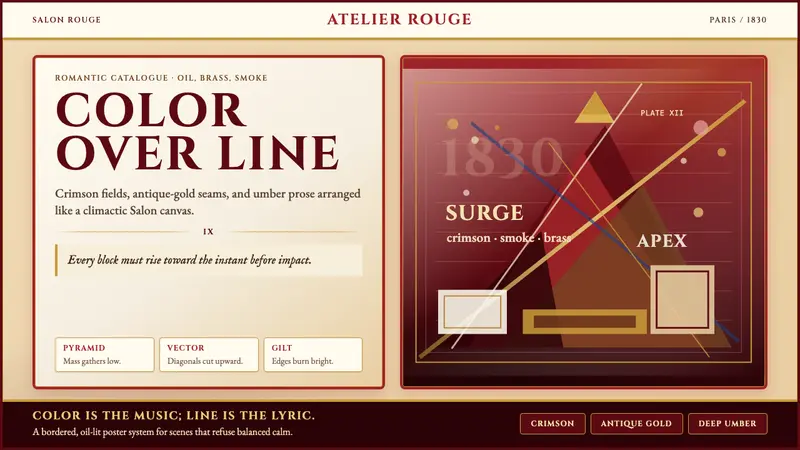 Delacroix French RomanticismOperatic color erupts. Crimson parchment, gilt borders, and diagonal pyramids force climax.
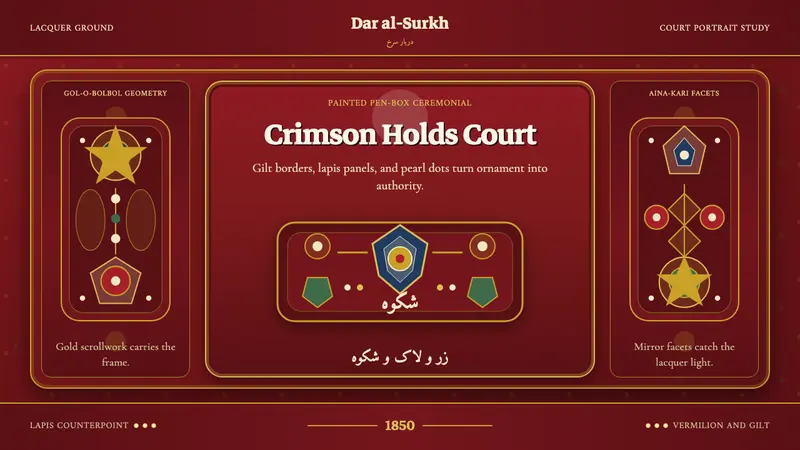 Qajar PersiaOpulence commands. Lacquer red, gilt borders, pearl dots, and lapis geometry.
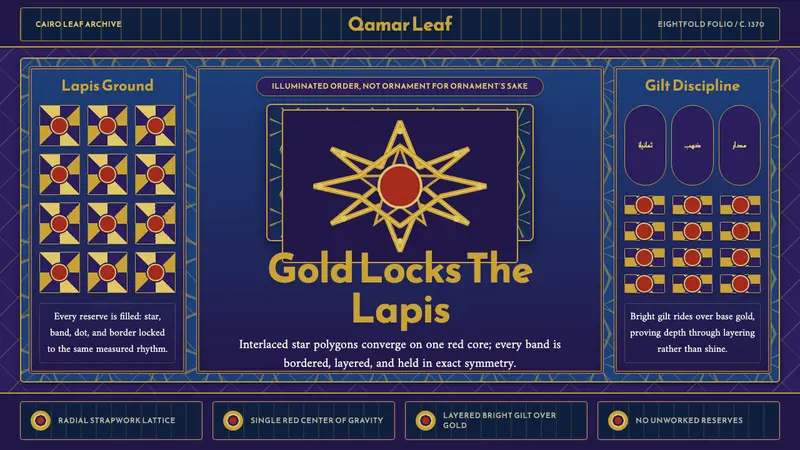 Mamluk Quran IlluminationGilded density rules. Lapis ground, eightfold gold strapwork, and one red core lock the page.
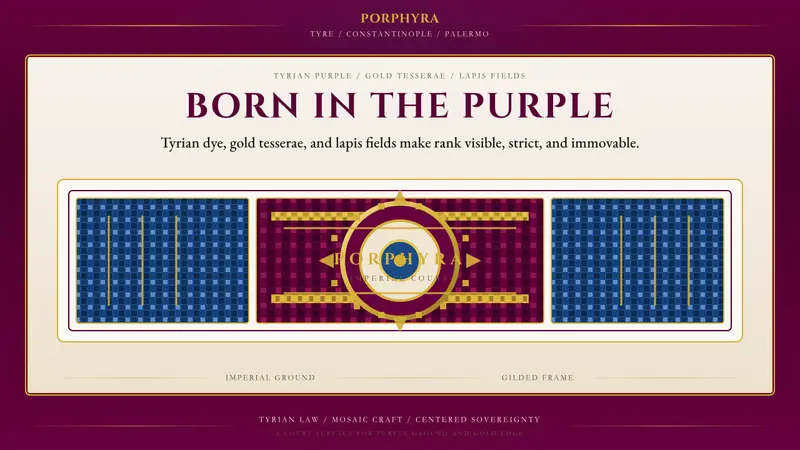 Byzantine Tyrian Purple (Imperial Court)Imperial rank made visible. Tyrian purple, gold tesserae, and centered symmetry.