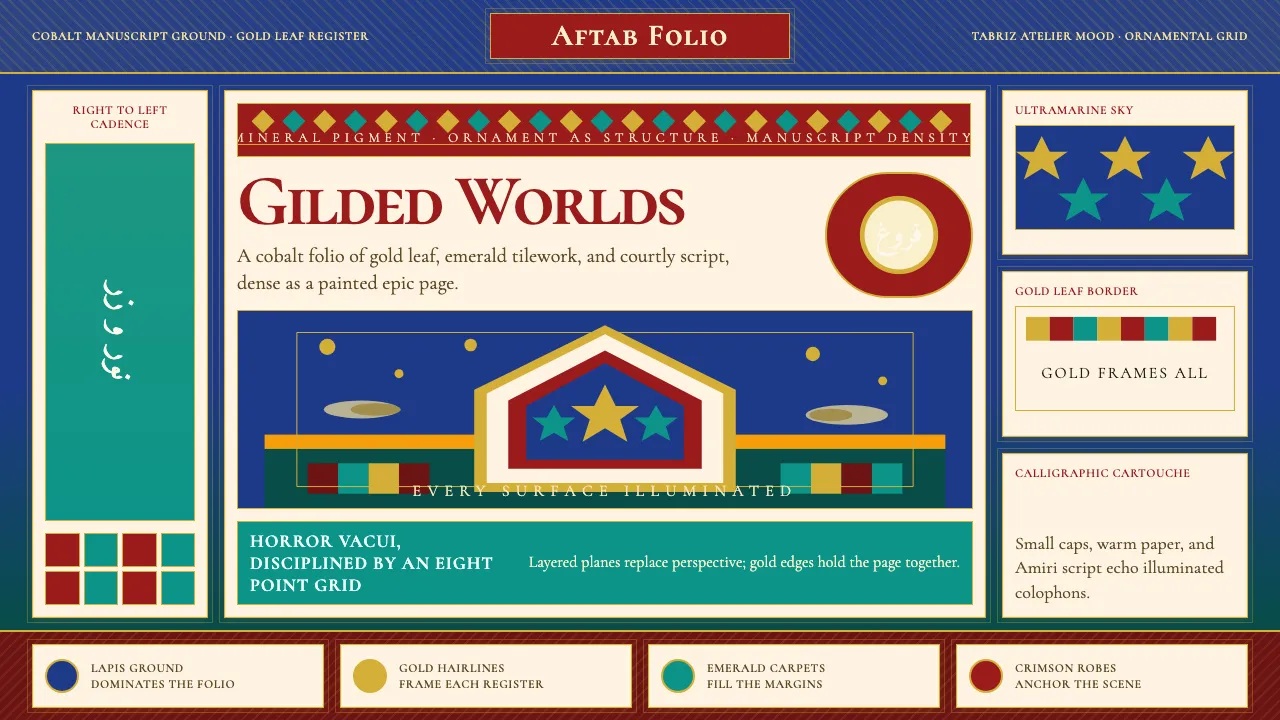
About Persian Miniature (Shahnameh era)
Persian miniature painting reached its apex in the Shahnameh manuscripts of the Timurid and Safavid courts, where master painters like Bihzad and Sultan Muhammad rendered entire worlds on folios no larger than a book page. Every square inch teems with ultramarine skies, gold-leaf clouds, emerald carpets, and crimson-robed figures drawn from Ferdowsi's epic.
This design system distills that maximalist manuscript tradition into digital form — cobalt grounds, real gold-leaf textures, ornamental tile borders, and calligraphic type that honors the right-to-left heritage of the originals.
Learn more about the Persian Miniature (Shahnameh era) style
- Origin
- Persia / Iran (Tabriz, Herat, Shiraz, Isfahan)
- Era
- 14th–16th century (peak: Safavid Shahnameh of Shah Tahmasp, 1525–1535)
- Key figures
- Bihzad · Sultan Muhammad · Aqa Mirak · Mir Sayyid Ali
- Movements
- Persian miniature painting · Timurid book arts · Safavid royal manuscripts · Nastaliq calligraphy
Persian Miniature (Shahnameh era) design spec
Colors
Typography
The other 11 sections — buttons, cards, spacing, motion, techniques and more — open once you unlock. Download the DESIGN.md or send it to your AI in one click. Unlock once, yours forever.
Sign up nowStyles similar to Persian Miniature (Shahnameh era)
Also inspired by art & artists, with a close feel.
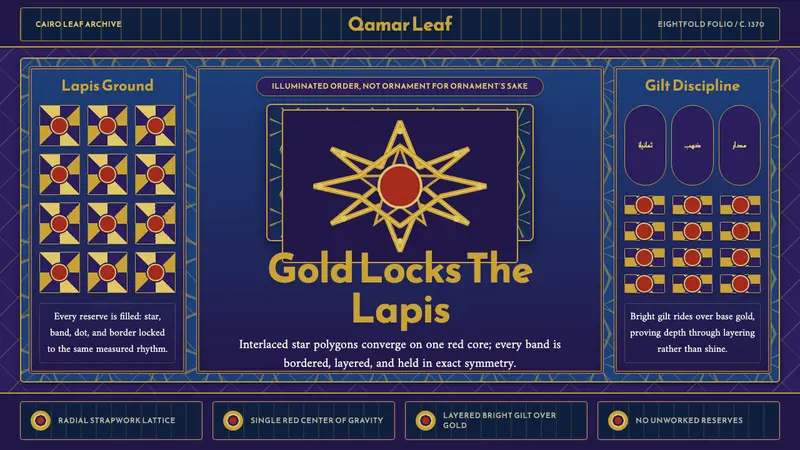 Mamluk Quran IlluminationGilded density rules. Lapis ground, eightfold gold strapwork, and one red core lock the page.
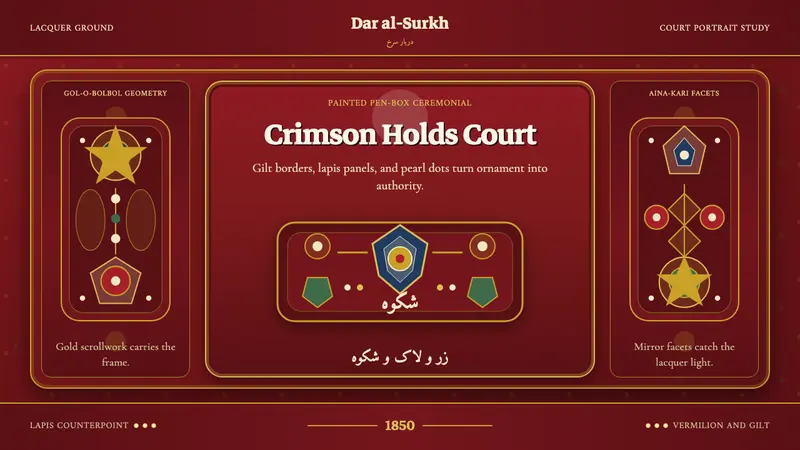 Qajar PersiaOpulence commands. Lacquer red, gilt borders, pearl dots, and lapis geometry.
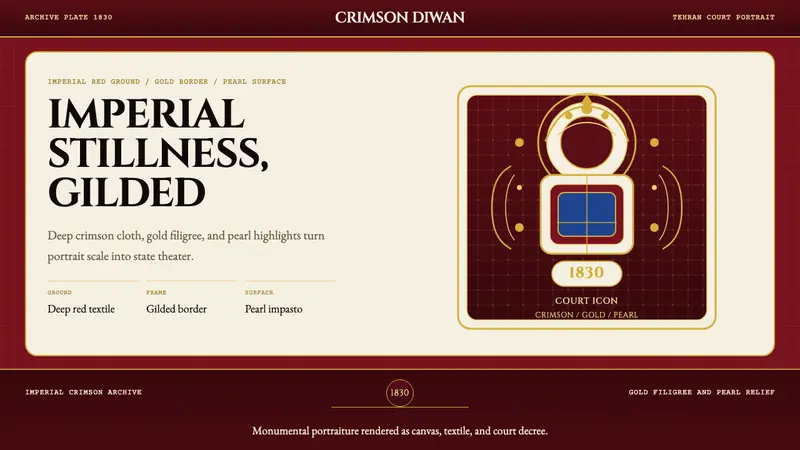 Persian Qajar Portrait (1830)Imperial stillness, gilded. Deep crimson, gold filigree, and pearl accents stage a royal icon.
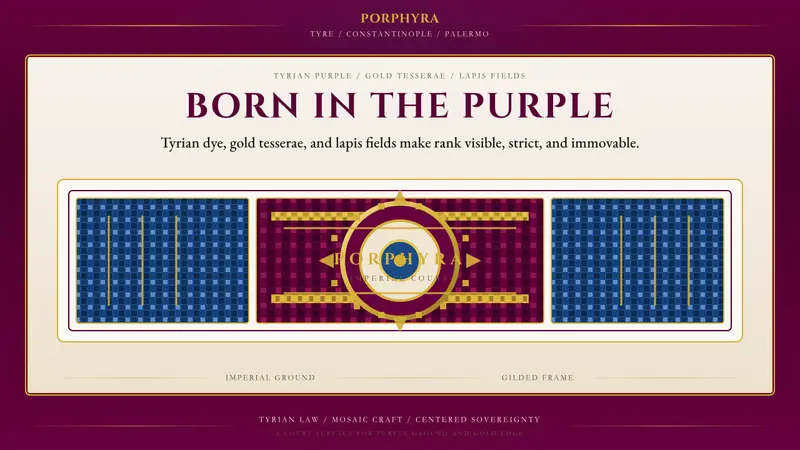 Byzantine Tyrian Purple (Imperial Court)Imperial rank made visible. Tyrian purple, gold tesserae, and centered symmetry.