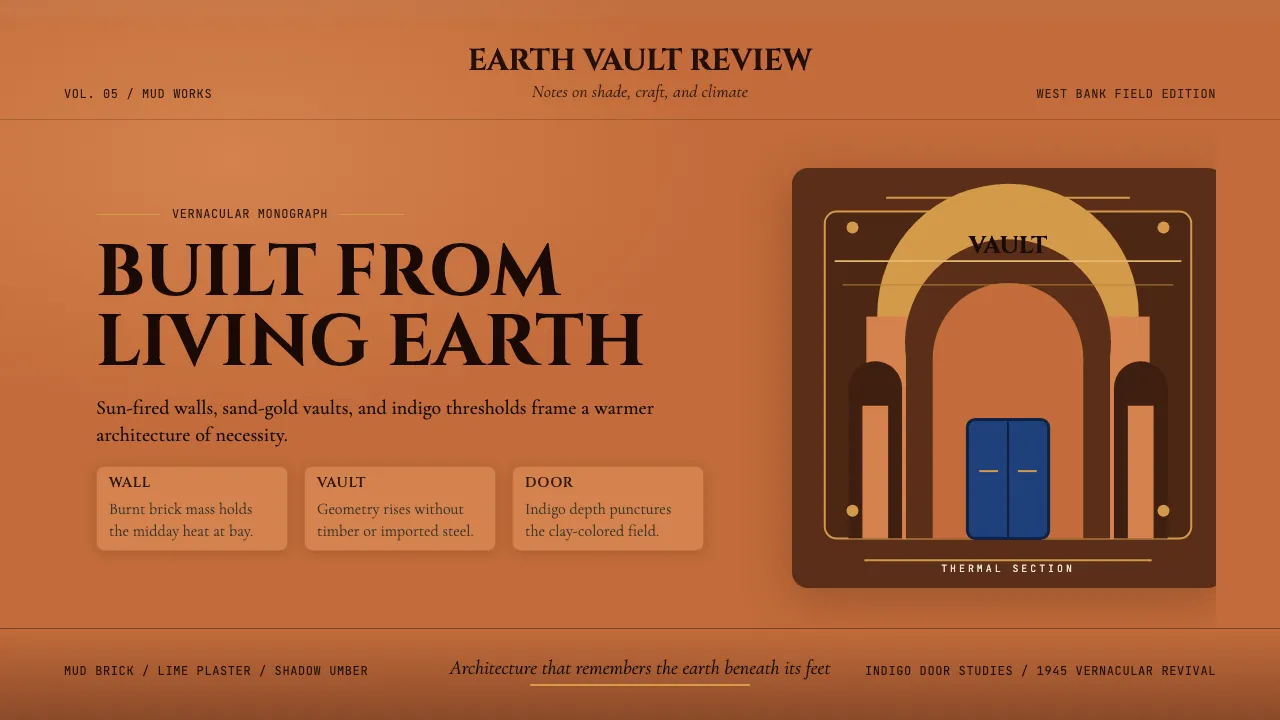
About Egyptian Hassan Fathy Vernacular (1945)
Hassan Fathy proved that the cheapest material — Nile mud — could produce architecture of extraordinary beauty and thermal performance. His New Gourna village (1945–1948) revived Nubian vaulting techniques dormant for a millennium, building domed roofs without timber in 45°C heat.
This design system channels that midday Gourna palette: saturated burnt-brick orange walls, sand-gold dome highlights, deep arched shadows, and indigo-painted doors — all rendered in serif typography that echoes the pages of *Architecture for the Poor*.
Learn more about the Egyptian Hassan Fathy Vernacular (1945) style
- Origin
- New Gourna, West Bank of Luxor, Egypt
- Era
- 1945–1989 (New Gourna 1945–1948; Architecture for the Poor 1969/1973)
- Key figures
- Hassan Fathy · Aladdin Mustafa · Abdel-Wahed El-Wakil · William Curtis
- Movements
- Egyptian architectural vernacular revival · Aga Khan Award lineage · Post-colonial appropriate-technology architecture
Egyptian Hassan Fathy Vernacular (1945) design spec
Colors
Typography
The other 11 sections — buttons, cards, spacing, motion, techniques and more — open once you unlock. Download the DESIGN.md or send it to your AI in one click. Unlock once, yours forever.
Sign up nowStyles similar to Egyptian Hassan Fathy Vernacular (1945)
Also inspired by architecture & places, with a close feel.
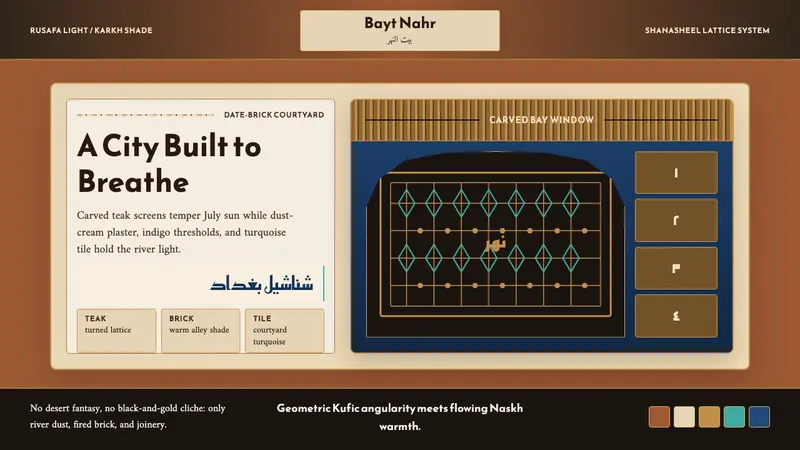 Iraqi Baghdad Shanasheel HouseBreathes through ornament. Date-brick ground, teak lattice, and turquoise tile frame the page.
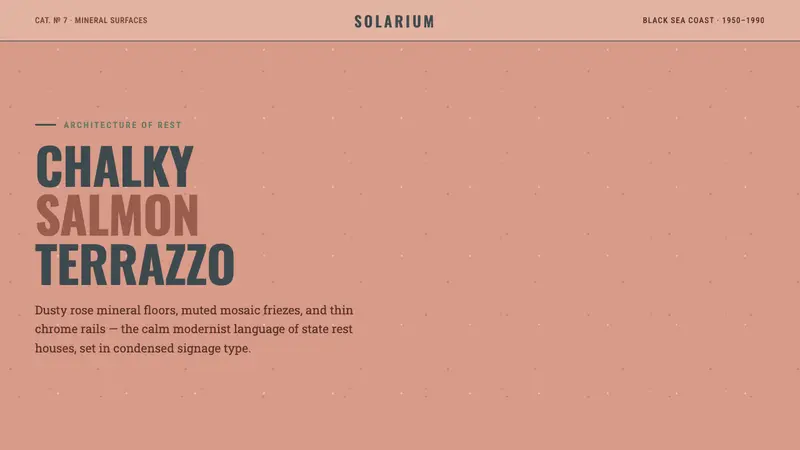 Soviet Sanatorium PinkState calm in stone. Salmon terrazzo, condensed signage, and chrome rails form the grid.
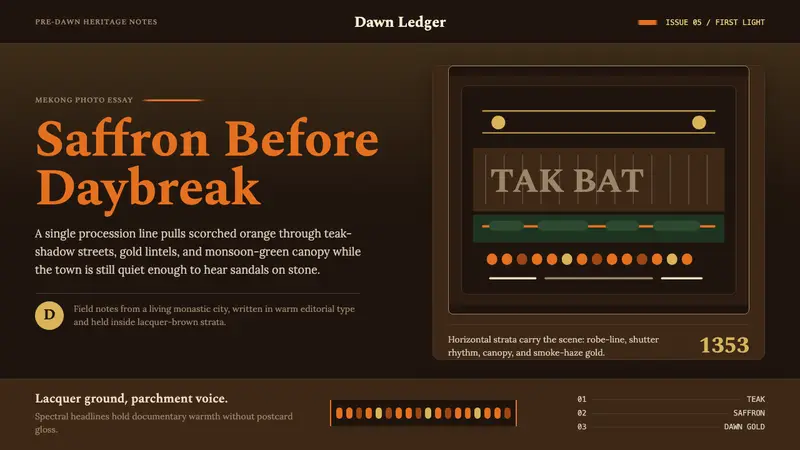 Luang Prabang Saffron AlmsDawn has weight. Saffron bands cut through teak brown and smoke-gold editorial type.
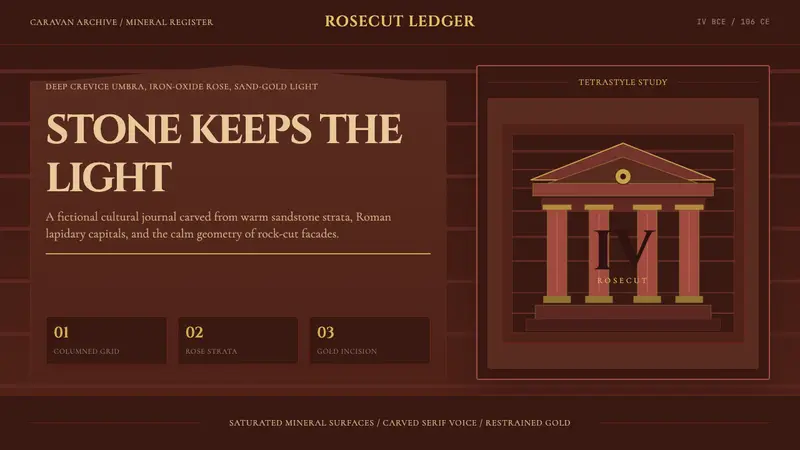 Jordanian Petra Rose NabataeanGeology feels monumental. Crevice umbra, rose strata, and Cinzel capitals carve the page.