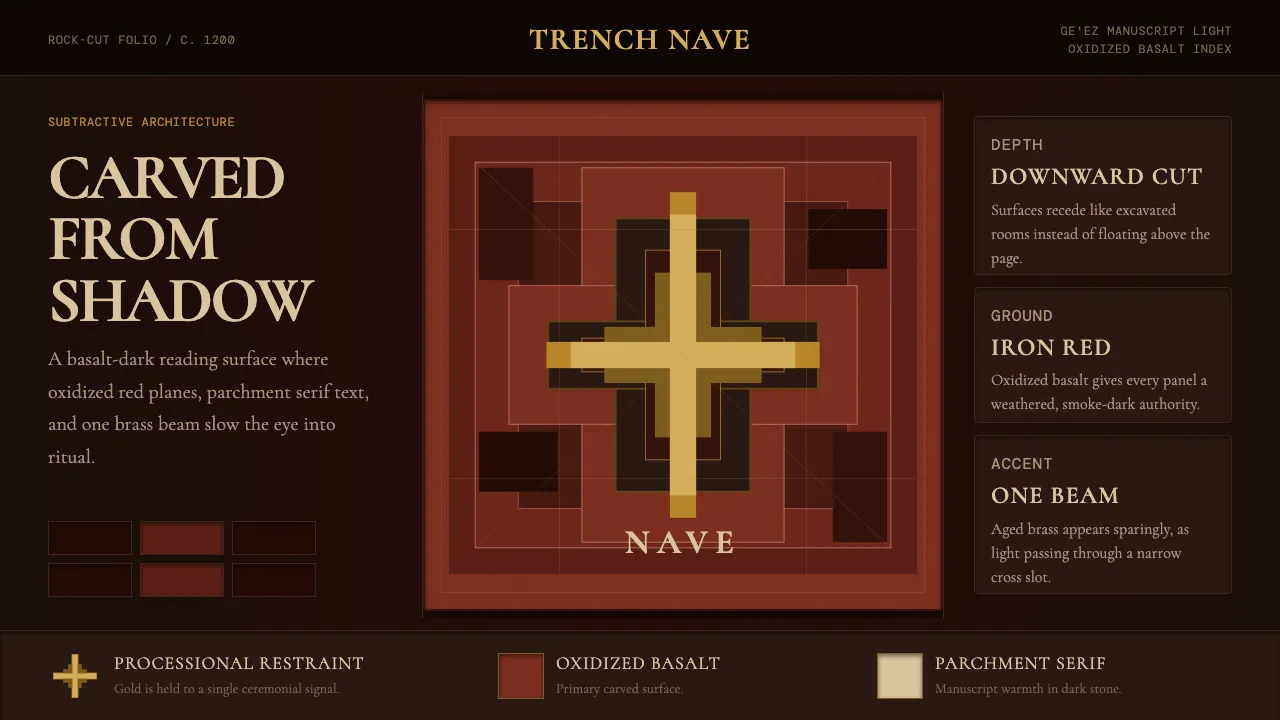
About Ethiopian Lalibela Rock-Hewn Church (c.1200)
The rock-hewn churches of Lalibela were not built but excavated — each monolith chiselled downward from living basalt during the reign of King Gebre Mesqel Lalibela in the early thirteenth century. This design system channels that subtractive architecture: deep trench shadows, iron-oxide red walls weathered by eight centuries of rain, and aged brass processional crosses catching slatted light through cross-shaped windows.
The palette is volcanic and liturgical — smoke umbra grounds, oxidized basalt panels, parchment bone text, and gold accents used with the restraint of a single ray entering a carved nave. Typography echoes Ge'ez manuscript tradition through generous serif letterforms and small-cap headings that recall chiselled lintels.
Learn more about the Ethiopian Lalibela Rock-Hewn Church (c.1200) style
- Origin
- Lalibela (formerly Roha), Lasta highlands, Amhara region, Ethiopia
- Era
- late 12th – early 13th century (King Lalibela, r. 1181–1221, Zagwe dynasty)
- Key figures
- King Gebre Mesqel Lalibela · Queen Maskal Kibra · Francisco Álvares · Saint Yared
- Movements
- Zagwe-era Christian architecture · Ethiopian Orthodox Tewahedo tradition · Ge'ez illuminated manuscripts
Ethiopian Lalibela Rock-Hewn Church (c.1200) design spec
Colors
Typography
The other 11 sections — buttons, cards, spacing, motion, techniques and more — open once you unlock. Download the DESIGN.md or send it to your AI in one click. Unlock once, yours forever.
Sign up nowStyles similar to Ethiopian Lalibela Rock-Hewn Church (c.1200)
Also inspired by architecture & places, with a close feel.
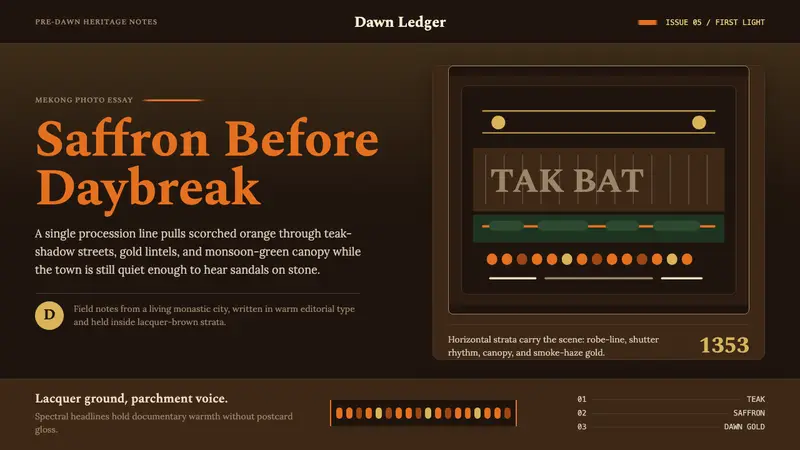 Luang Prabang Saffron AlmsDawn has weight. Saffron bands cut through teak brown and smoke-gold editorial type.
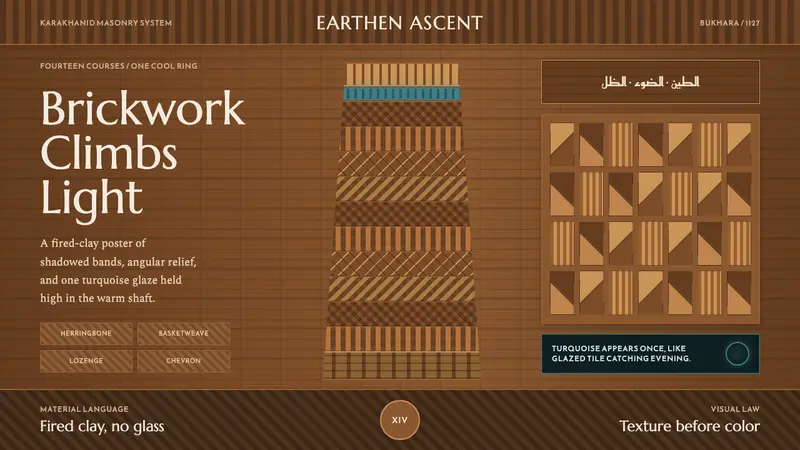 Bukhara Kalon Minaret BrickworkMonumental warmth. Ochre brick bands climb toward one turquoise ring.
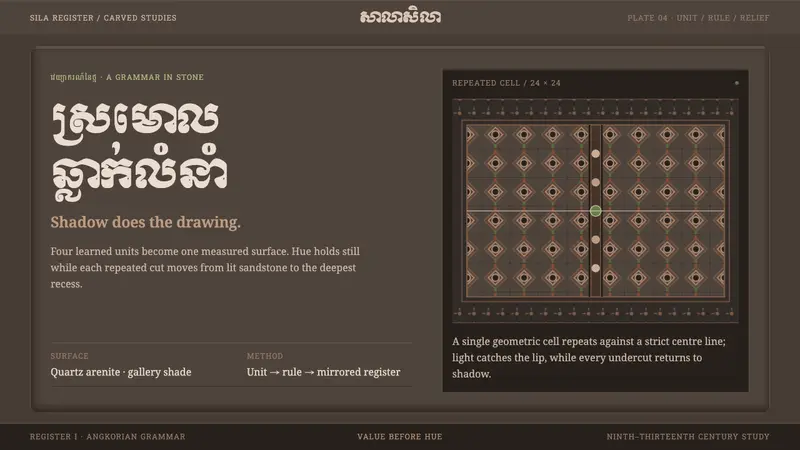 Khmer Kbach MotifShadow carves the grammar. Repeated stone cells turn a narrow sandstone palette into relief.
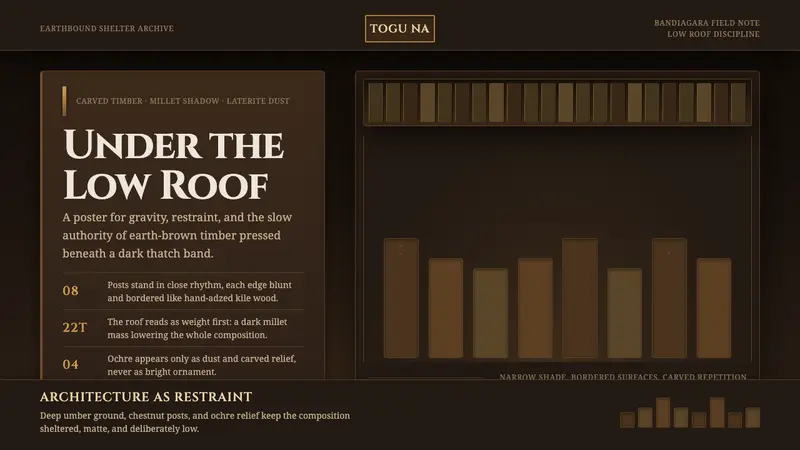 Dogon Toguna ShelterGravity made visible. Deep umber ground, low roof band, chestnut posts in shadow.