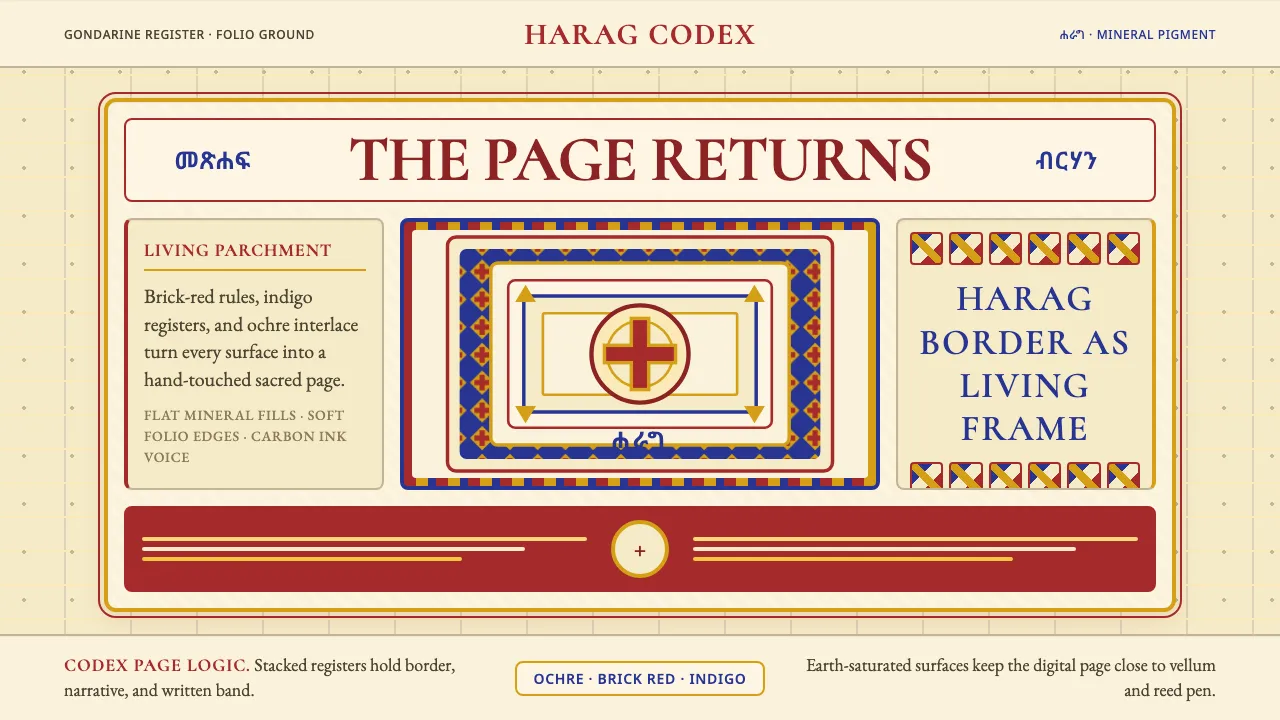
About Ethiopian Orthodox Manuscript
The Gondarine school of Ethiopian manuscript illumination produced some of East Africa's most extraordinary sacred art — parchment codices alive with brick-red halos, indigo-robed archangels, and tessellating harag vine borders. Every figure gazes outward with enormous almond eyes, transforming the page into a living icon.
This design system translates those mineral pigments, geometric interlace patterns, and warm parchment grounds into a digital vocabulary that feels hand-touched and earth-saturated rather than machine-made.
- Origin
- Ethiopia — Gondar, Lake Tana monasteries, Lalibela, Aksum
- Era
- 13th–19th century (peak: Gondarine school 1632–1769)
- Key figures
- Empress Mentewab · Emperor Iyasu I · Anonymous monk-scribes of Gondar
- Movements
- Ethiopian Orthodox iconography · Coptic illuminated manuscript lineage · Aksumite Christian tradition
Ethiopian Orthodox Manuscript design spec
Colors
Typography
The other 11 sections — buttons, cards, spacing, motion, techniques and more — open once you unlock. Download the DESIGN.md or send it to your AI in one click. Unlock once, yours forever.
Sign up nowStyles similar to Ethiopian Orthodox Manuscript
Also inspired by print & type, with a close feel.
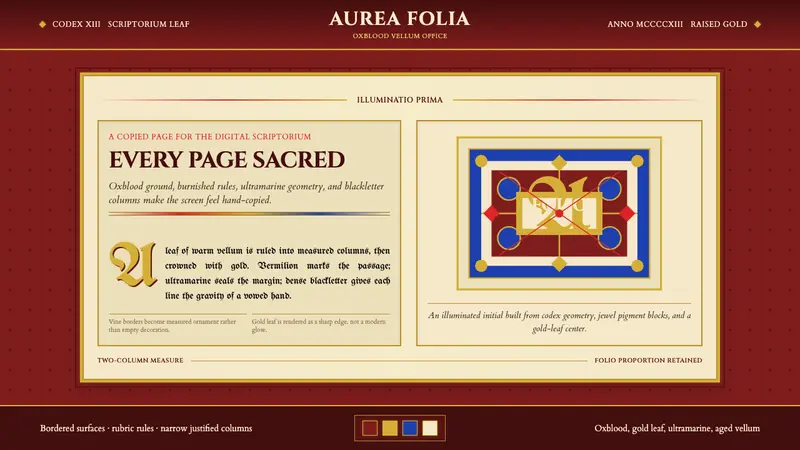 Medieval Illuminated ManuscriptTreats every page as sacred. Oxblood vellum, Cinzel capitals, gold-rule borders.
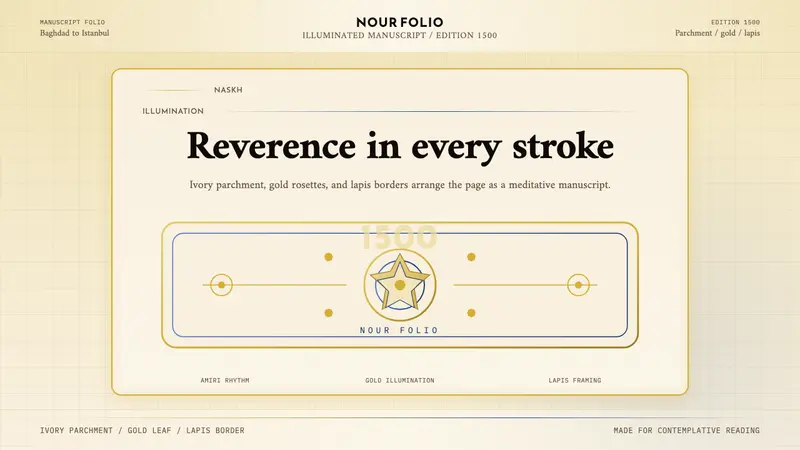 Naskh Quranic (1500)Reverence in every stroke. Ivory parchment, gold rosettes, and lapis framing.
 Peter Pan Neverland (1904)Enchantment glints, never shouts. Midnight navy holds gilt sparks and Edwardian serif type.
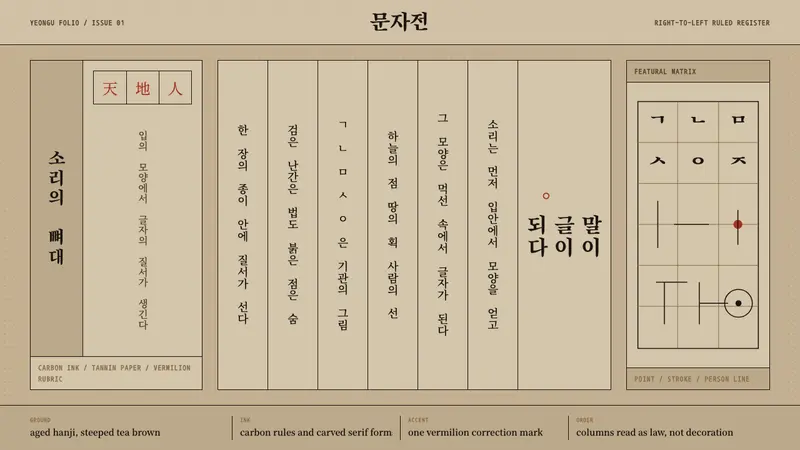 Hangul 訓民正音Ink obeys the grid. Carbon rules, vertical Myeongjo columns, and rare vermilion marks.