About Hopi Katsina Tihu
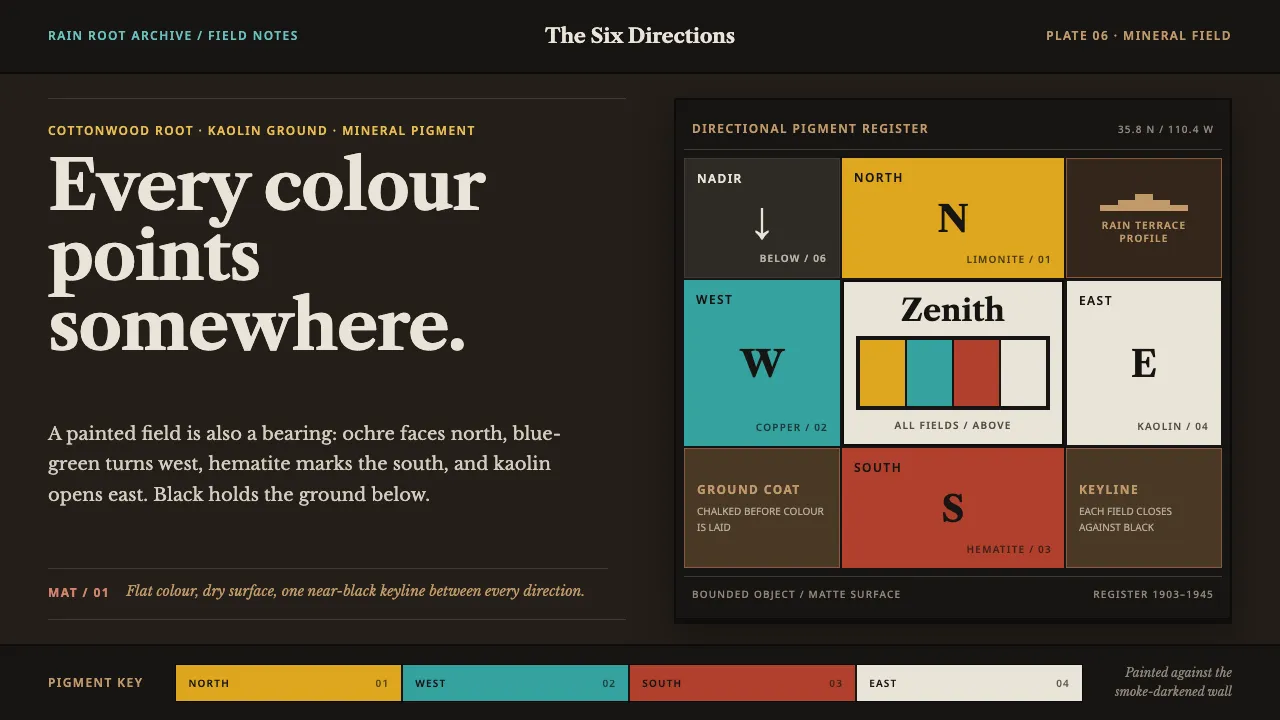
A tihu is cut from cottonwood root — a tree that hunts water, chosen by people whose year turns on rain — then chalked with kaolin and painted in ground mineral pigment. Every mask is a map: yellow north, blue-green west, red south, white east, black the nadir.
This system takes that literally. The page is the smoke-darkened wall the dolls hang against. Colour arrives in flat, hard-edged fields split by a black keyline, never blended, never glossed. Type is the text face of the Fewkes plates that documented the subject in 1903.
- Origin
- Hopi mesas, north-eastern Arizona — Oraibi and Walpi
- Era
- pre-1900 mineral-pigment tradition; Early Action carving era 1930–1945
- Key figures
- Wilson Tawaquaptewa · Jesse Walter Fewkes · Barry Goldwater
- Movements
- Hopi katsina carving tradition · Southwest Pueblo material culture · Early Action carving era
Hopi Katsina Tihu design spec
Colors
Typography
The other 11 sections — buttons, cards, spacing, motion, techniques and more — open once you unlock. Download the DESIGN.md or send it to your AI in one click. Unlock once, yours forever.
Sign up nowStyles similar to Hopi Katsina Tihu
Also inspired by crafts & folk art, with a close feel.
 Nuristani Wooden Effigy (Pre-Islamic Kafiristan)Grave-marker serious. Silver cedar, quartz dots, and columnar stack hold the dark field.
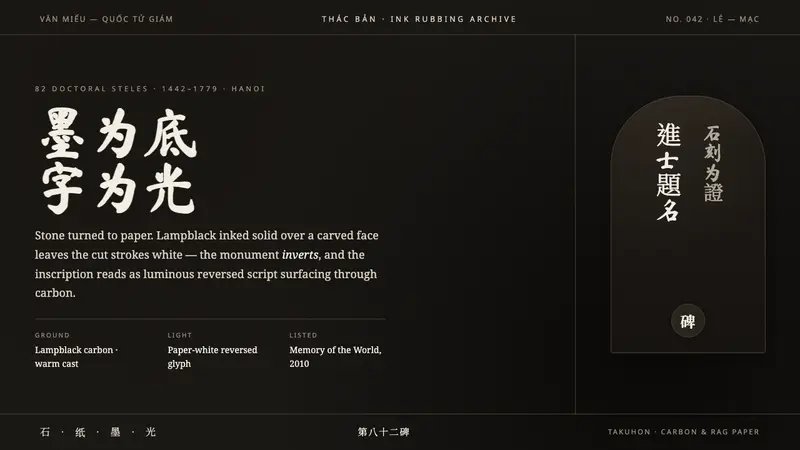 Vietnamese Stele RubbingStone turned to paper. Lampblack ground, ghost-white carved Han glyphs surfacing as reversed light.
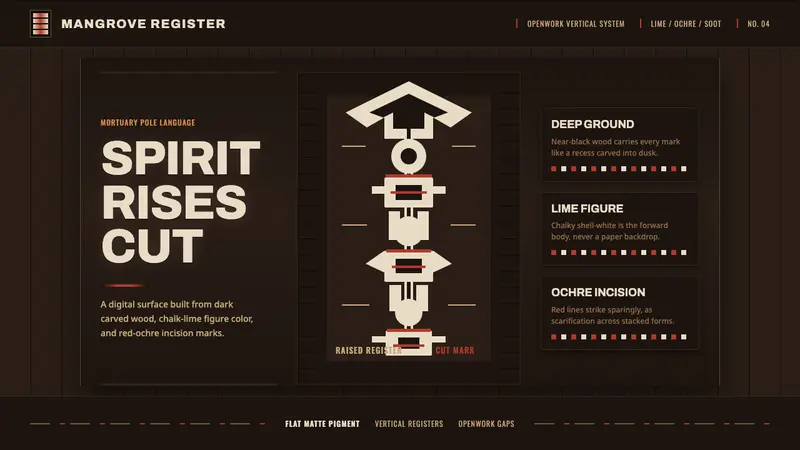 Asmat Bisj Ancestor PoleCeremonial vertical force. Lime-white figures rise from dark wood with red-ochre cuts.
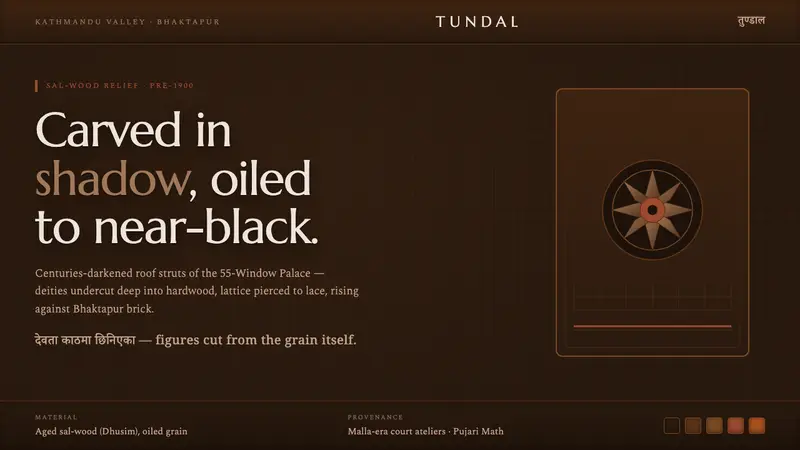 Newar Tundal Strut CarvingCenturies-darkened sal-wood. Carved deities and pierced lattice in mid-brown on near-black grain.