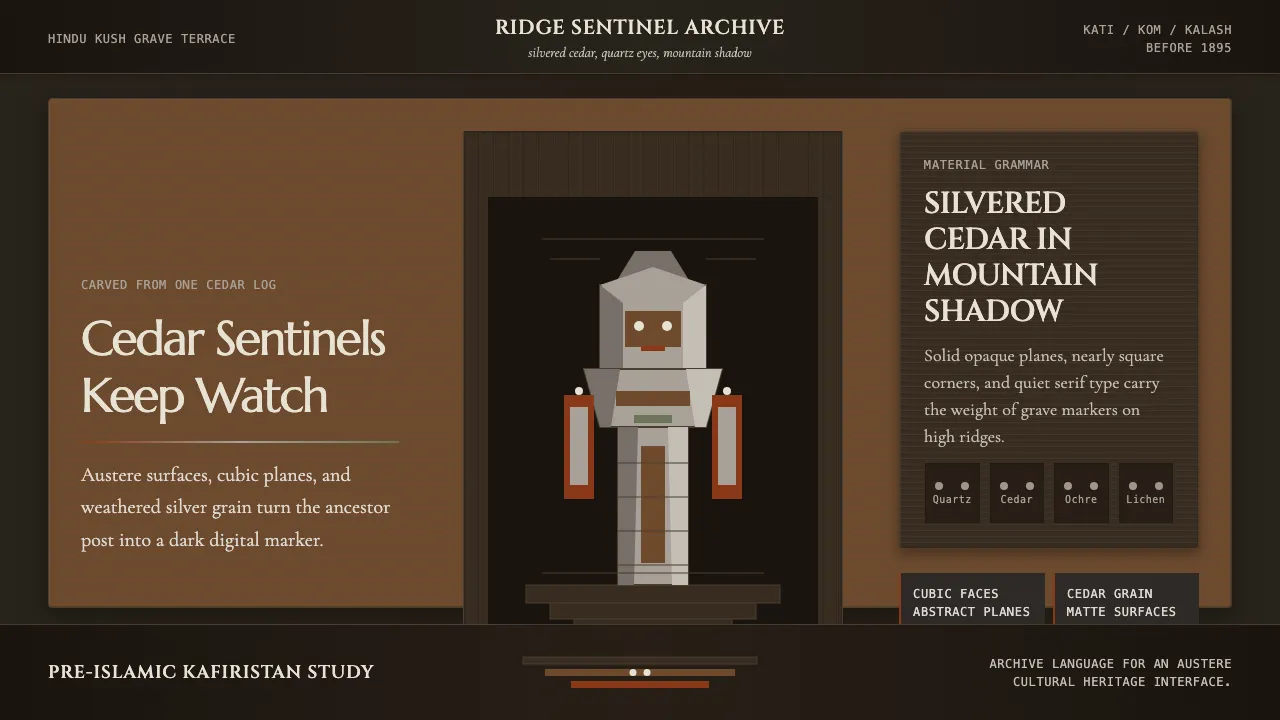
About Nuristani Wooden Effigy (Pre-Islamic Kafiristan)
Nuristani wooden effigies are the last polytheistic sculpture tradition of the Hindu Kush — ancestor figures carved from single cedar logs by Kati, Kom, and Kalash peoples, mounted at terraced gravesites across ridges that were Kafiristan until 1895. This design system translates their silvered cedar grain, cubic abstracted faces, quartz-inlaid eyes, and deep mountain-shadow palette into a digital language that is austere, monolithic, and grave-marker serious.
Learn more about the Nuristani Wooden Effigy (Pre-Islamic Kafiristan) style
- Origin
- Nuristan province, Afghanistan (formerly Kafiristan); Chitral / Kalash valleys, Pakistan
- Era
- 1500 BCE–1895 CE (last carved before forced Islamization by Amir Abdur Rahman Khan)
- Key figures
- George Scott Robertson · Max Klimburg · Karl Jettmar · Wolfgang Lentz
- Movements
- Hindu Kush polytheism · Kafiristan ancestor cult · Kalash surviving variant
Nuristani Wooden Effigy (Pre-Islamic Kafiristan) design spec
Colors
Typography
The other 11 sections — buttons, cards, spacing, motion, techniques and more — open once you unlock. Download the DESIGN.md or send it to your AI in one click. Unlock once, yours forever.
Sign up nowStyles similar to Nuristani Wooden Effigy (Pre-Islamic Kafiristan)
Also inspired by crafts & folk art, with a close feel.
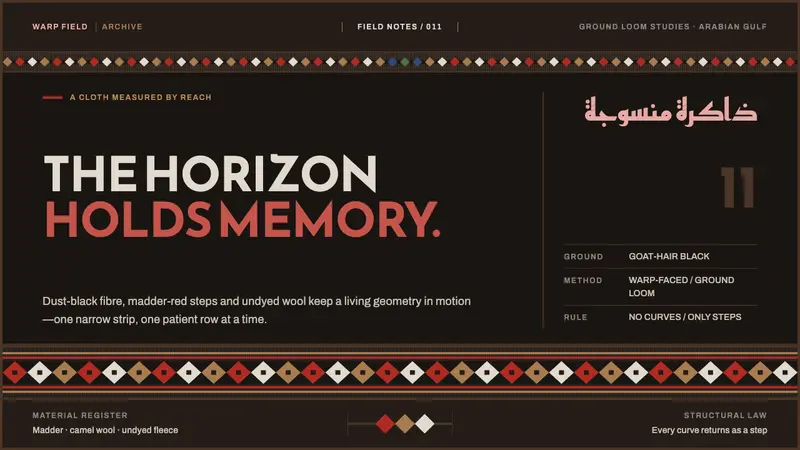 Emirati Sadu WeavingMemory runs in bands. Madder steps cross dusty goat-hair black with no curve in sight.
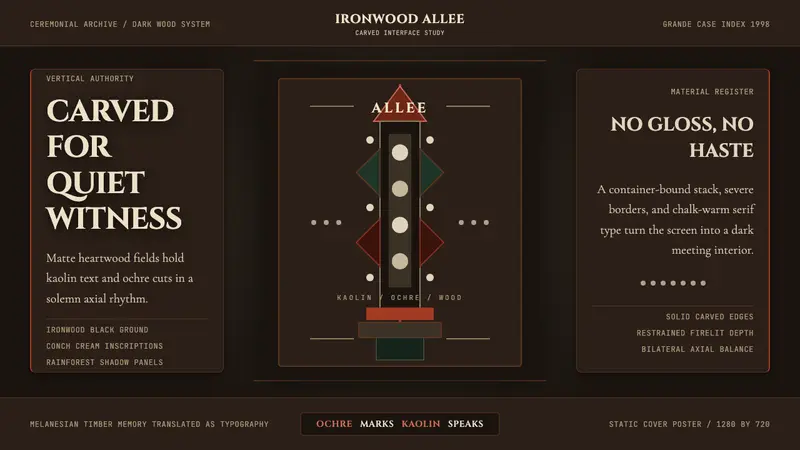 New Caledonia Kanak TotemSolemn carved darkness. Ochre axis, kaolin serif type, and conch dots hold the page upright.
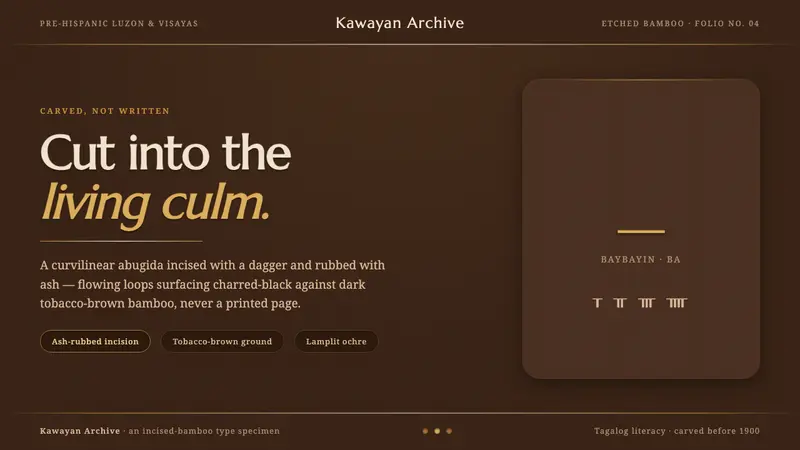 Baybayin ScriptCarved, not written. Curvilinear baybayin ash-rubbed into tobacco-brown bamboo, charred-black loops.
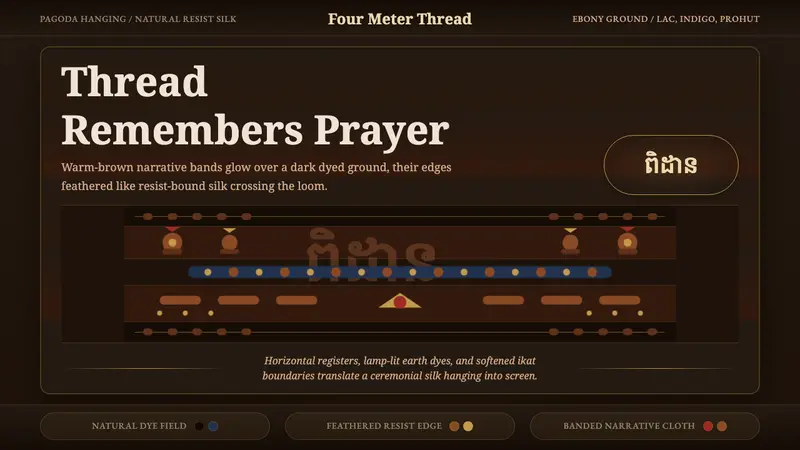 Cambodian Pidan IkatSacred cloth glows. Ebony-indigo bands carry warm-brown ikat figures with feathered edges.