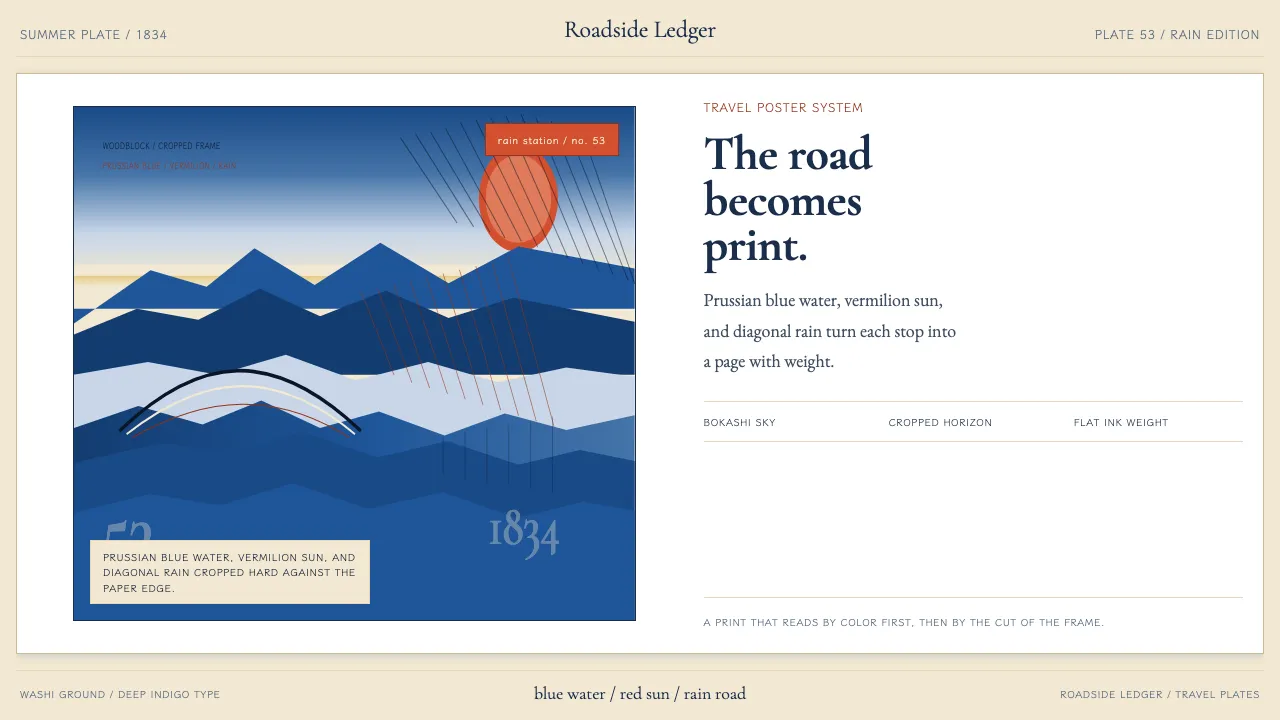
About Hiroshige — Tokaido Road
Utagawa Hiroshige's *Fifty-Three Stations of the Tōkaidō* (1833–34) is the late-Edo travel-poster series that became the visual template for every modern landscape print. Fifty-five woodblock plates document the post-road from Edo to Kyoto in saturated Prussian blue, vermilion sun, and washi cream — each station cropped boldly by the frame, with falling rain rendered as parallel diagonal strokes.
This system rebuilds that grammar for the screen: flat ukiyo-e color blocks, bokashi-gradient sky bands wiped by hand, red-orange title cartouches anchored in the upper corner, and Western one-point perspective fused with Japanese flat-color tradition. No photographic smoothness, no pastel timidity — just the printed weight of inked paper.
- Origin
- Japan — Tōkaidō road from Edo (Tokyo) to Kyoto
- Era
- Late Edo period, c. 1833–1858; Hōeidō Tōkaidō series 1833–1834
- Key figures
- Utagawa Hiroshige · Hōeidō Takenouchi Magohachi · Katsushika Hokusai · Keisai Eisen
- Movements
- Ukiyo-e woodblock printing · Meisho-e famous-place pictures · Japonisme
Hiroshige — Tokaido Road design spec
Colors
Typography
The other 11 sections — buttons, cards, spacing, motion, techniques and more — open once you unlock. Download the DESIGN.md or send it to your AI in one click. Unlock once, yours forever.
Sign up nowStyles similar to Hiroshige — Tokaido Road
Also inspired by art & artists, with a close feel.
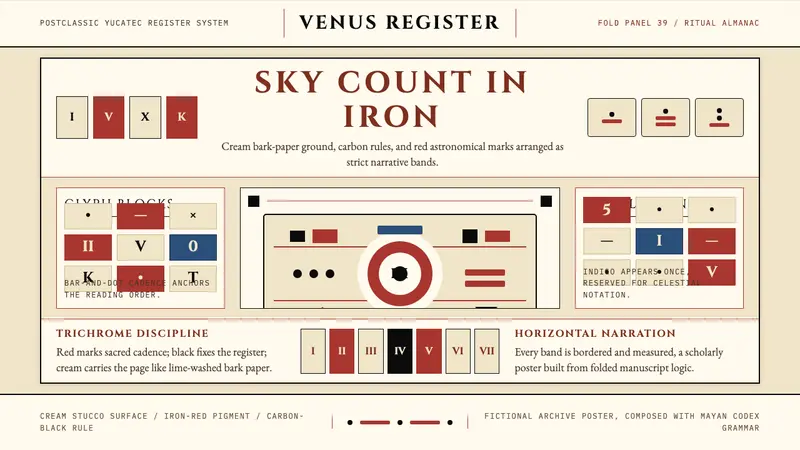 Mayan Dresden CodexSacred astronomy, measured. Cream registers, iron-red glyphs, carbon rules.
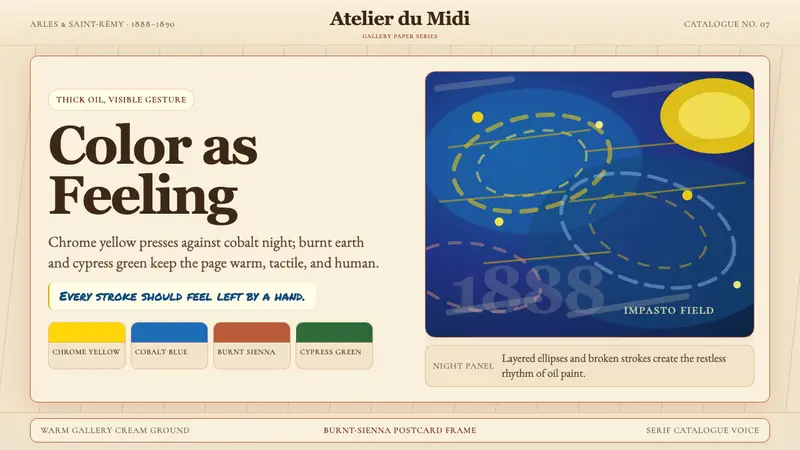 Van Gogh Post-ImpressionistFeeling made visible. Chrome yellow meets cobalt swirls on warm gallery cream.
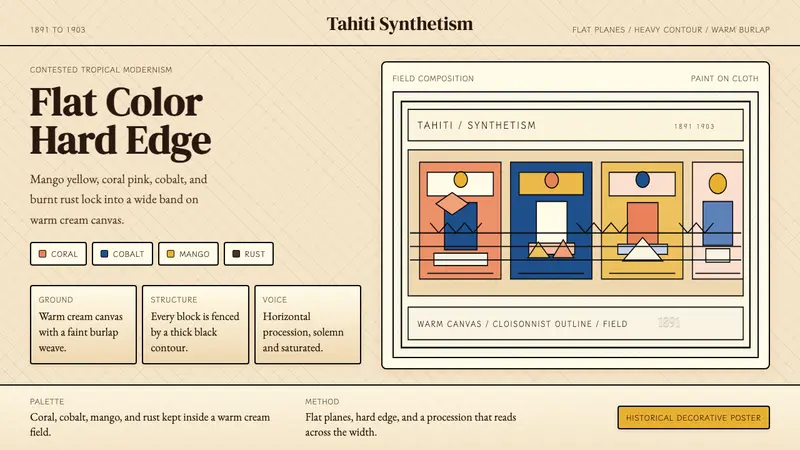 Gauguin — Tahiti SynthetismFlat color, hard edge. Cream canvas, coral, cobalt, and rust lock into a frieze.
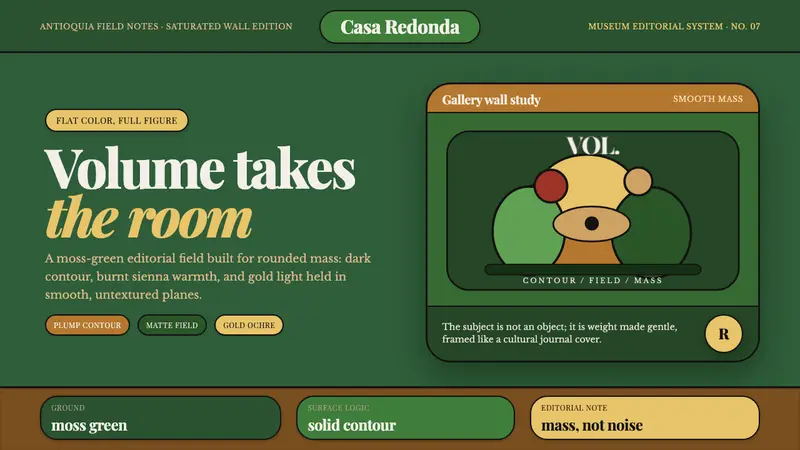 Botero Boterismo VolumeVolume becomes gentle. Moss green fields, dark contours, and gold ochre make mass feel buoyant.