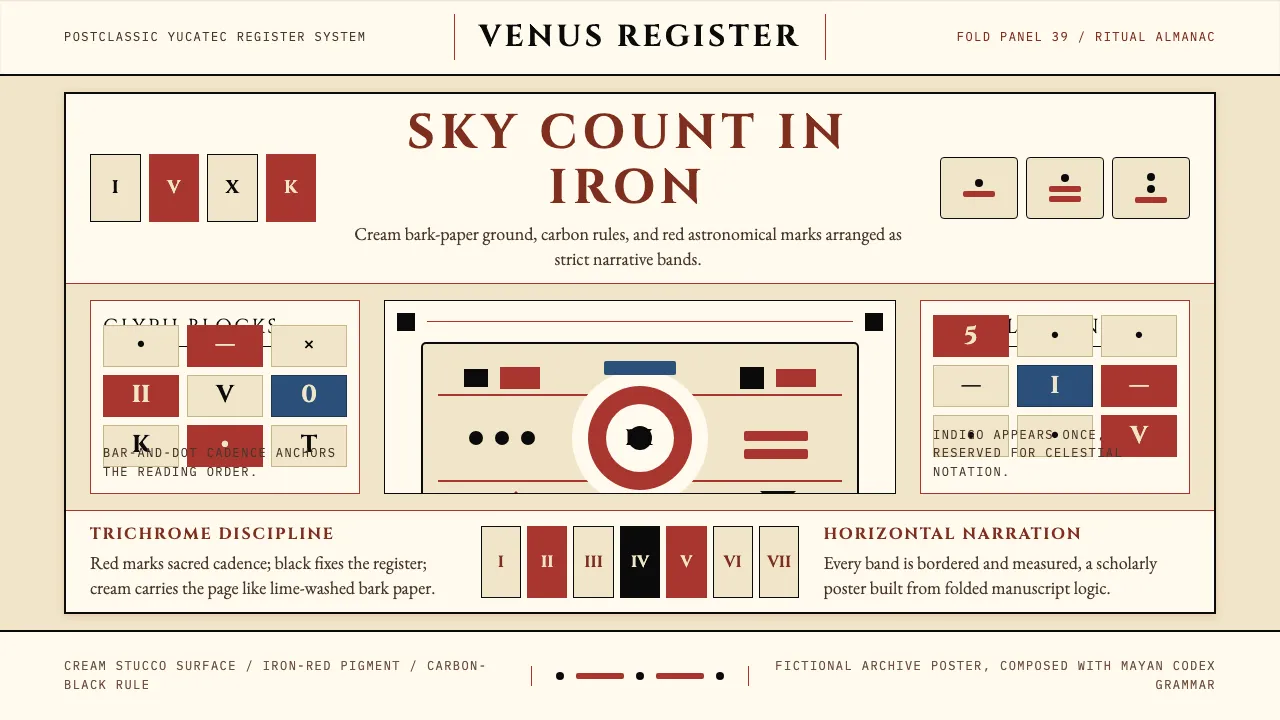
About Mayan Dresden Codex
The Dresden Codex is one of only four surviving pre-Columbian Mayan manuscripts — a 39-page bark-paper-and-stucco accordion-fold painted by Yucatec priest-scribes around 1200 CE, mapping Venus cycles, eclipse predictions, and ritual ceremonies. The visual system is severe and exact: cream bark-paper ground, deep iron-red and carbon-black hand-painted glyphs, horizontal narrative registers, profile deities, and a bar-and-dot number system.
This design language carries that trichrome discipline into the screen. Cream surface, red and black ornament, horizontal register bands, lapidary Roman caps for headings, Garamond serif for body — handled with the cultural gravity these sacred astronomical texts deserve.
- Origin
- Pre-Columbian Mesoamerica — Yucatán Peninsula, Guatemala, Belize, western Honduras, El Salvador
- Era
- Postclassic Maya c. 1200–1250 CE; rediscovered 1739; broader Mayan codex tradition spans 1000+ years
- Key figures
- anonymous Yucatec Maya priest-scribes · Diego de Landa · Yuri Knorozov · Linda Schele · David Stuart
- Movements
- Pre-Columbian Mesoamerican manuscript tradition · Mayan glyph decipherment · Mayan cultural revitalization
Mayan Dresden Codex design spec
Colors
Typography
The other 11 sections — buttons, cards, spacing, motion, techniques and more — open once you unlock. Download the DESIGN.md or send it to your AI in one click. Unlock once, yours forever.
Sign up nowStyles similar to Mayan Dresden Codex
Also inspired by art & artists, with a close feel.
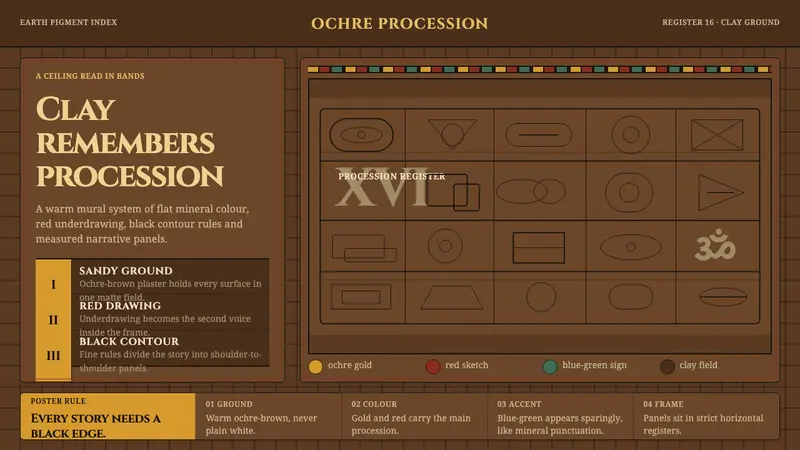 Lepakshi Vijayanagara CeilingEarth remembers in registers. Ochre gold, red underdrawing and black rules march on clay.
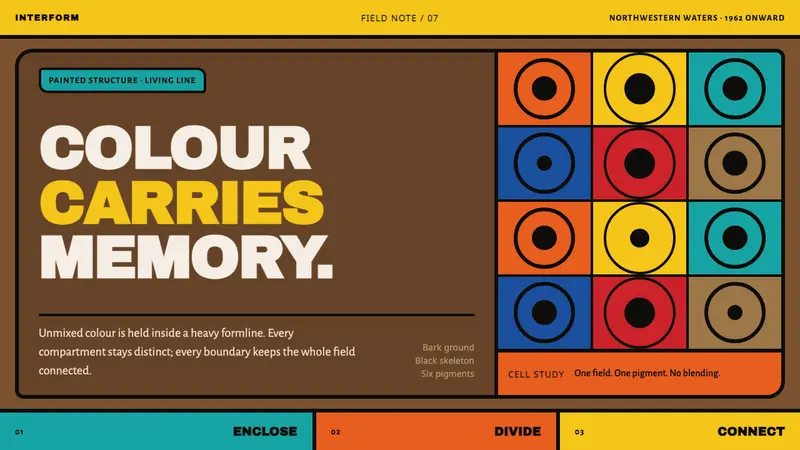 Woodland School — MorrisseauColour carries memory. Unmixed orange, yellow and turquoise lock into heavy black cells.
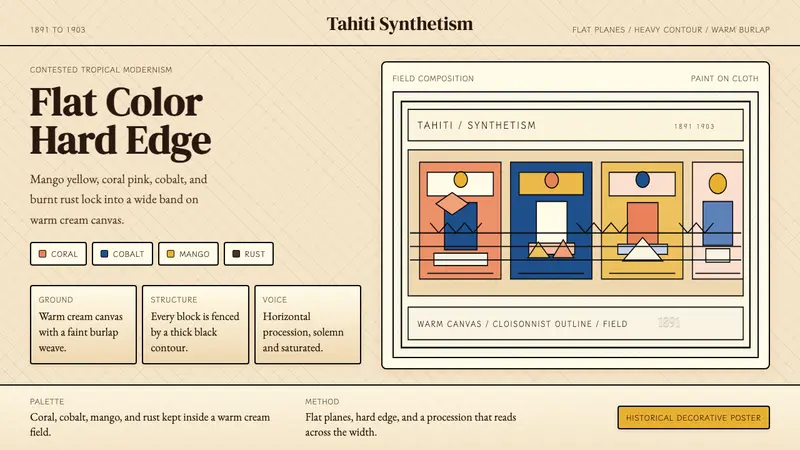 Gauguin — Tahiti SynthetismFlat color, hard edge. Cream canvas, coral, cobalt, and rust lock into a frieze.
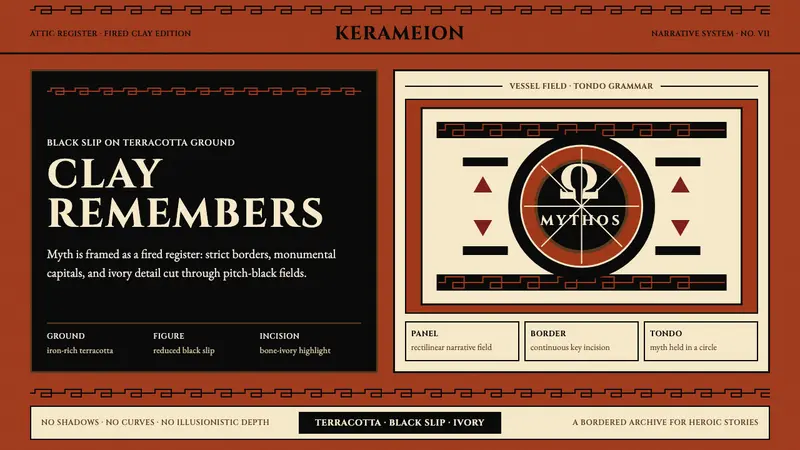 Greek Antiquity (Attic Vase)Myth becomes architecture. Terracotta, black slip, and Greek-key borders frame story.