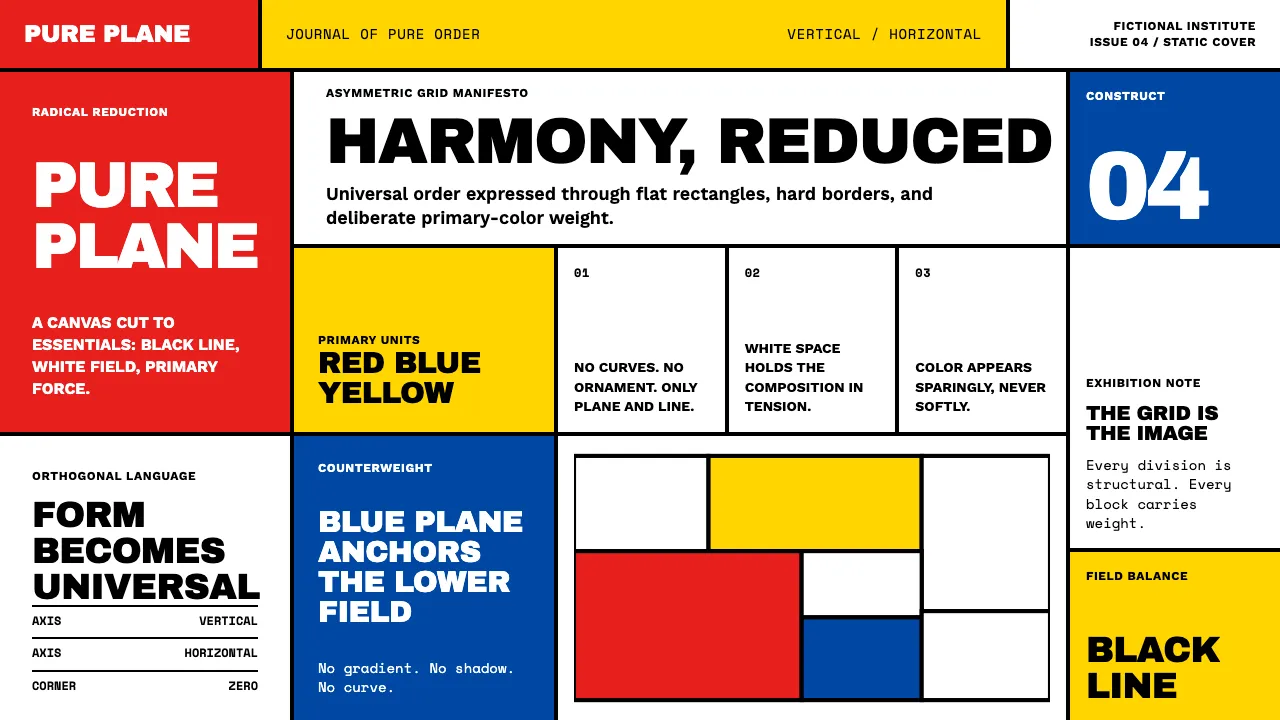
About De Stijl
De Stijl distills visual language to its absolute essence: vertical and horizontal black lines carving a white canvas into asymmetric rectangles filled with pure red, blue, or yellow. Founded in 1917 by Mondrian and van Doesburg, the movement sought universal harmony through radical reduction.
This design system translates Neoplasticism into digital interfaces — thick black borders, zero border-radius, flat primary-color fills, and rigidly orthogonal layouts that echo Mondrian's iconic Compositions.
- Origin
- Leiden, Netherlands (later Paris)
- Era
- 1917–1931 (formally dissolved with Theo van Doesburg's death in 1931)
- Key figures
- Piet Mondrian · Theo van Doesburg · Gerrit Rietveld · Bart van der Leck
- Movements
- Neoplasticism · abstraction · modernism
De Stijl design spec
Colors
Background
Surface
Primary
Secondary
Accent
Text
Typography
Archivo BlackHeadings
Work SansBody
Space MonoMono
Unlock for 1 credit
The other 11 sections — buttons, cards, spacing, motion, techniques and more — open once you unlock. Download the DESIGN.md or send it to your AI in one click. Unlock once, yours forever.
Sign up nowHave an account? Sign in
Styles similar to De Stijl
Also inspired by design movements, with a close feel.
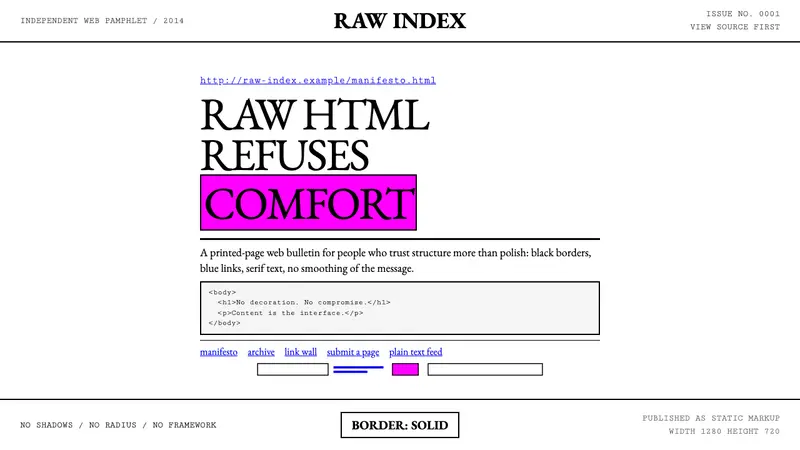 Brutalist Web 2014Browser defaults, weaponized. Times New Roman, electric-blue links — raw HTML as message.
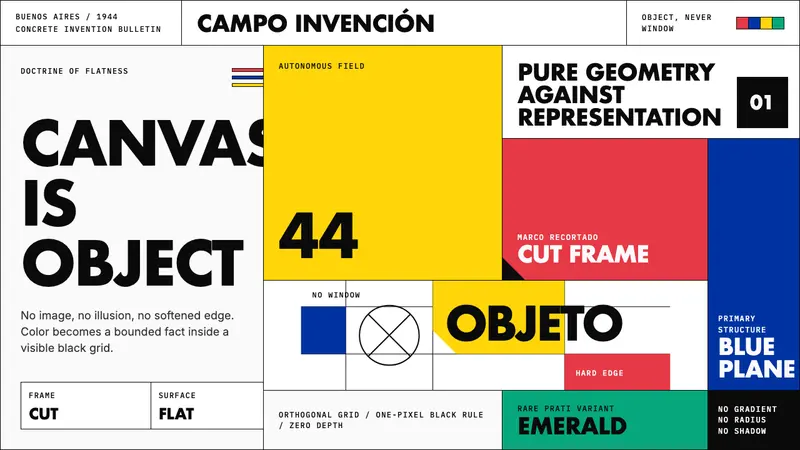 Argentine Arte ConcretoCanvas becomes object. Primary blocks, black hairlines, and a cut-frame grid enforce flatness.
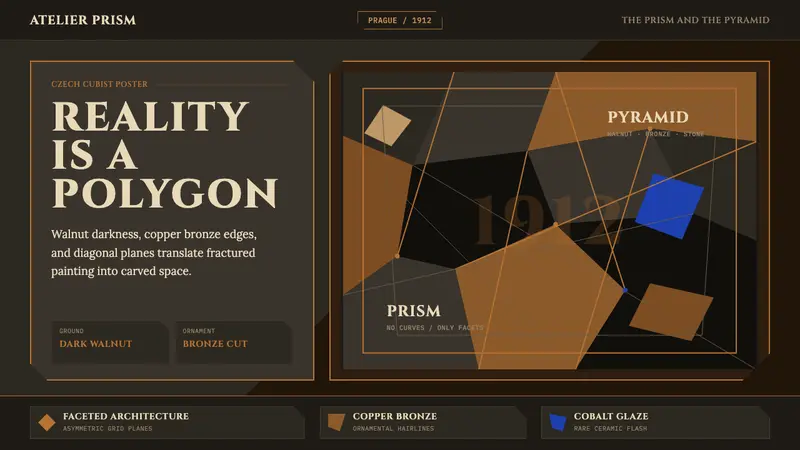 Czech Cubism (Prague 1912)Reality is faceted. Walnut ground, Cinzel capitals, and bronze diagonals cut every plane.
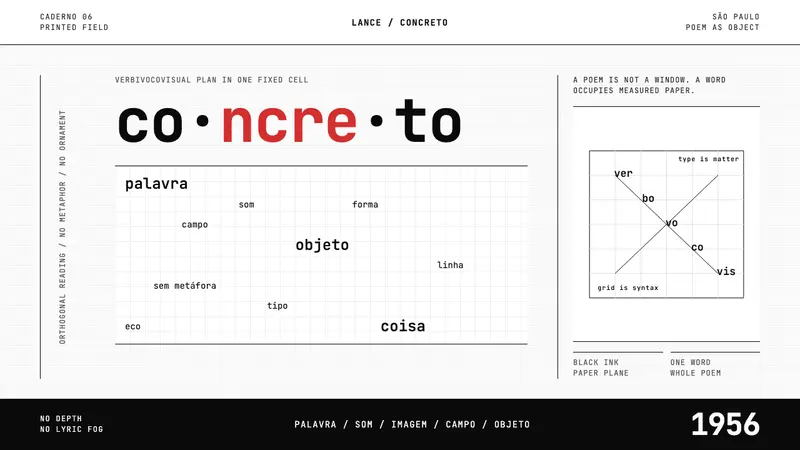 Brazilian Concrete PoetryWords become objects. Monospace cells, black-white paper, one cadmium red rupture.