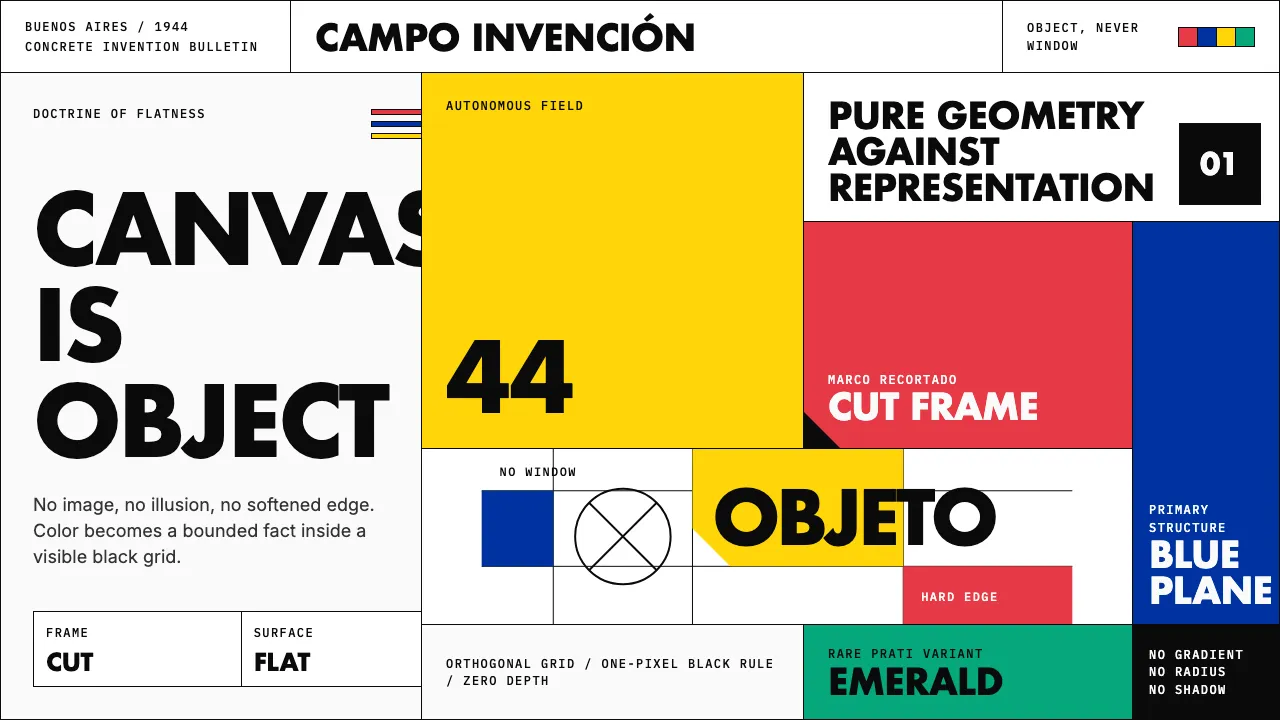
About Argentine Arte Concreto
In 1944, Buenos Aires intellectuals launched the single-issue *Arturo* magazine and ignited South America's earliest pure geometric abstraction. The Asociación Arte Concreto-Invención rejected representation outright: painting became an autonomous object, the rectangular canvas was cut into irregular polygons — the *marco recortado* — and color was confined to black, white, and the saturated primaries of Mondrian and Malevich.
The movement fused De Stijl rigor, Russian Suprematist economy, and Bauhaus rationality into a distinctly Argentine program of invention over representation. Tomás Maldonado would later carry its logic to the Ulm HfG; Lidy Prati and Alfredo Hlito refined its modular grids; Grupo Madí pushed the cut-frame further. The result is a doctrine of flatness, primary color, and hard-edge geometry — the canvas as object, never window.
- Origin
- Buenos Aires, Argentina
- Era
- 1944 (Arturo magazine launch) – 1956 (Maldonado departs for Ulm); continuing influence via Grupo Madí
- Key figures
- Tomás Maldonado · Edgar Bayley · Lidy Prati · Alfredo Hlito · Manuel Espinosa
- Movements
- Arte Concreto-Invención · Perceptismo · Grupo Madí
Argentine Arte Concreto design spec
Colors
Typography
The other 11 sections — buttons, cards, spacing, motion, techniques and more — open once you unlock. Download the DESIGN.md or send it to your AI in one click. Unlock once, yours forever.
Sign up nowStyles similar to Argentine Arte Concreto
Also inspired by design movements, with a close feel.
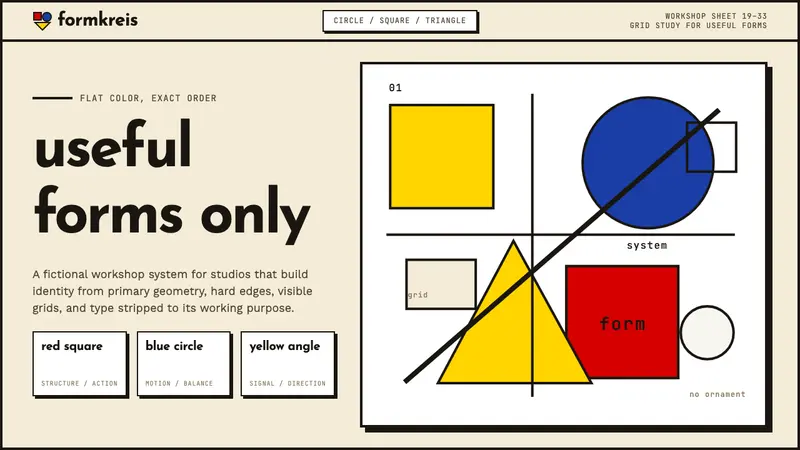 Bauhaus WeimarForm follows revolution. Primary red-blue-yellow on cream, hard shadows, no ornament — pure form.
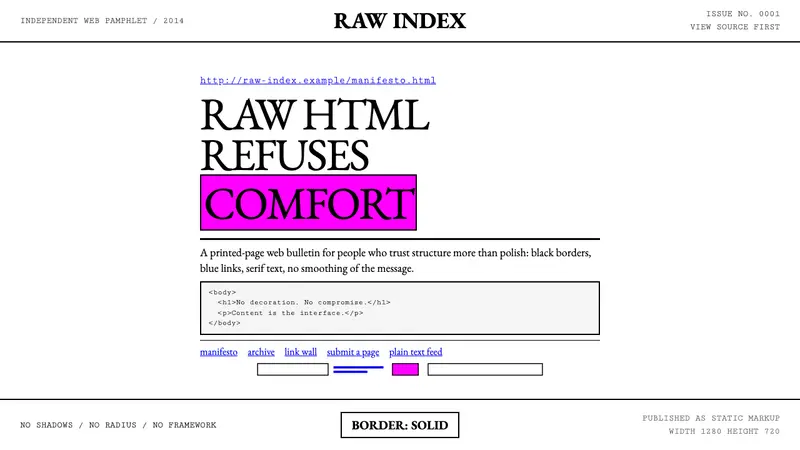 Brutalist Web 2014Browser defaults, weaponized. Times New Roman, electric-blue links — raw HTML as message.
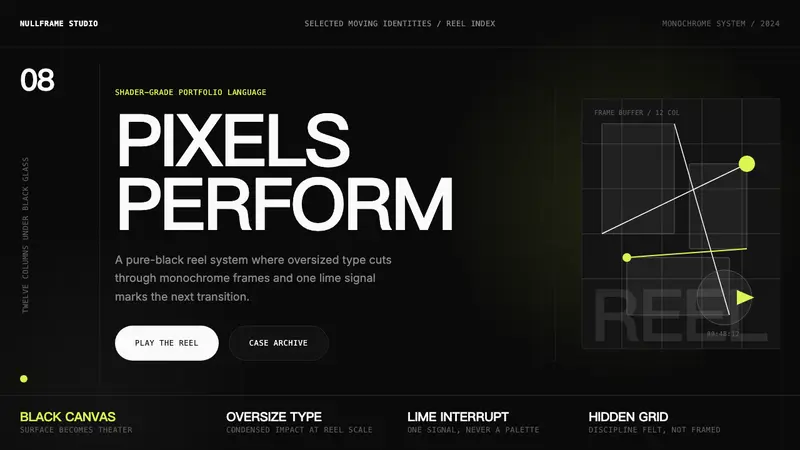 Awwwards Swiss PortfolioCinema, not interface. Black canvas, huge condensed type, and one lime signal carry the reel.
 De StijlPrimary colors, locked in a black grid. Mondrian's compositions, in thick borders and flat fills.