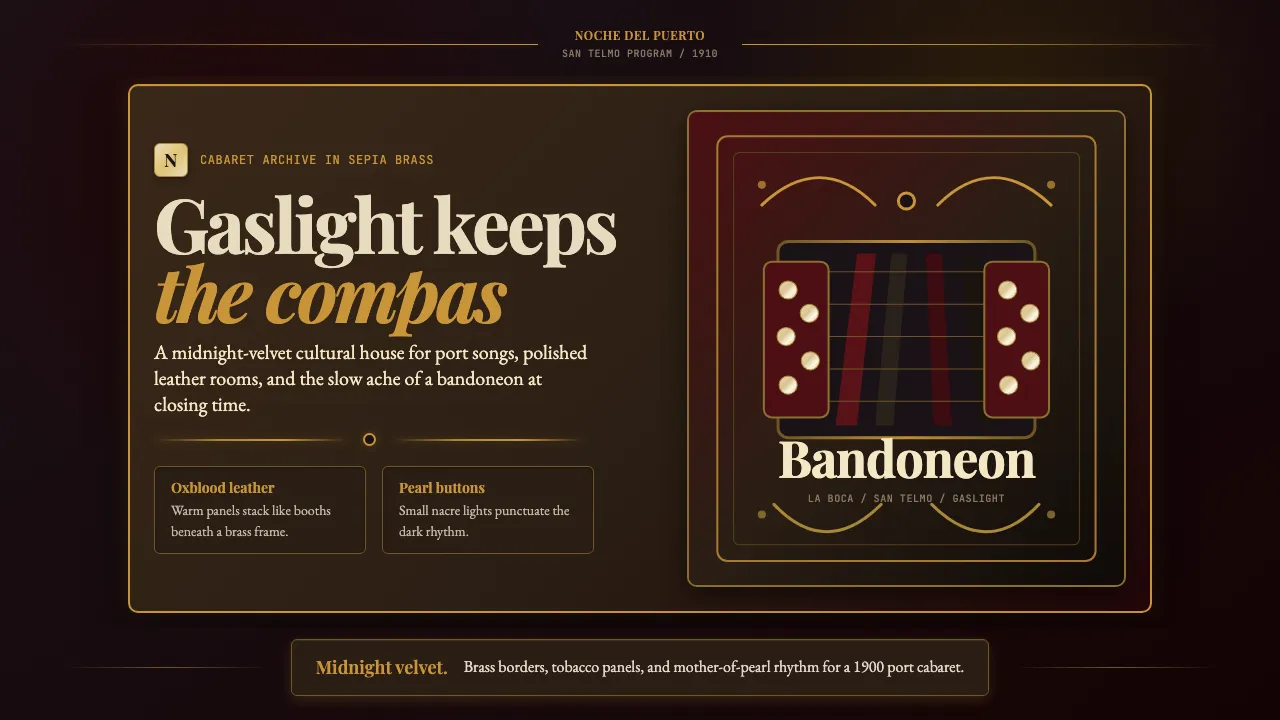
About Argentine Bandoneón 1900 (Tango)
Buenos Aires tango was born at the La Boca docks around 1880 when German-built bandoneón concertinas arrived via Hamburg ships and fell into the hands of Italian, Spanish, and Afro-Argentine dockworkers. Fused with Cuban habanera and Andalusian flamenco, the tango moved from conventillo courtyards to cabarets to Carlos Gardel's radio broadcasts and the stages of Paris.
This design system captures the gaslit back-alley cabaret of San Telmo circa 1910: midnight-velvet grounds, sepia-yellow glow, polished oxblood leather, mother-of-pearl bandoneón button highlights, brass ornament, and fileteado porteño scrollwork borders — all rendered as digital tokens.
- Origin
- Buenos Aires, Argentina — La Boca, San Telmo; Montevideo, Uruguay; Paris 1910s export
- Era
- 1880–1900 formation (La Boca docks); Golden Age 1917–1955; UNESCO ICH 2009
- Key figures
- Carlos Gardel · Aníbal Troilo · Astor Piazzolla · Roberto Firpo
- Movements
- Río de la Plata immigrant-port subculture · tango canción · Golden Age orchestras · nuevo tango
Argentine Bandoneón 1900 (Tango) design spec
Colors
Typography
The other 11 sections — buttons, cards, spacing, motion, techniques and more — open once you unlock. Download the DESIGN.md or send it to your AI in one click. Unlock once, yours forever.
Sign up nowStyles similar to Argentine Bandoneón 1900 (Tango)
Also inspired by crafts & folk art, with a close feel.
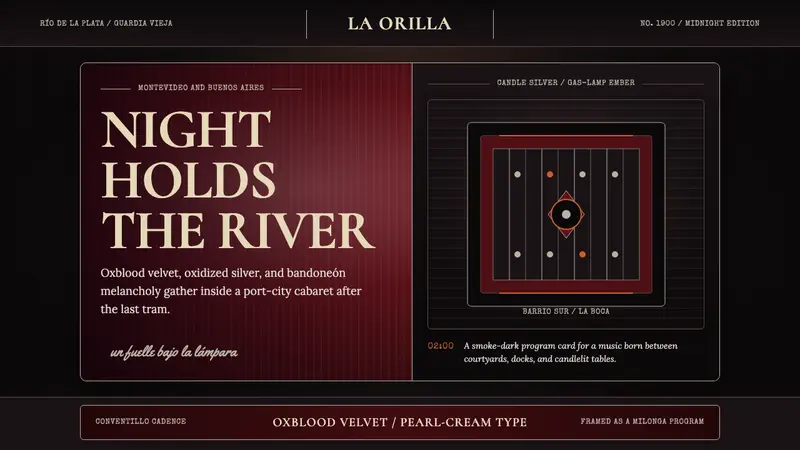 Uruguayan Tango Rioplatense 1900Cabaret melancholy. Oxblood velvet, candle silver, and framed type hold the dark.
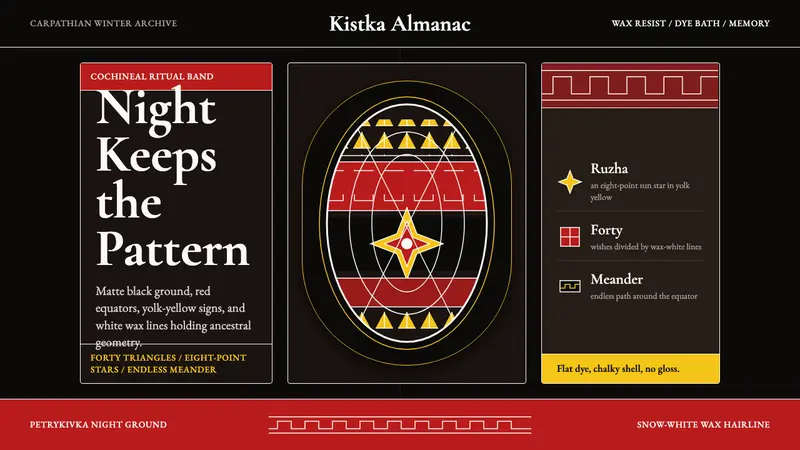 Ukrainian Pysanky (wax-resist egg)Night holds memory. Red bands, yolk geometry, and white wax lines cut matte black.
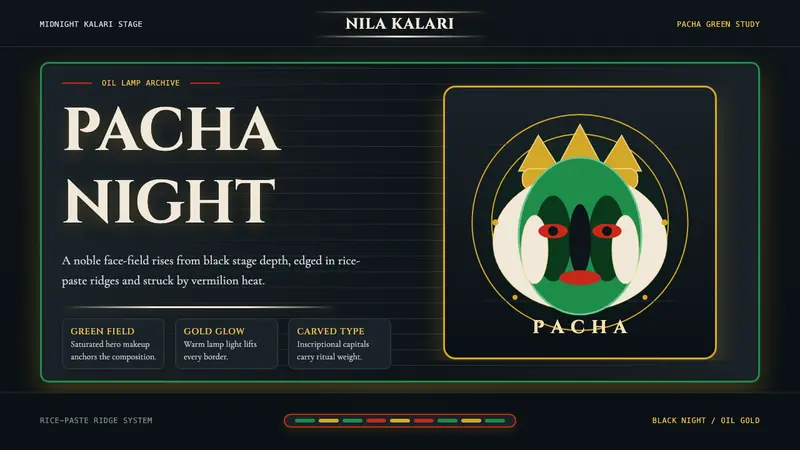 Kerala Kathakali (Pacha Green Makeup)Fierce ceremonial night. Pacha green, vermilion, and oil-gold frame monumental serif type.
 Nsibidi Script Cross RiverSecrecy glows in ochre. Ring-line glyphs sit on charcoal with kaolin and indigo reserves.