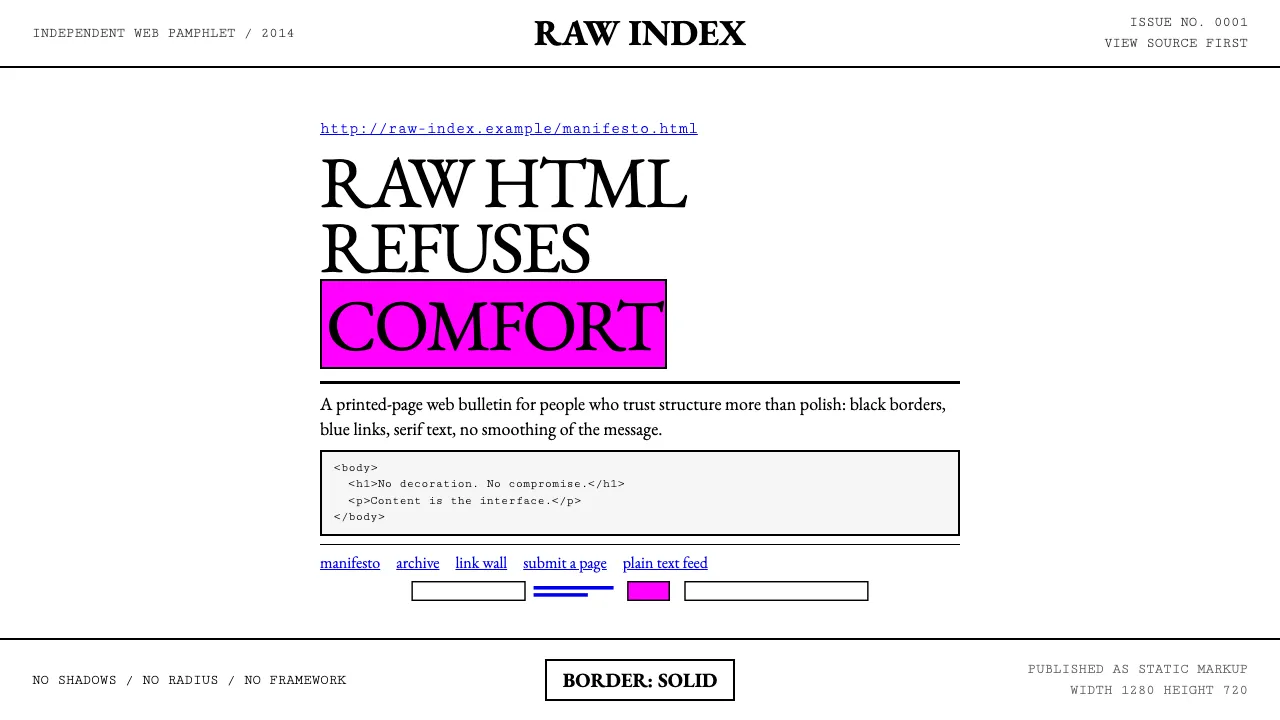
About Brutalist Web 2014
Brutalist web design strips the browser back to its defaults — Times New Roman, electric blue links, solid black borders, and nothing else. Emerging around 2014 as a conscious rejection of polished SaaS aesthetics, it treats raw HTML structure as both medium and message.
The movement draws its name from béton brut (raw concrete) and channels the same confrontational honesty into digital form. Sites like brutalistwebsites.com, Drudge Report, and Balenciaga's 2015 redesign proved that refusing decoration could itself be a powerful design statement.
- Origin
- International web design discourse; Berlin / NYC nexus
- Era
- 2014–2020; brutalistwebsites.com launched 2014
- Key figures
- Pascal Deville · Balenciaga · Matt Drudge · Tim Berners-Lee
- Movements
- anti-design · post-digital · architectural Brutalism
Brutalist Web 2014 design spec
Colors
Typography
The other 11 sections — buttons, cards, spacing, motion, techniques and more — open once you unlock. Download the DESIGN.md or send it to your AI in one click. Unlock once, yours forever.
Sign up nowStyles similar to Brutalist Web 2014
Also inspired by design movements, with a close feel.
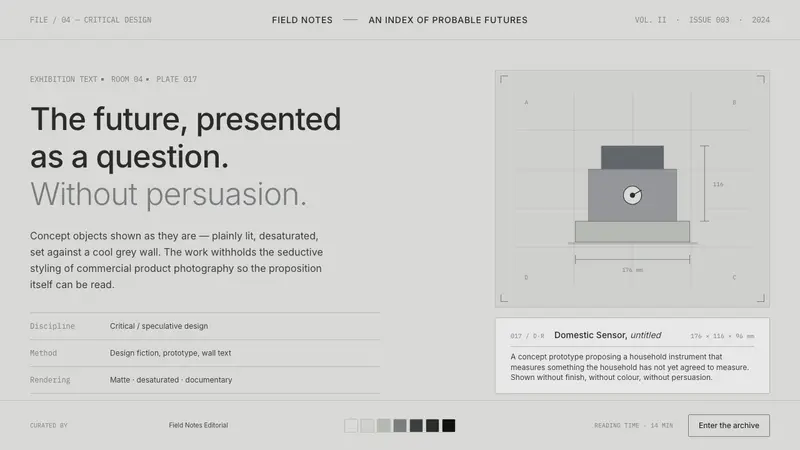 Speculative Design (Dunne & Raby)Refuses to seduce. Cool-grey wall, Inter labels, matte concept objects — the future as a question.
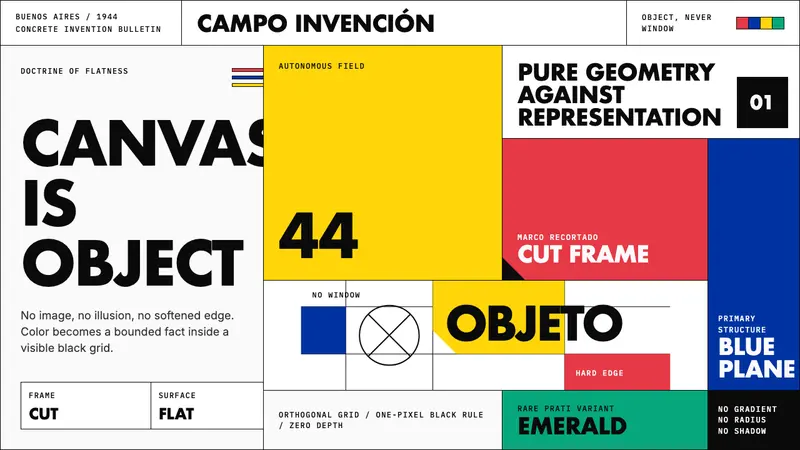 Argentine Arte ConcretoCanvas becomes object. Primary blocks, black hairlines, and a cut-frame grid enforce flatness.
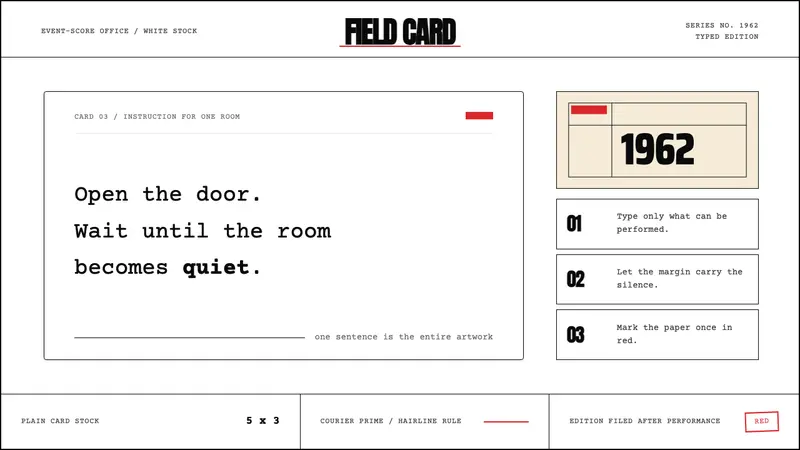 Fluxus Event Score (1962)Instruction becomes art. Courier on white card, hairline rules, one sharp red mark.
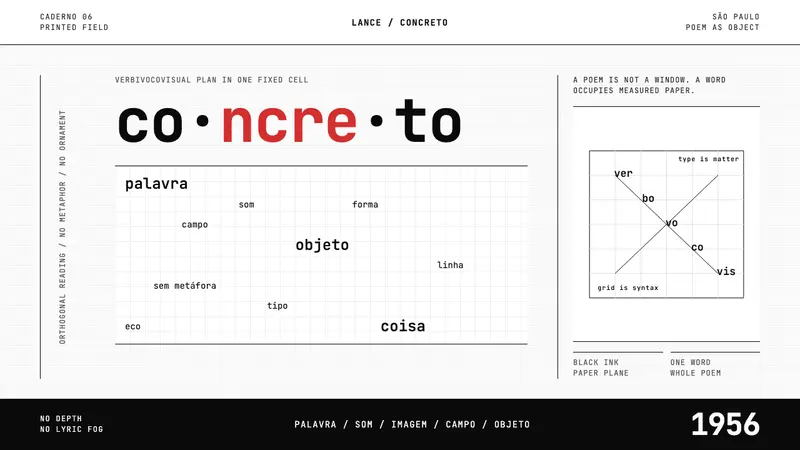 Brazilian Concrete PoetryWords become objects. Monospace cells, black-white paper, one cadmium red rupture.