About Trading Pit Hand Signals
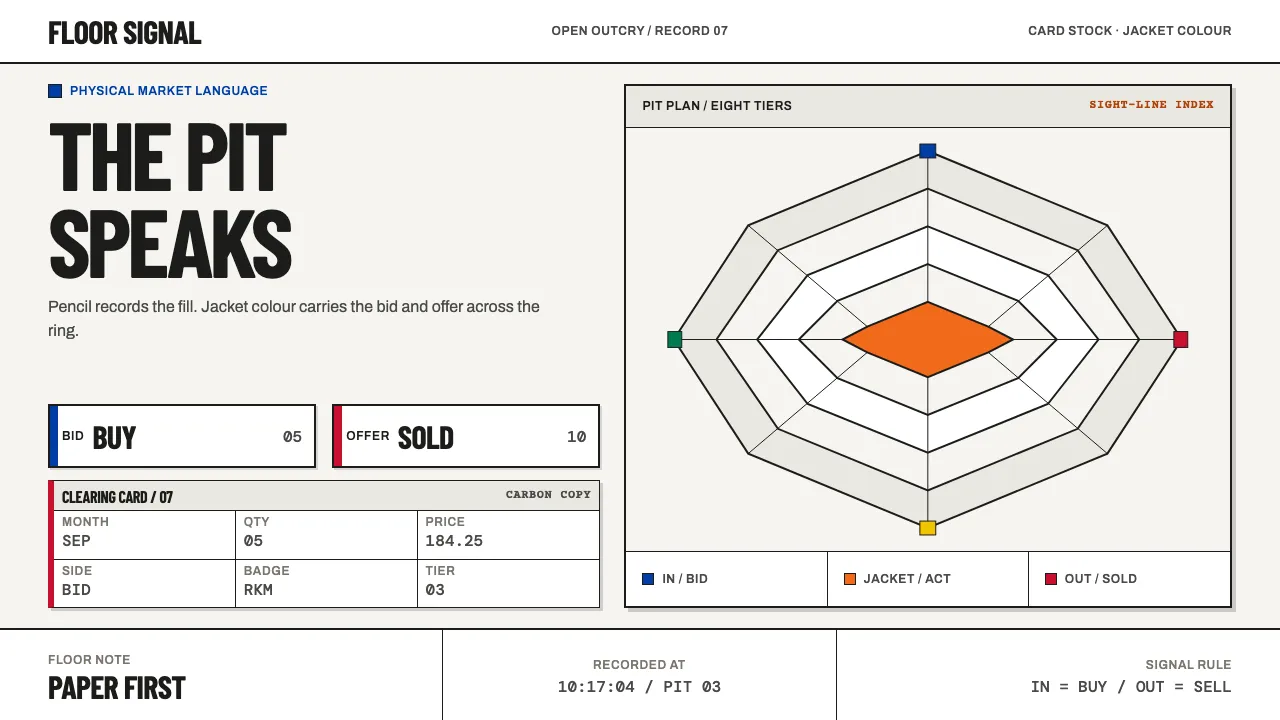
Open outcry ran on two surfaces and nothing else: a hardened-paper trading card filled in with pencil, and the jacket on the trader's back. Price, quantity, month and the opposite broker's badge went into ruled boxes in graphite, erasable because the market moved faster than the hand. Everything between the boxes was gesture — palms in to buy, palms out to sell, fingers vertical to five and sideways to ten.
The visual system takes that literally. The field is pale: card stock and white cotton twill, never grey screen. The figure is jacket colour, solid and saturated, cut into flat blocks with hard edges. Red marks the sold side, blue the buy side, because that is how the card was printed. Type is condensed grotesque shouting across a pit and typewriter mono filling in a field.
- Origin
- Chicago and London trading floors (CBOT, CME, LIFFE)
- Era
- 1950s–1990s; signalling standardised in the CME pits from the early 1970s, colour-jacket era from the late 1960s
- Key figures
- PECO Inc. of Chicago · CME Group market regulation staff · CBOT market regulation staff · LIFFE floor locals
- Movements
- Open outcry auction markets · Floor-trader vernacular signage · Industrial workwear
Trading Pit Hand Signals design spec
Colors
Typography
The other 11 sections — buttons, cards, spacing, motion, techniques and more — open once you unlock. Download the DESIGN.md or send it to your AI in one click. Unlock once, yours forever.
Sign up nowStyles similar to Trading Pit Hand Signals
Also inspired by pop culture, with a close feel.
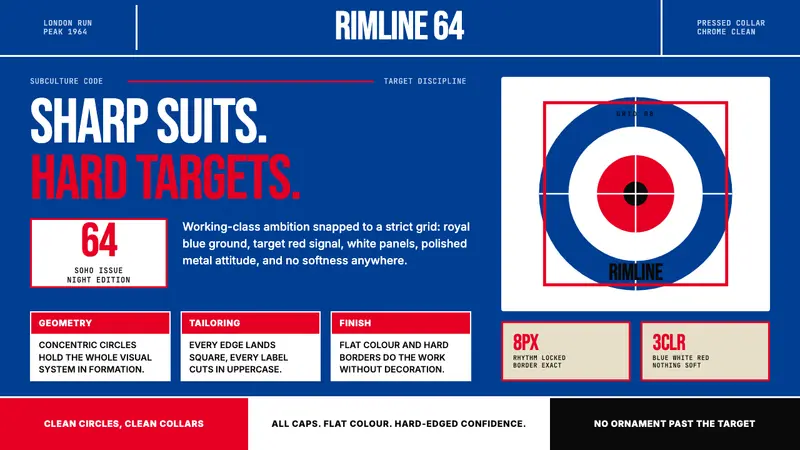 Mod Vespa London (1964)Precision rides hard. Royal blue, target red, Bebas caps, and roundel geometry lock the frame.
 Tunisian Jasmine Revolution (2010)Raw urgency wins. Red browser grids and mono hashtags compress 3am protest into pixels.
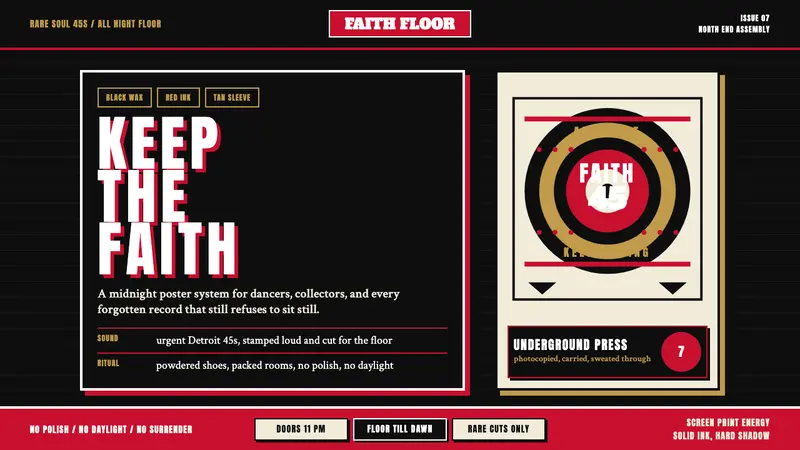 Northern Soul Wigan (1970)Underground urgency. Black ground, fist-red type, and tan vinyl rings hit like a 4am poster.
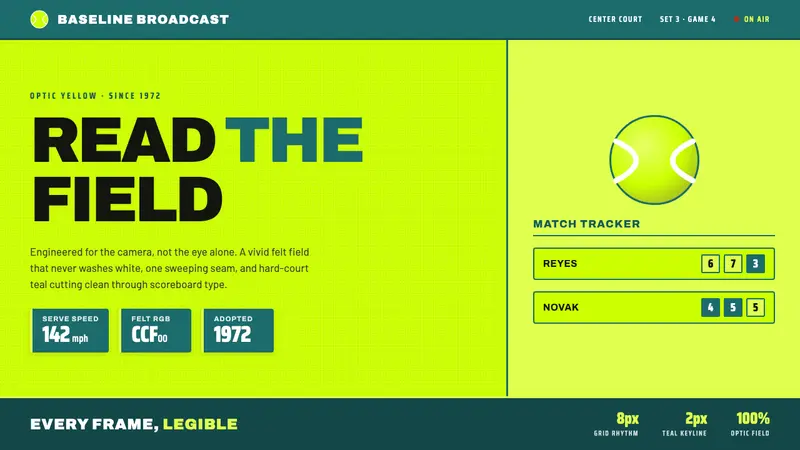 Optic Yellow Tennis BallBuilt for the camera. Electric optic-yellow felt, one sweeping white seam, teal scoreboard type.