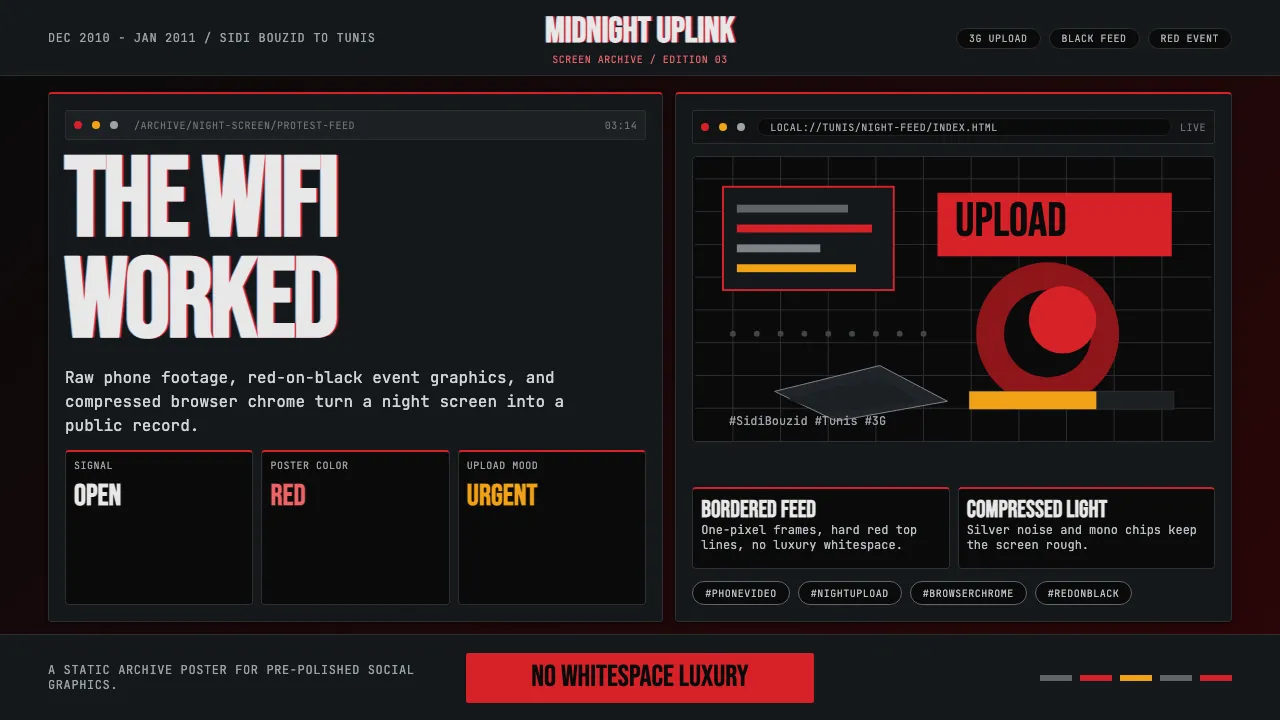
About Tunisian Jasmine Revolution (2010)
On December 17, 2010, a vegetable seller in Sidi Bouzid set himself on fire and triggered the first revolution of the Arab Spring. Within four weeks, Ben Ali fled Tunisia. The visual record is raw: phone-camera stills compressed over 3G, fluorescent red Facebook event posters on black backgrounds, Anonymous mask vectors beside the Tunisian crescent.
This design system captures the digital protest aesthetic before Instagram — Nawaat blog graphics, hashtag chips in monospace, browser-chrome tab bars, and the harsh glow of a Tunis café laptop at 3am. It is utilitarian, dense, and unapologetically 2010-era digital.
Learn more about the Tunisian Jasmine Revolution (2010) style
- Origin
- Sidi Bouzid, Tunis, Tunisia
- Era
- December 2010 – January 2011; visual aftermath through 2013
- Key figures
- Mohamed Bouazizi · Lina Ben Mhenni · Slim Amamou · Sami Ben Gharbia
- Movements
- Arab Spring (Tunisian first wave) · digital activism · hashtag protest
Tunisian Jasmine Revolution (2010) design spec
Colors
Typography
The other 11 sections — buttons, cards, spacing, motion, techniques and more — open once you unlock. Download the DESIGN.md or send it to your AI in one click. Unlock once, yours forever.
Sign up nowStyles similar to Tunisian Jasmine Revolution (2010)
Also inspired by pop culture, with a close feel.
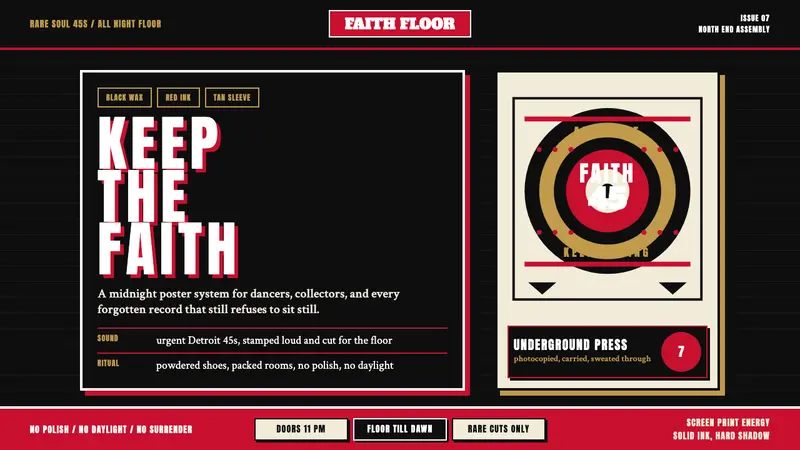 Northern Soul Wigan (1970)Underground urgency. Black ground, fist-red type, and tan vinyl rings hit like a 4am poster.
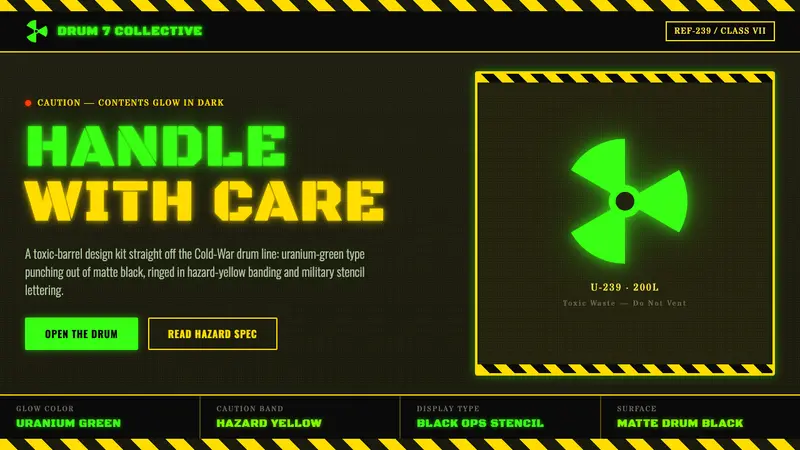 Radioactive Trefoil SignToxic-barrel glow, not the official sign. Neon-green trefoils on matte-black drums, yellow banding.
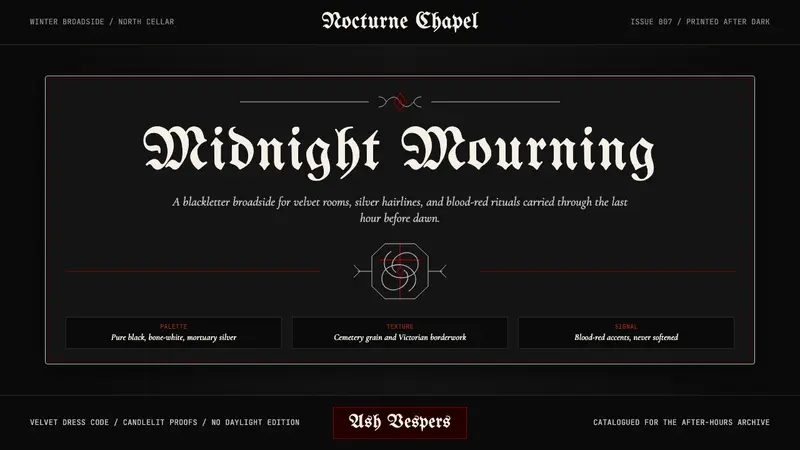 Traditional GothPost-punk in Victorian mourning. Black, blood red, bone white — Bauhaus album sleeve as interface.
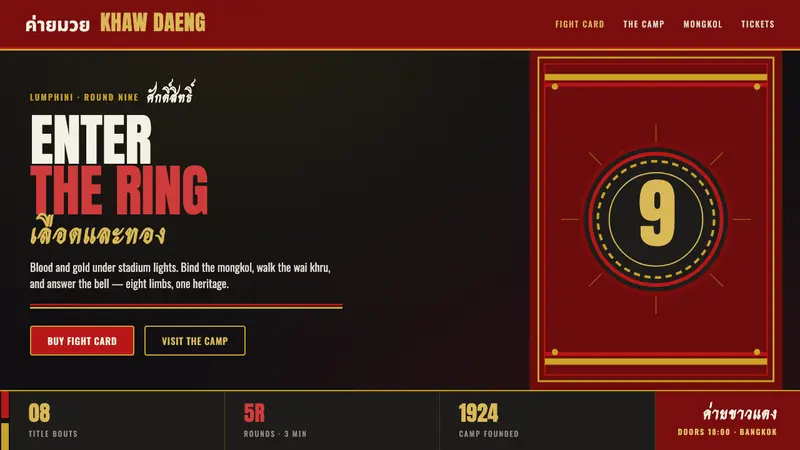 Muay Thai Camp BannerFight-poster physical. Blood-red and gold satin on near-black, heavy Anton type, Thai brush script.