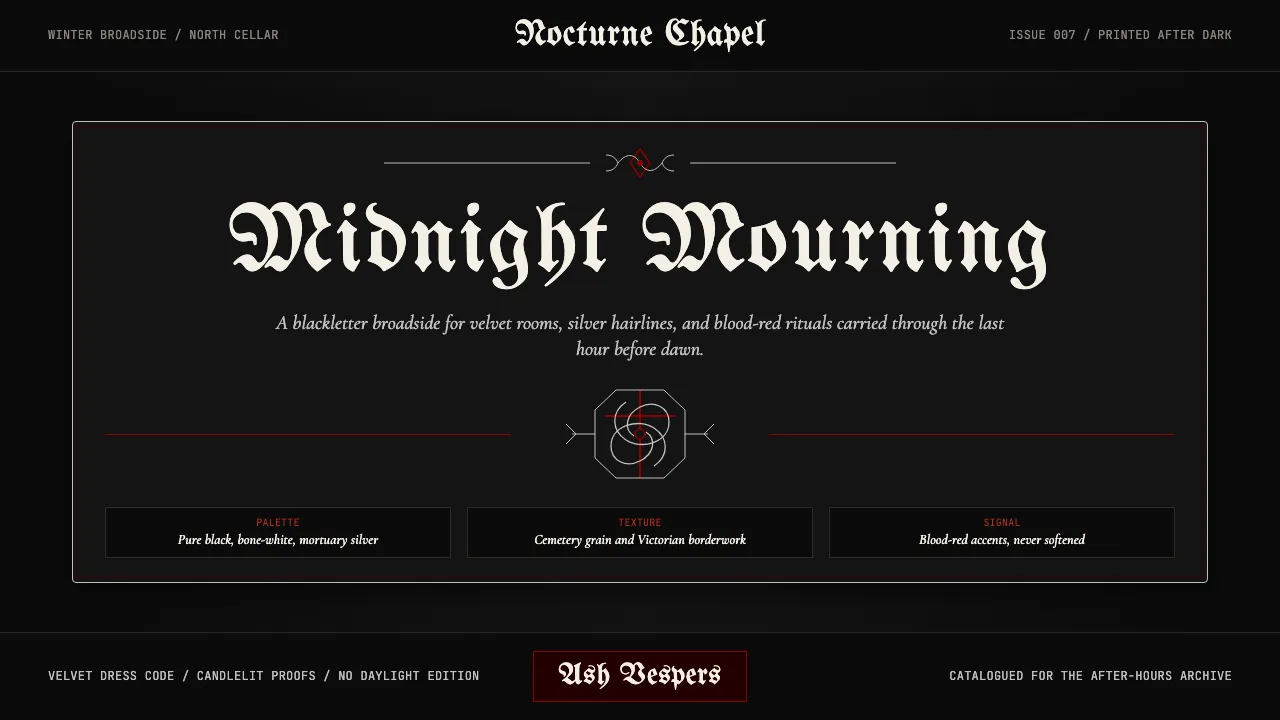
About Traditional Goth
Traditional Goth is the original visual language of the post-punk subculture that emerged from London's Batcave Club and the Leeds goth-rock scene in the early 1980s. It draws on Victorian mourning aesthetics, blackletter calligraphy, and the stark monochrome photography of artists like Anton Corbijn.
The design system channels full-saturation darkness — pure black grounds, blood-red accents, bone-white text, and mortuary-silver ornament — into a digital vocabulary that feels like a Bauhaus album sleeve brought to life as an interface.
- Origin
- London and Leeds, England
- Era
- 1979 birthed (Bauhaus 'Bela Lugosi's Dead'); peak 1981–1989; revival cycles every decade
- Key figures
- Peter Murphy · Siouxsie Sioux · Andrew Eldritch · Robert Smith
- Movements
- Post-punk · Goth-rock · Death-rock
Traditional Goth design spec
Colors
Typography
The other 11 sections — buttons, cards, spacing, motion, techniques and more — open once you unlock. Download the DESIGN.md or send it to your AI in one click. Unlock once, yours forever.
Sign up nowStyles similar to Traditional Goth
Also inspired by pop culture, with a close feel.
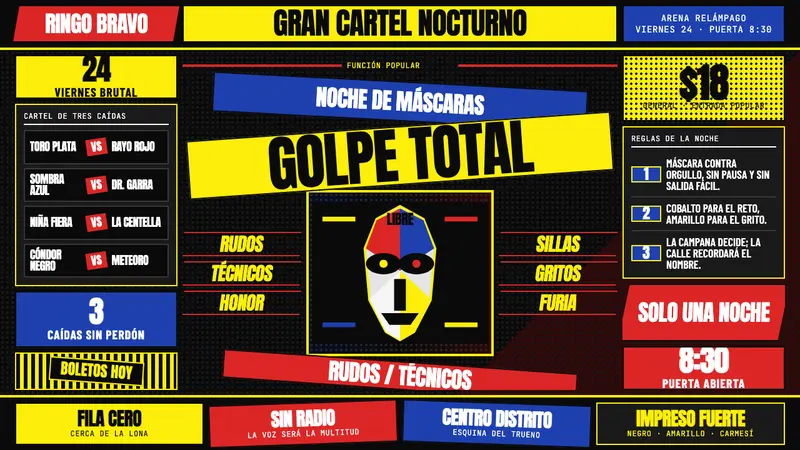 Lucha Libre PosterStreet-poster voltage. Yellow Anton banners, crimson diagonals, cobalt grids on black.
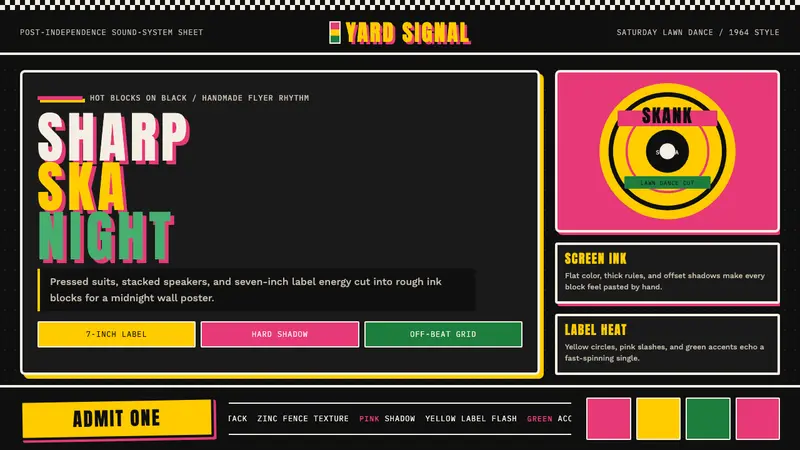 Rude Boy Jamaica Ska (1960)Street swagger hits hard. Hot pink and yellow blocks, checker trim, chunky type on black.
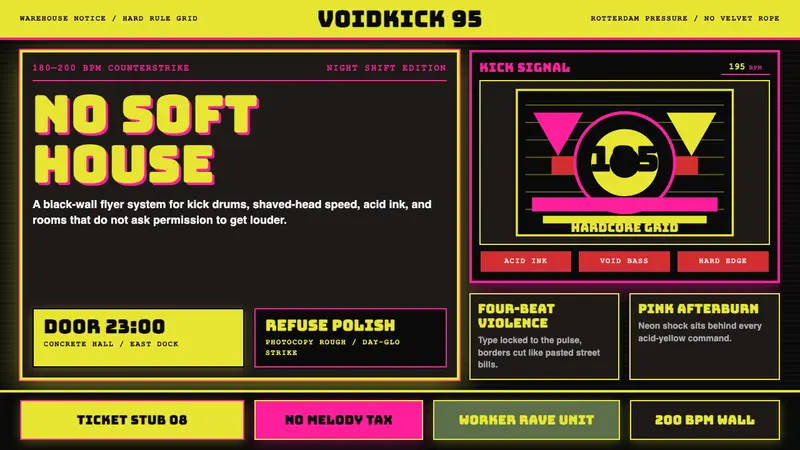 Rotterdam Gabber HardcoreHardcore refuses polish. Acid yellow, neon pink, black grid, and brutal Bungee type hit like flyers.
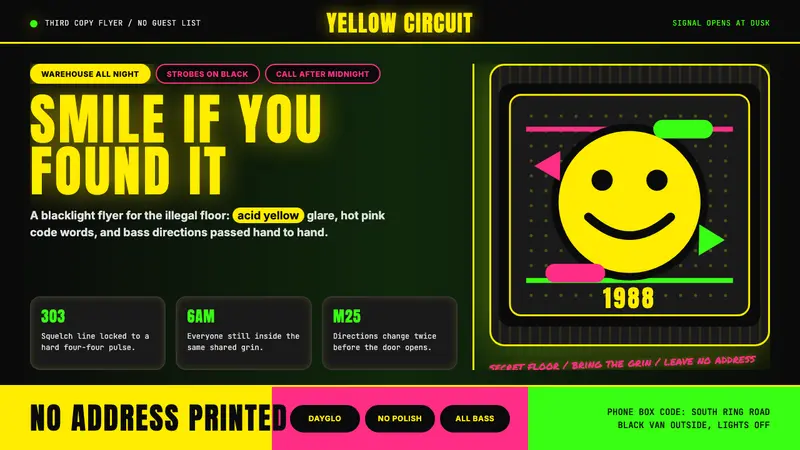 Acid House Smiley (1988)Rave energy hits first. Acid yellow on black, Anton caps, smiley glow.