About Diablada de Oruro
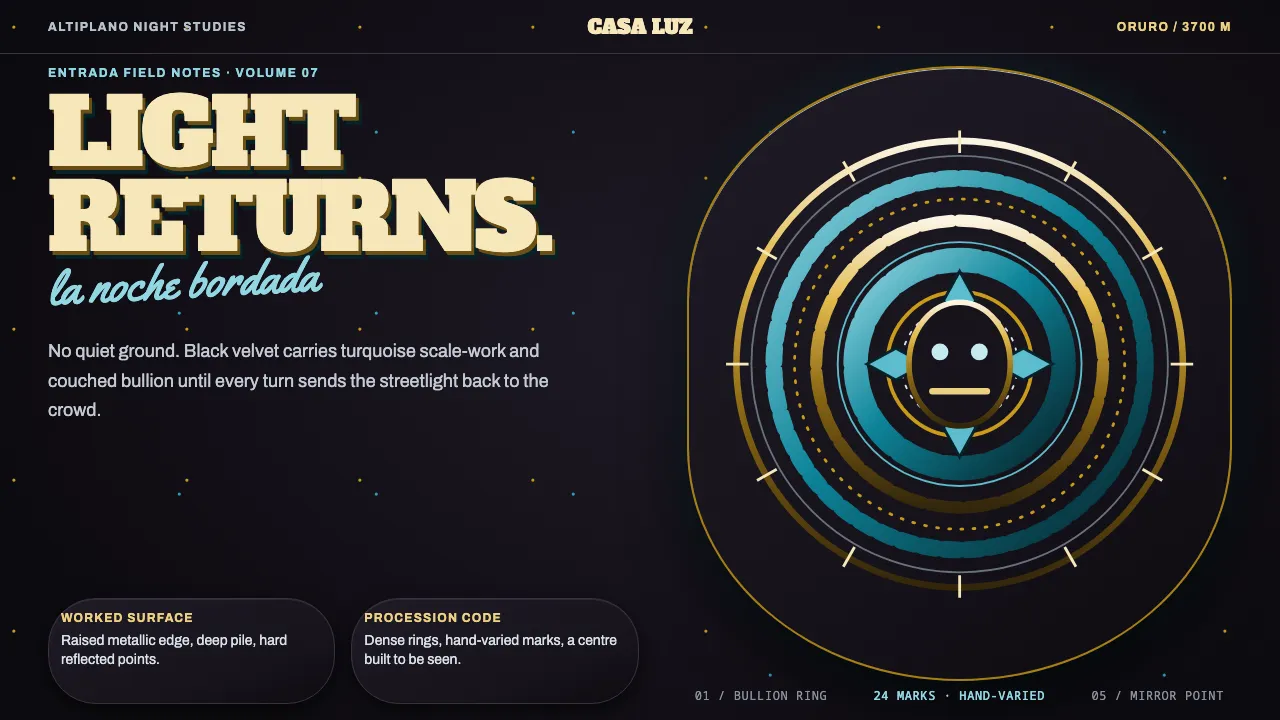
The Diablada opens the Carnival of Oruro: a three-day entrada at 3,700 metres where dancers carry capes of black velvet so densely worked in silver and gold bullion that the ground barely shows. Masks are moulded plaster and tin — convex glass eyes, mirror inlay, dragons and serpents crowding the brow.
This system takes that logic literally. Near-black ground, turquoise scale-work, metallics that read by highlight and shadow rather than flat fill, and containers shaped as medallions instead of rectangles. Density is the point. There is no quiet field to rest in.
- Origin
- Oruro, Bolivian altiplano (with Diablada Puneña at Puno, Peru)
- Era
- 1900–1950 for the fraternity form danced today; entrada tradition running back through colonial Candelaria devotion
- Key figures
- Gran Tradicional Auténtica Diablada Oruro · Diablada Ferroviaria · the careteros of Calle La Paz · the bordadores of Oruro
- Movements
- Andean carnival entrada · Virgen del Socavón mining devotion · Uru–Catholic syncretic ritual · UNESCO Intangible Cultural Heritage (2001)
Diablada de Oruro design spec
Colors
Typography
The other 11 sections — buttons, cards, spacing, motion, techniques and more — open once you unlock. Download the DESIGN.md or send it to your AI in one click. Unlock once, yours forever.
Sign up nowStyles similar to Diablada de Oruro
Also inspired by crafts & folk art, with a close feel.
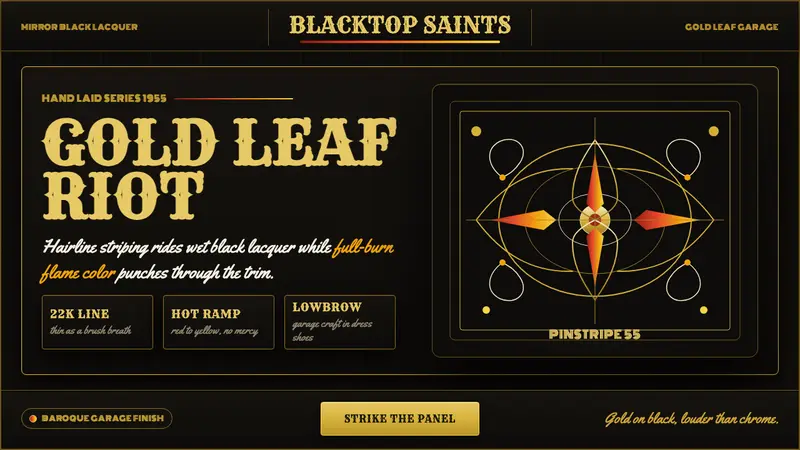 Kustom Kulture PinstripeGarage baroque burns hot. Rye woodtype, black lacquer, gold hairlines, flame bars.
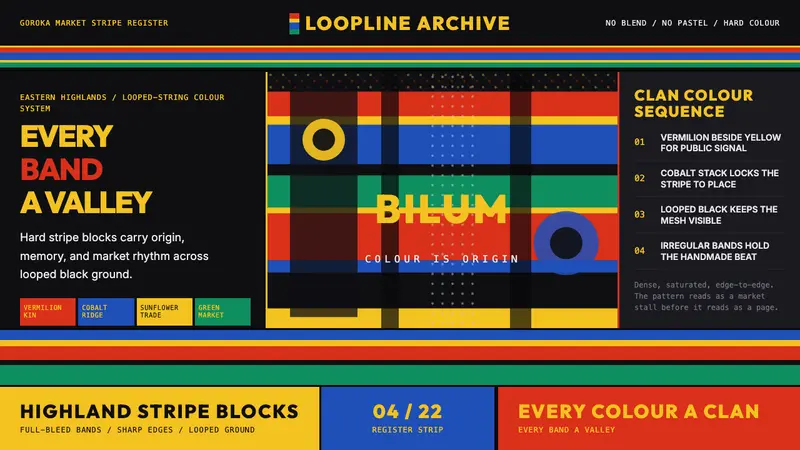 PNG Bilum (Looped String Bag)Identity is striped. Vermilion, cobalt, and sunflower bands beat across looped black.
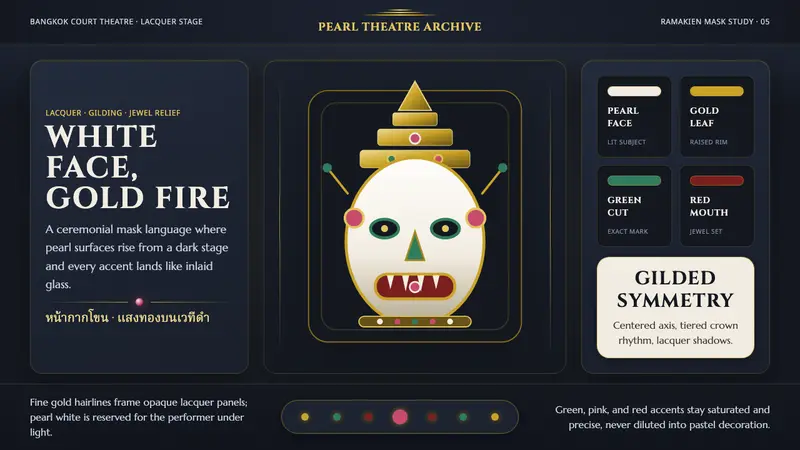 Thai Khon Hanuman MaskThai court theatre, digitized. A pearl-white mask and gilt coronet rise from dark lacquer.
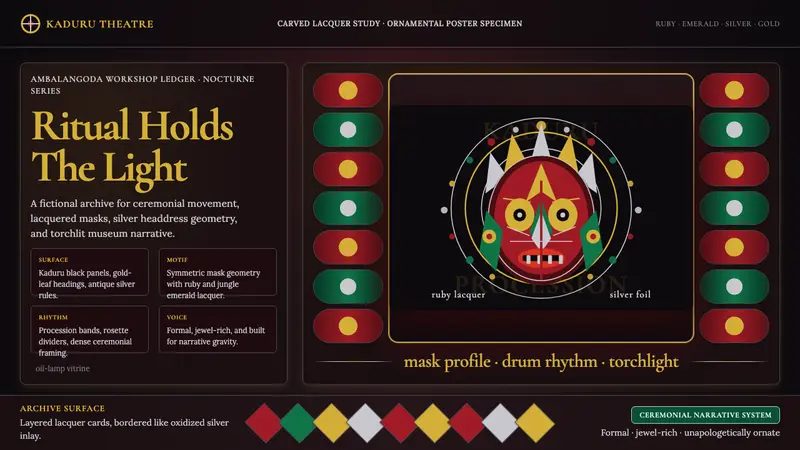 Sri Lankan Kandyan Mask & DanceRitual carries weight. Gold serif type and ruby-emerald filigree burn on black lacquer.