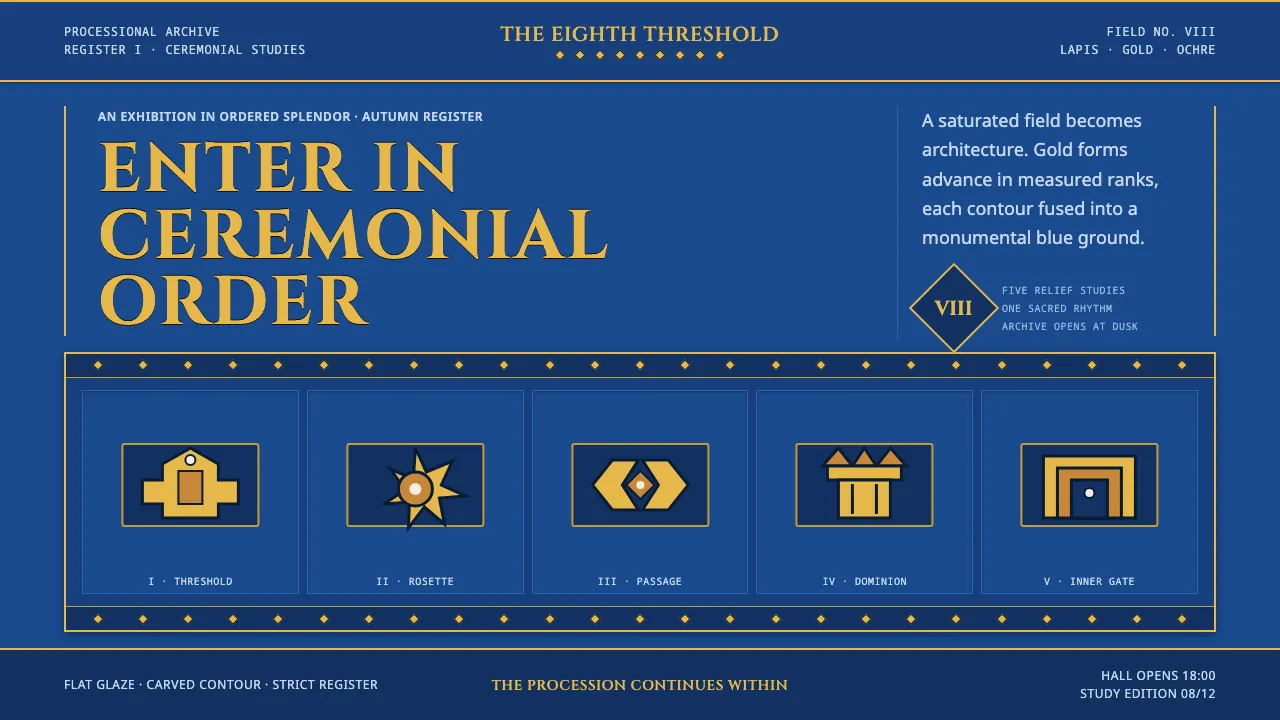
About Babylonian Ishtar Gate
Built around 575 BCE under Nebuchadnezzar II, the Ishtar Gate was a wall of cobalt-blue glazed brick imitating lapis lazuli, its saturated field crossed by processions of aurochs, mushhushshu dragons, and lions rendered in gold and brown glaze. It was the eighth gate into inner Babylon and the threshold of a sacred processional way.
This system carries that ceremonial gravity into the screen: a deep lapis ground, gold and ochre relief accents, carved imperial-caps display type, and a strict processional rhythm. Everything is flat, fused, and monumental — no gradients, no scatter, only registers and rosette borders.
- Origin
- Babylon, Mesopotamia (Middle East); reconstruction in Berlin, Germany
- Era
- c. 575 BCE (Neo-Babylonian Empire); reconstructed 1930 at Berlin's Pergamon Museum
- Key figures
- Nebuchadnezzar II · Robert Koldewey
- Movements
- Neo-Babylonian monumental architecture · Glazed-brick relief tradition
Babylonian Ishtar Gate design spec
Colors
Typography
The other 11 sections — buttons, cards, spacing, motion, techniques and more — open once you unlock. Download the DESIGN.md or send it to your AI in one click. Unlock once, yours forever.
Sign up nowStyles similar to Babylonian Ishtar Gate
Also inspired by architecture & places, with a close feel.
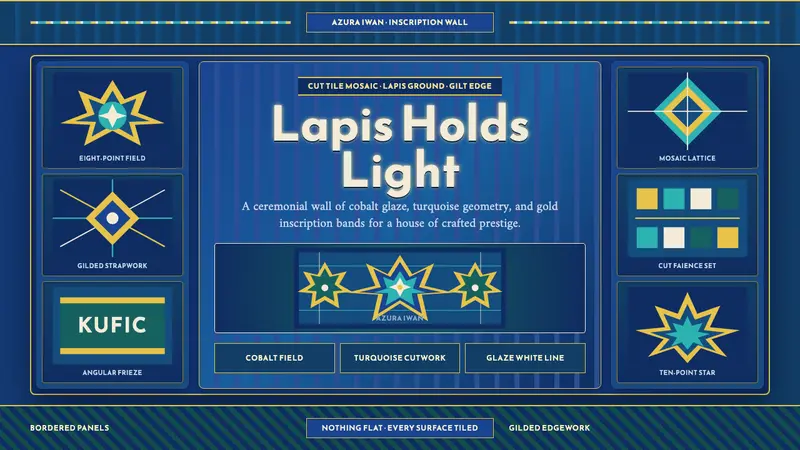 Samarkand TileworkOrnament is the architecture. Lapis panels, gold Kufic bands, and star geometry fill every inch.
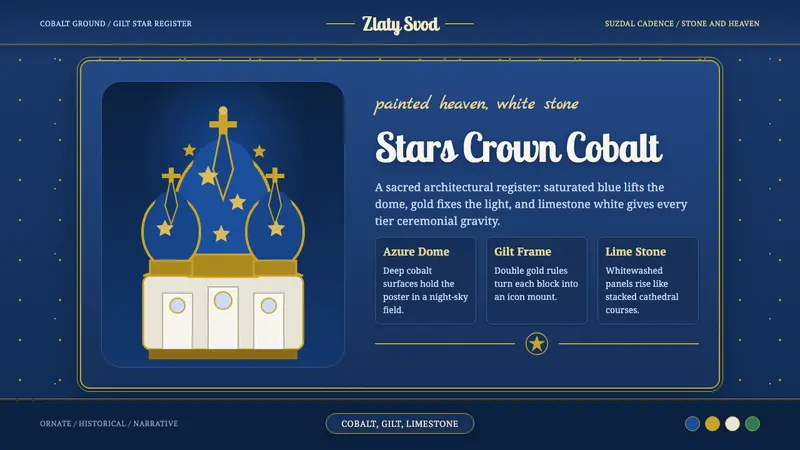 Russian Onion DomesSacred cobalt ascends. Gilt stars and limestone tiers frame an ornate dome poster.
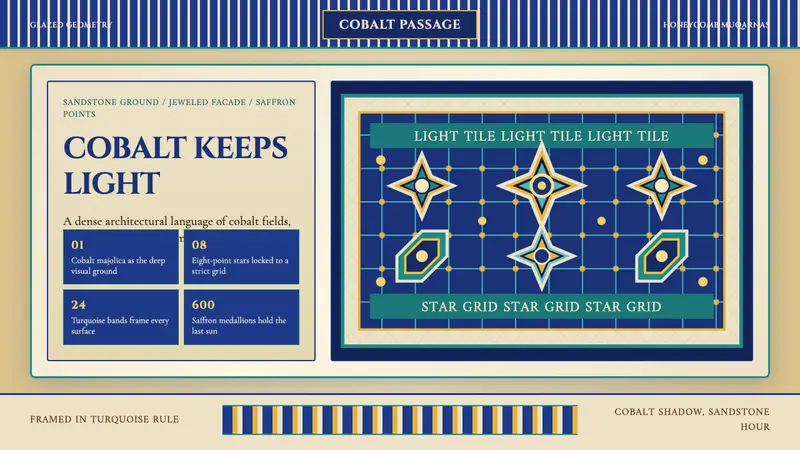 Uzbek Samarkand Shah-i-ZindaOpulent tile memory. Cobalt grids, turquoise bands, and saffron medallions crowd sandstone.
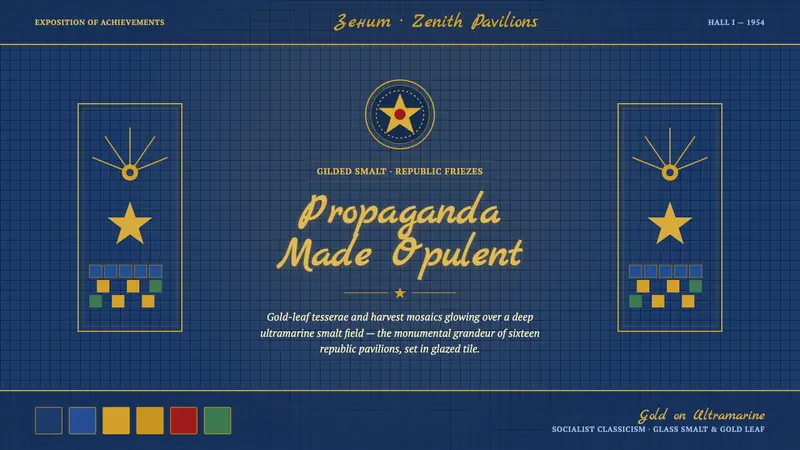 VDNKh Exhibition PavilionsPropaganda made opulent. Gold-leaf tesserae glow over a deep ultramarine smalt field.