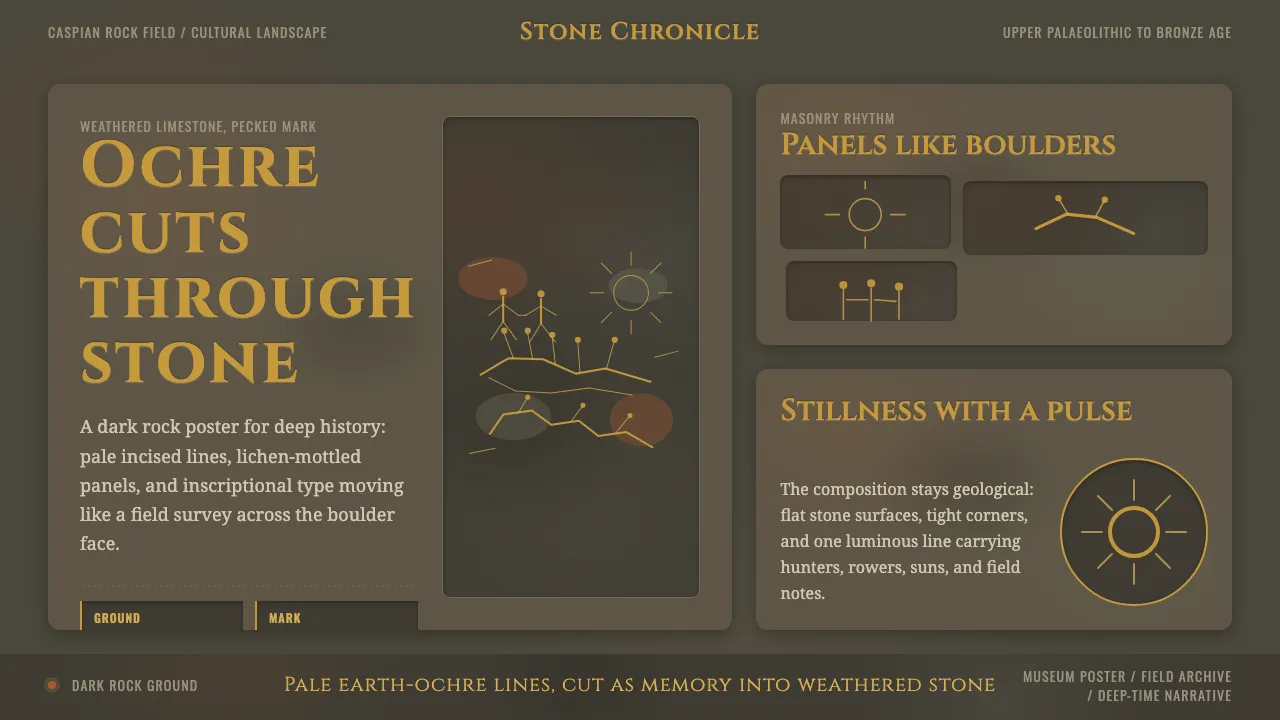
About Azerbaijani Gobustan Petroglyph
On the weathered limestone boulders of Gobustan, above the Caspian shore, prehistoric carvers pecked more than six thousand images over some twenty millennia: bull hunts, rows of dancing figures, reed boats crowded with oarsmen, radiating sun symbols. The fresh cut exposed lighter stone, so every figure reads as a pale earth-ochre line against a dark, dusty olive-grey rock face patched with reddish ochre and silvery lichen.
This design system carries that surface to the screen — a dark weathered-stone ground, ochre-yellow incised marks, stippled peck textures, and a lapidary type voice cut in Cinzel and Marcellus. Never desert-tan paper; always dark rock.
- Origin
- Gobustan, Azerbaijan (Caspian coastal semi-desert, Caucasus)
- Era
- Upper Palaeolithic through Bronze Age (c. 20,000–2,000 BCE); UNESCO-listed 2007
- Key figures
- Prehistoric hunter-gatherer carvers · Early pastoralist communities · Isaak Jafarzadeh (documenting archaeologist)
- Movements
- Caucasus petroglyph tradition · UNESCO-listed Gobustan cultural landscape
Azerbaijani Gobustan Petroglyph design spec
Colors
Typography
The other 11 sections — buttons, cards, spacing, motion, techniques and more — open once you unlock. Download the DESIGN.md or send it to your AI in one click. Unlock once, yours forever.
Sign up nowStyles similar to Azerbaijani Gobustan Petroglyph
Also inspired by art & artists, with a close feel.
 The Little Mermaid (Andersen, 1837)Cold longing, cut clean. Foam-white silhouettes drift on harbour teal with one coral bruise.
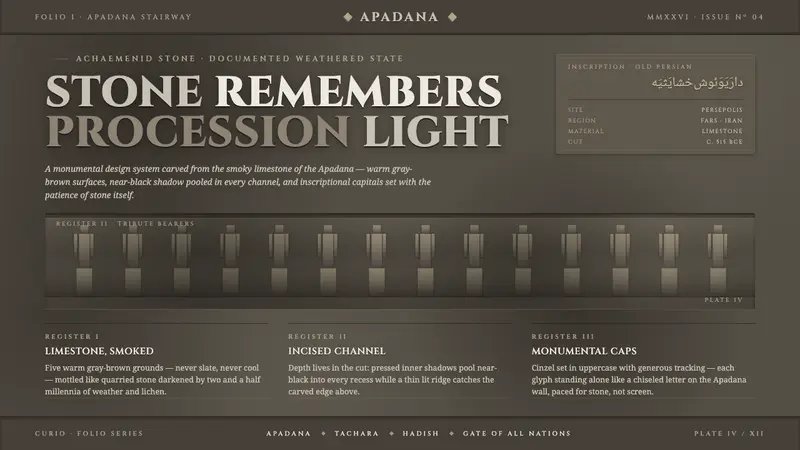 Persian Gray Stone ReliefStone remembers. Smoky weathered limestone, near-black shadow in every channel, Cinzel cut as caps.
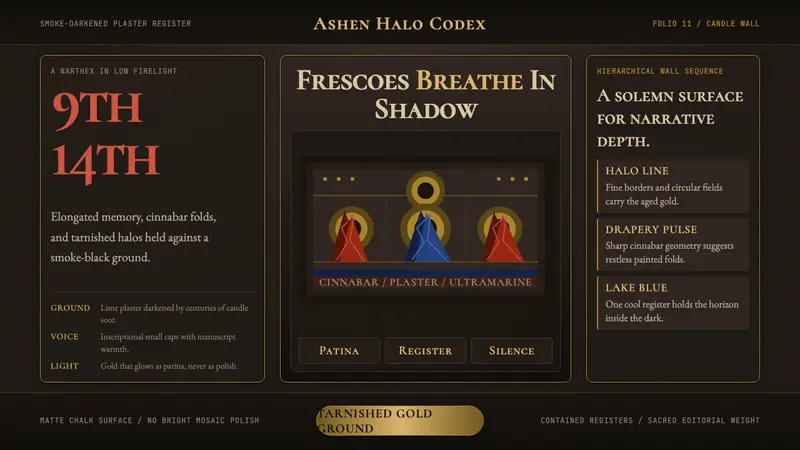 Macedonian Ohrid Fresco (Byzantine)Sacred darkness breathes. Tarnished gold rings, cinnabar folds, and plaster grain carry it.
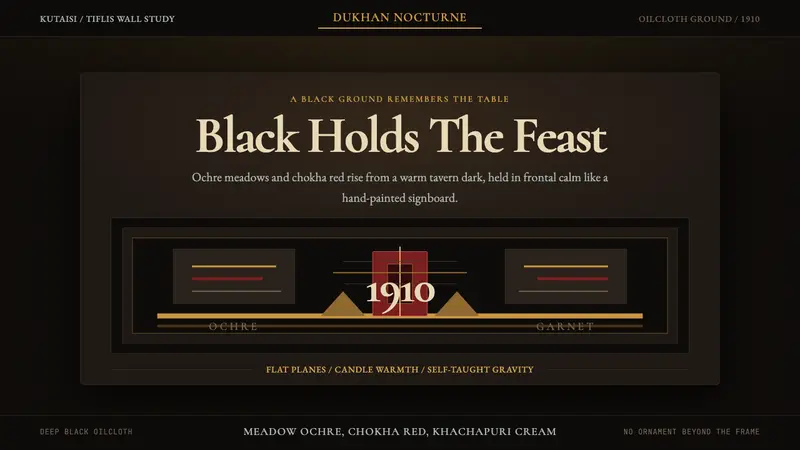 Georgian Pirosmani 1910Oilcloth black turns memory ceremonial. Ochre panels and Cormorant type hold the glow.