About Assyrian Lamassu Relief
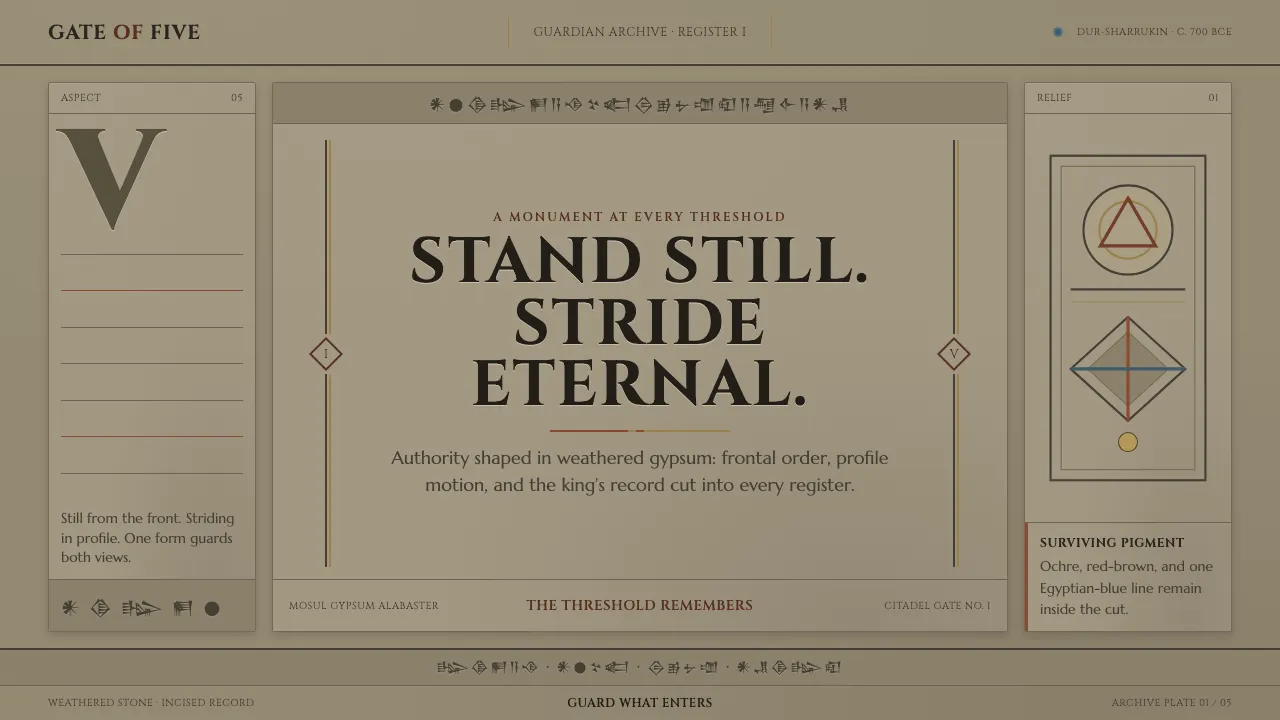
Cut from Mosul gypsum alabaster for the citadel gates of Sargon II, the lamassu are colossal human-headed winged bulls — five-legged guardians that stride when seen from the side and stand guard head-on. This system takes their weathered buff-gray stone, dense cuneiform banding, and chiselled musculature as its material. Color stays close to aged carved gypsum: never the fresh-cut white, never cream. Type is monumental Latin capital married to real cuneiform script, and surviving pigment appears only as restrained ochre, red-brown, and Egyptian-blue traces — the way the paint actually survives on the stone today.
- Origin
- Dur-Sharrukin (Khorsabad), northern Mesopotamia
- Era
- c. 700 BCE (reign of Sargon II); Neo-Assyrian
- Key figures
- Sargon II · Neo-Assyrian palace sculptors
- Movements
- Neo-Assyrian palace relief sculpture
Assyrian Lamassu Relief design spec
Colors
Typography
The other 11 sections — buttons, cards, spacing, motion, techniques and more — open once you unlock. Download the DESIGN.md or send it to your AI in one click. Unlock once, yours forever.
Sign up nowStyles similar to Assyrian Lamassu Relief
Also inspired by art & artists, with a close feel.
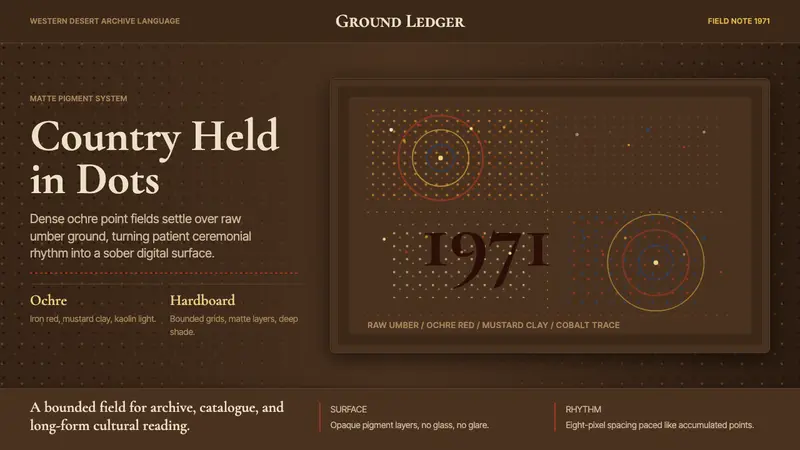 Aboriginal Dot Painting (Papunya 1971)Ochre memory, held steady. Raw umber ground, Cormorant type, disciplined dot-fields.
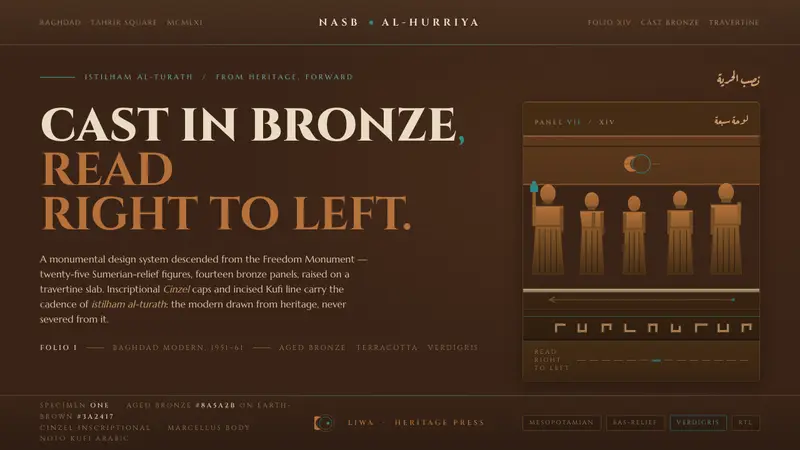 Jewad Selim Baghdad ModernCast in bronze, read right to left. Aged-bronze grounds, incised Kufi line, verdigris accents.
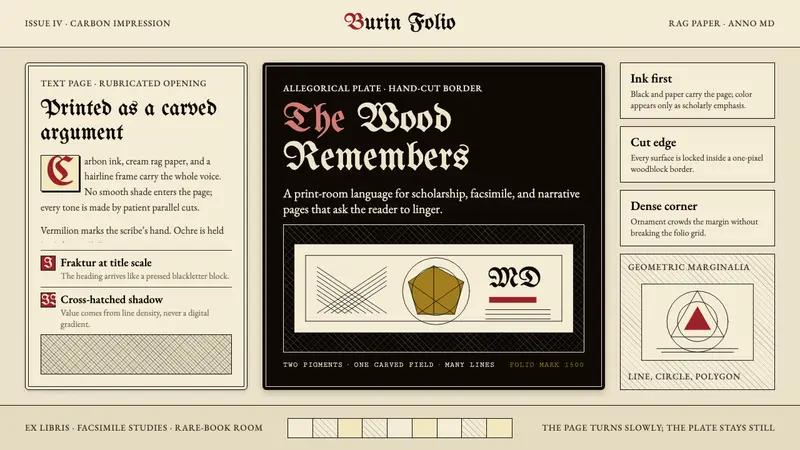 Dürer WoodcutInk remembers everything. Fraktur titles, rag-paper cream, and cross-hatched geometry.
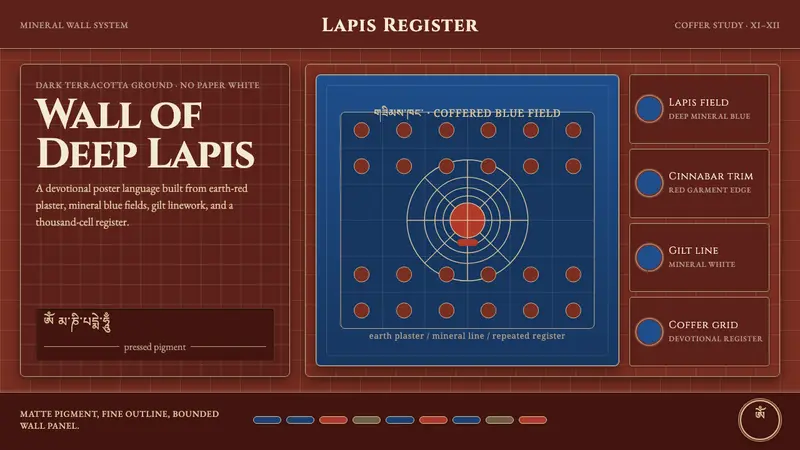 Alchi Monastery MuralDevotional depth. Lapis fields and coffered grids glow on terracotta plaster.