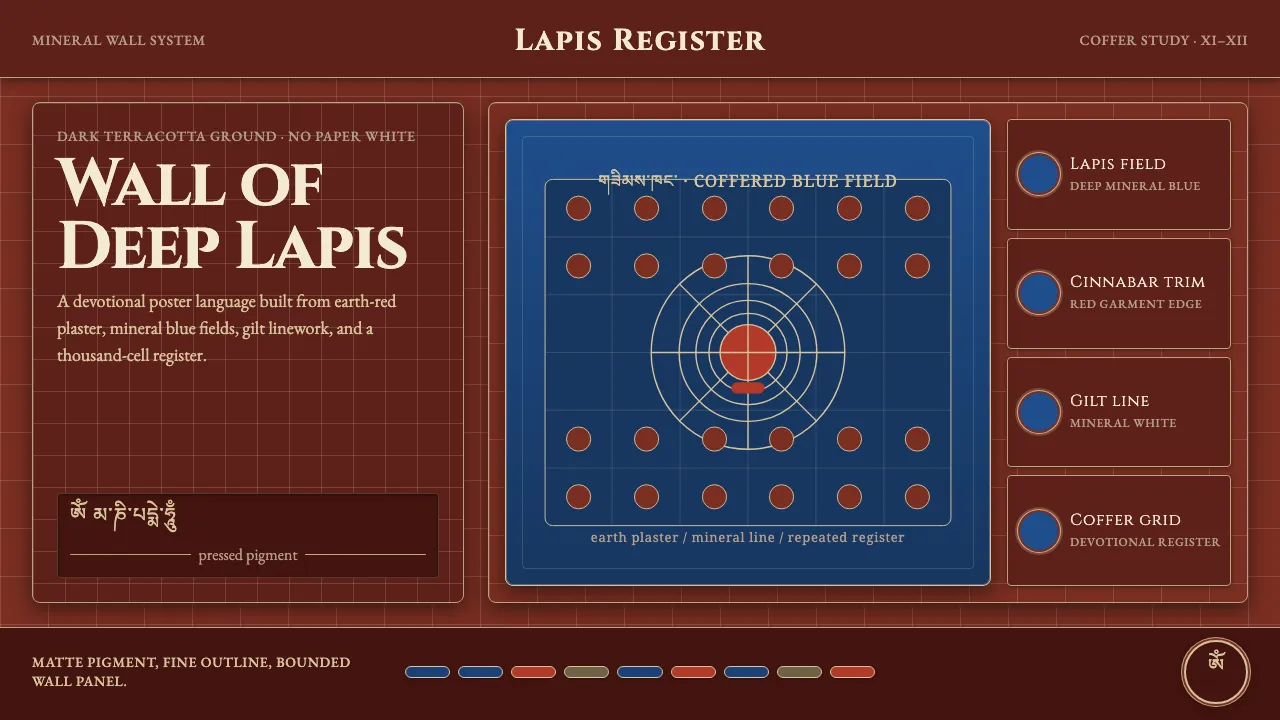
About Alchi Monastery Mural
The murals of Alchi Monastery — the Sumtsek and Dukhang temples, painted in the 11th–12th century — are the great surviving witness to the Kashmiri Buddhist painting tradition. Mineral pigments were pressed directly into a dark terracotta-red plastered wall, so lapis-lazuli bodhisattvas in intense, undimmed blue and thousand-Buddha coffered grids float over a deep dark-red earth ground, drawn in fine round-faced line.
This design system distills that wall into a digital language: a dark terracotta-red page ground that never lightens toward cream, a mineral lapis blue held deep rather than digital-flat, and coffered thousand-Buddha lattices standing in for card grids and dividers.
- Origin
- Alchi, Ladakh — western Himalaya, Central Asia
- Era
- 11th–12th century; principal surviving witness to the Kashmiri Buddhist mural tradition
- Key figures
- anonymous Kashmiri master painters · Alchi Sumtsek temple painters · Alchi Dukhang temple painters
- Movements
- Kashmiri Buddhist mural painting · Indo-Tibetan tantric iconography
Alchi Monastery Mural design spec
Colors
Typography
The other 11 sections — buttons, cards, spacing, motion, techniques and more — open once you unlock. Download the DESIGN.md or send it to your AI in one click. Unlock once, yours forever.
Sign up nowStyles similar to Alchi Monastery Mural
Also inspired by art & artists, with a close feel.
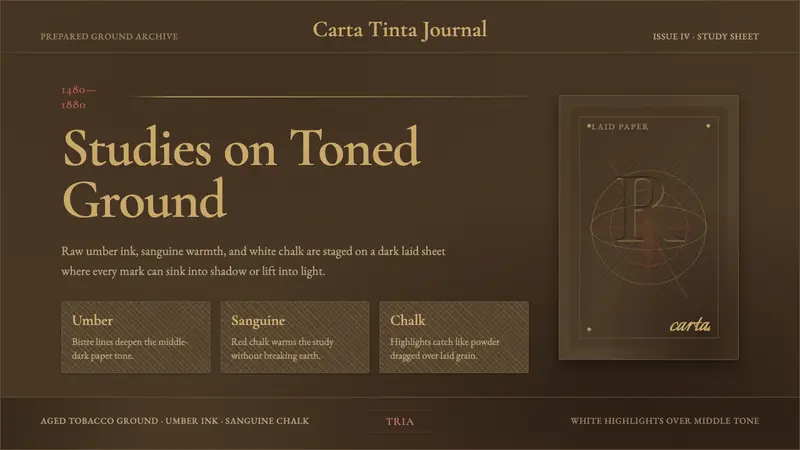 Raw Umber SketchbookMiddle tone becomes drama. Tobacco paper, Garamond type, sanguine marks, chalk hatching.
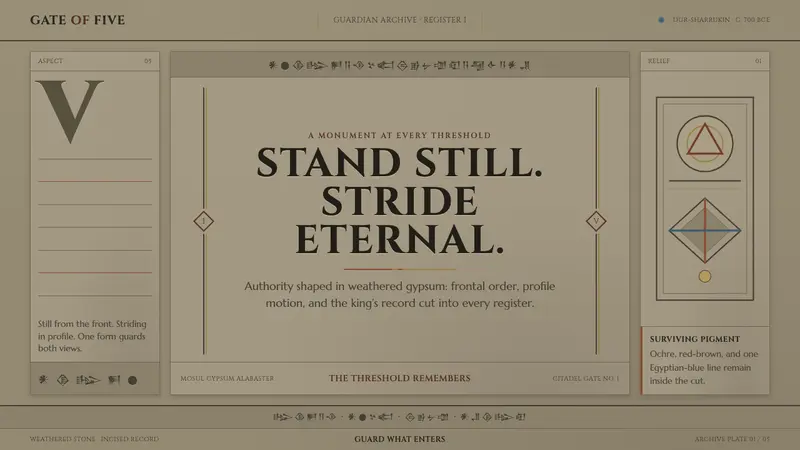 Assyrian Lamassu ReliefAuthority carved into silence. Buff-gray stone, monumental capitals, and cuneiform registers.
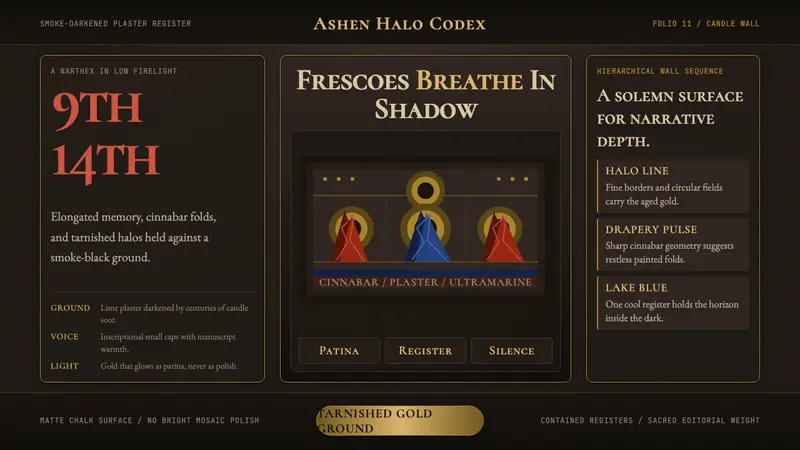 Macedonian Ohrid Fresco (Byzantine)Sacred darkness breathes. Tarnished gold rings, cinnabar folds, and plaster grain carry it.
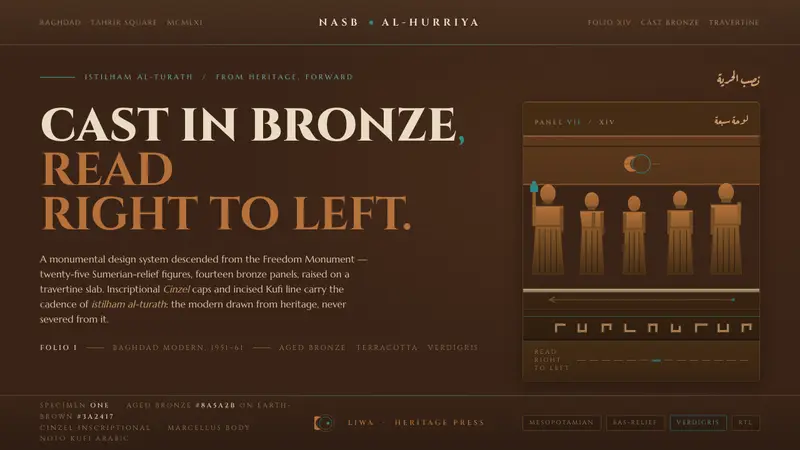 Jewad Selim Baghdad ModernCast in bronze, read right to left. Aged-bronze grounds, incised Kufi line, verdigris accents.