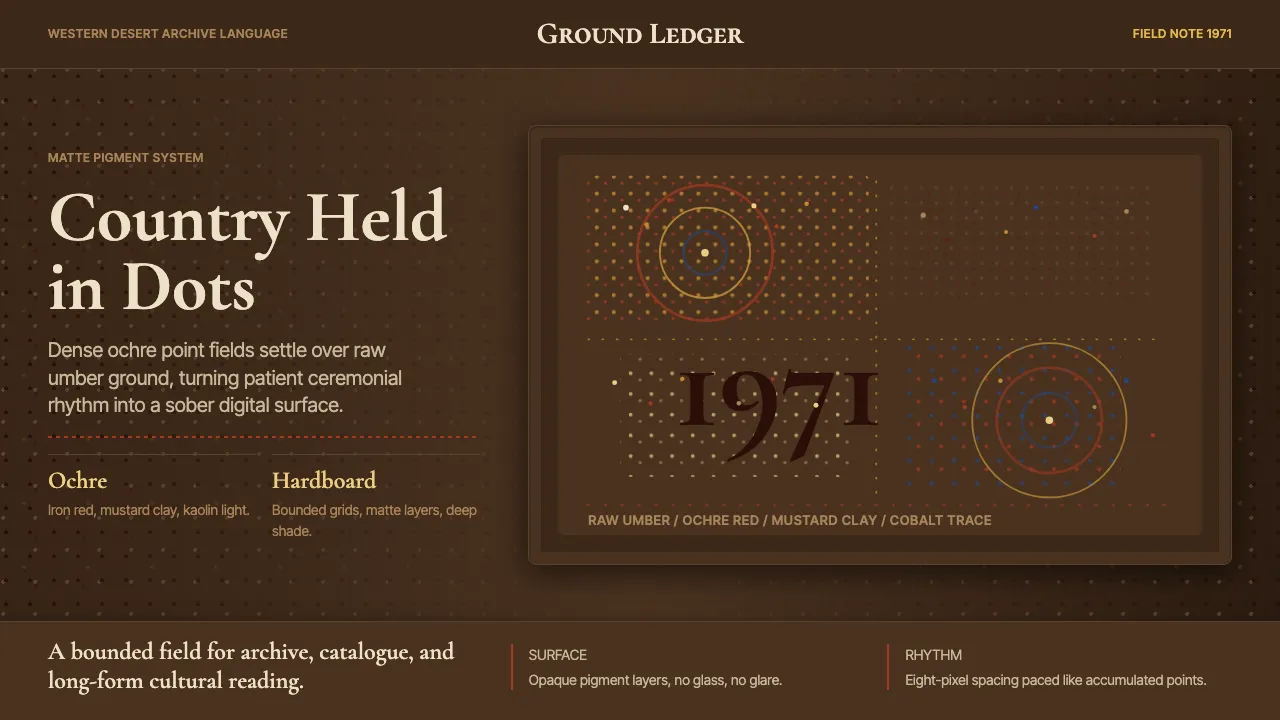
About Aboriginal Dot Painting (Papunya 1971)
In July 1971, senior Pintupi, Luritja, and Warlpiri men at Papunya settlement translated sacred ground sand-paintings into permanent acrylic dot compositions on hardboard — birthing one of the most significant art movements of the late twentieth century. This design system channels the dense ochre dot-fields, raw umber earth tones, and controlled point rhythms of those founding Papunya Tula boards into a digital interface language that honors materiality and Country.
Learn more about the Aboriginal Dot Painting (Papunya 1971) style
- Origin
- Papunya settlement, Northern Territory, Australia
- Era
- 1971 movement origin at Papunya; Papunya Tula Artists founded 1972; ongoing
- Key figures
- Clifford Possum Tjapaltjarri · Johnny Warangkula Tjupurrula · Mick Namarari Tjapaltjarri · Geoffrey Bardon
- Movements
- Western Desert art · Australian contemporary Indigenous art · dot-and-circle iconography
Aboriginal Dot Painting (Papunya 1971) design spec
Colors
Typography
The other 11 sections — buttons, cards, spacing, motion, techniques and more — open once you unlock. Download the DESIGN.md or send it to your AI in one click. Unlock once, yours forever.
Sign up nowStyles similar to Aboriginal Dot Painting (Papunya 1971)
Also inspired by art & artists, with a close feel.
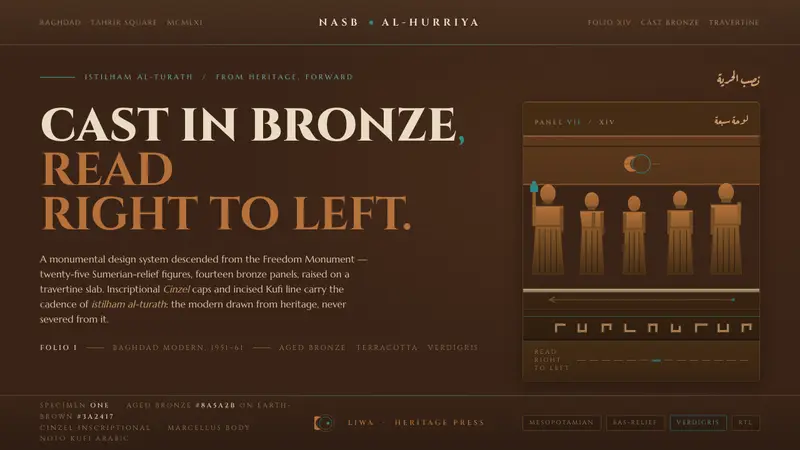 Jewad Selim Baghdad ModernCast in bronze, read right to left. Aged-bronze grounds, incised Kufi line, verdigris accents.
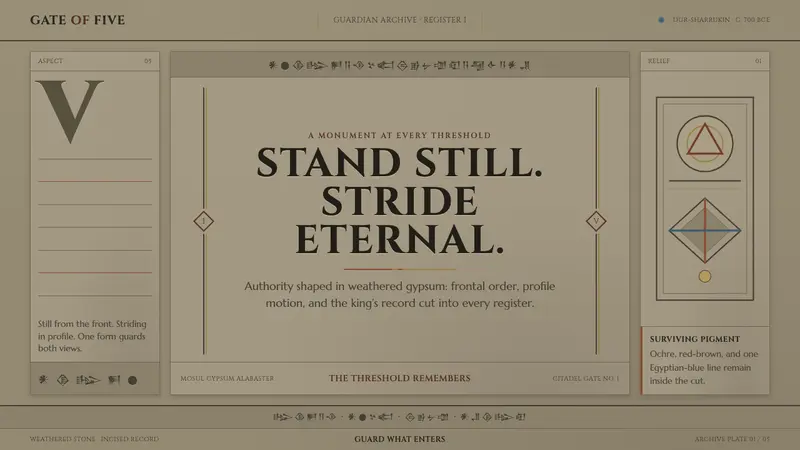 Assyrian Lamassu ReliefAuthority carved into silence. Buff-gray stone, monumental capitals, and cuneiform registers.
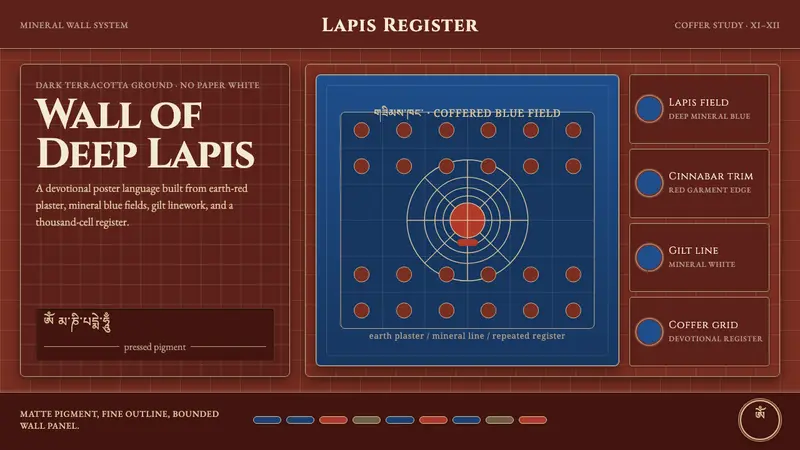 Alchi Monastery MuralDevotional depth. Lapis fields and coffered grids glow on terracotta plaster.
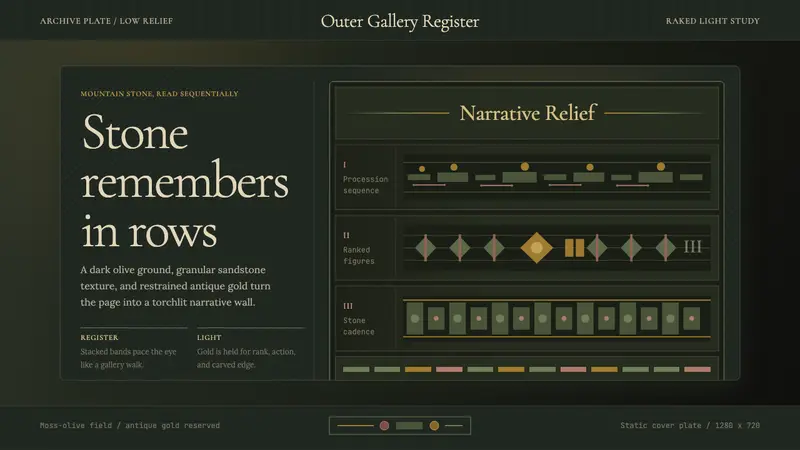 Cambodian Angkor Bas-ReliefStone speaks in shadow. Olive registers and antique gold carve a torchlit archive.