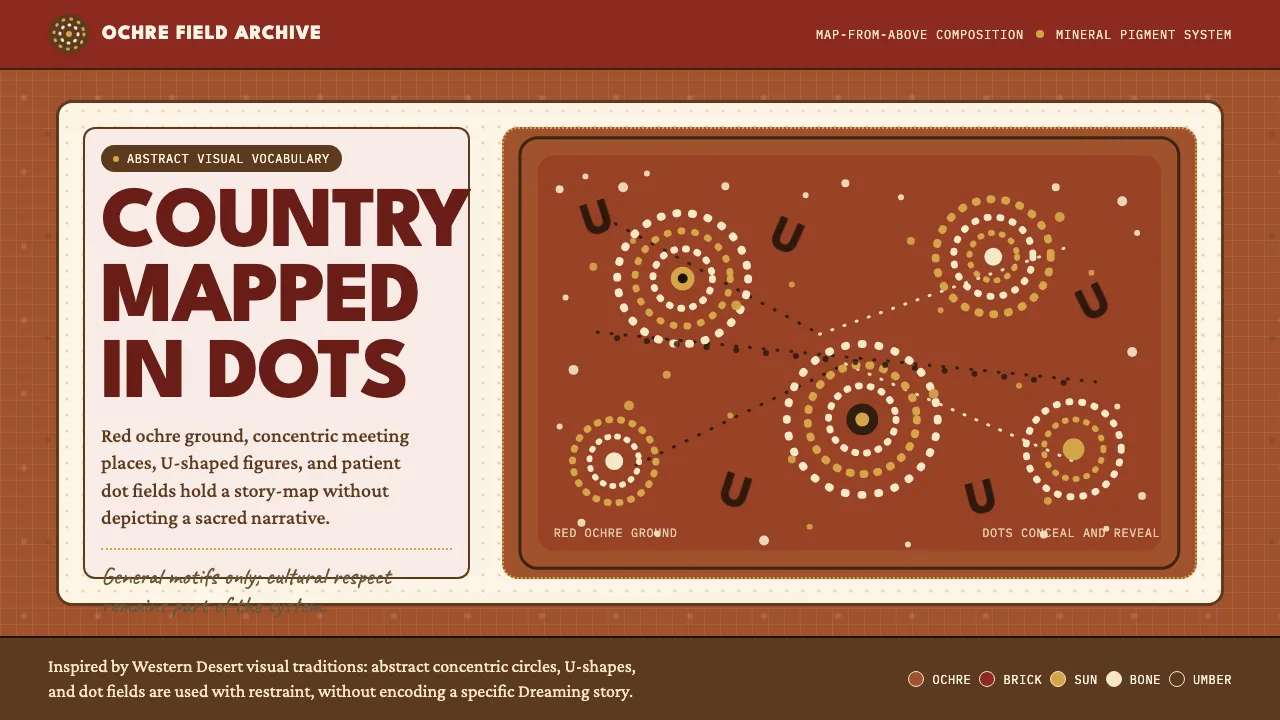
About Aboriginal Dot Painting
Aboriginal dot painting emerged in 1971 when schoolteacher Geoffrey Bardon encouraged Papunya elders to translate sacred body-painting traditions onto canvas. The resulting works — dense fields of acrylic dots encoding Dreaming narratives as map-from-above compositions — launched the most significant Indigenous art movement of the twentieth century.
This design system distills the visual vocabulary of Western Desert painting into interface tokens: red ochre earth grounds, concentric circle motifs (waterholes), U-shapes (sitting figures), and radiating dot fields, all held within a strict mineral-pigment palette of ochre, umber, bone white, and brick red.
- Origin
- Central Australian Desert — Papunya, Yuendumu, Kintore (Western Desert peoples)
- Era
- Contemporary canvas tradition since 1971 (Papunya); oldest continuous art tradition on Earth (40,000+ years)
- Key figures
- Geoffrey Bardon · Clifford Possum Tjapaltjarri · Emily Kngwarreye · Mick Namarari
- Movements
- Western Desert dot painting · Papunya Tula school · contemporary Aboriginal art
Aboriginal Dot Painting design spec
Colors
Typography
The other 11 sections — buttons, cards, spacing, motion, techniques and more — open once you unlock. Download the DESIGN.md or send it to your AI in one click. Unlock once, yours forever.
Sign up nowStyles similar to Aboriginal Dot Painting
Also inspired by crafts & folk art, with a close feel.
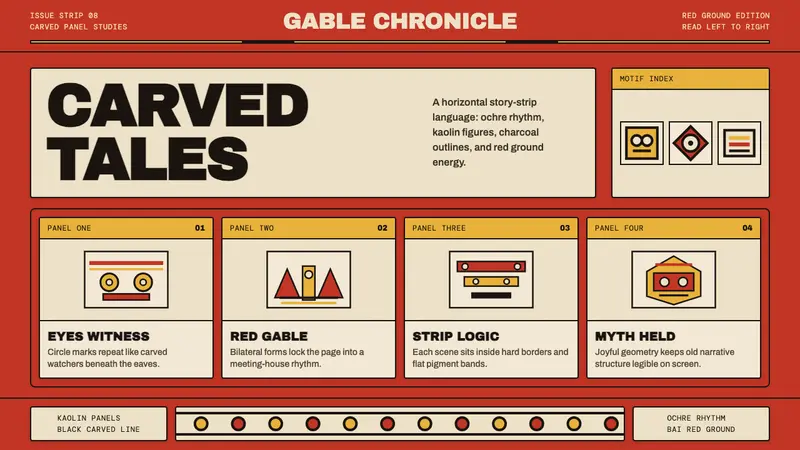 Palauan Bai StoryboardNarrative hits like carved wood. Bai red, ochre bands, kaolin panels, black outlines.
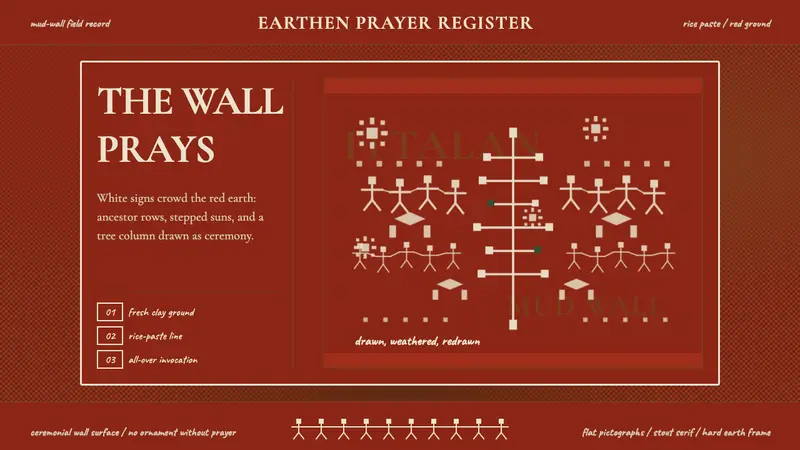 Odisha Saura Tribal MuralSacred density. Rice-white pictographs crowd a red-earth wall in ritual rhythm.
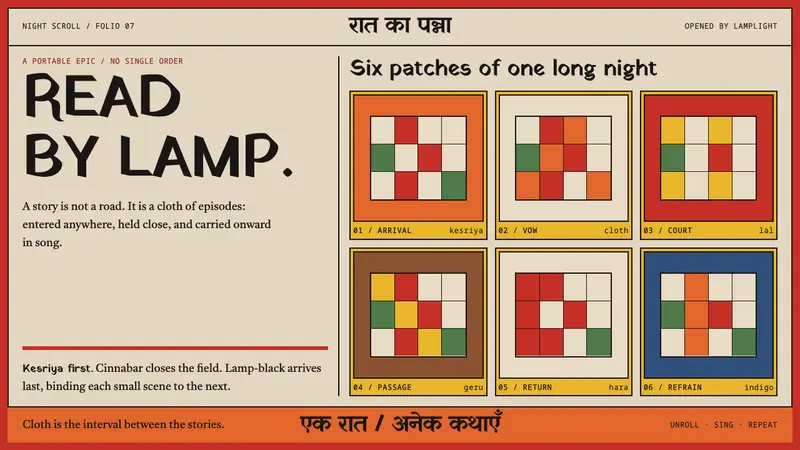 Phad Scroll PaintingAn epic refuses a single order. Kesriya cells and cinnabar rules open by lamplight.
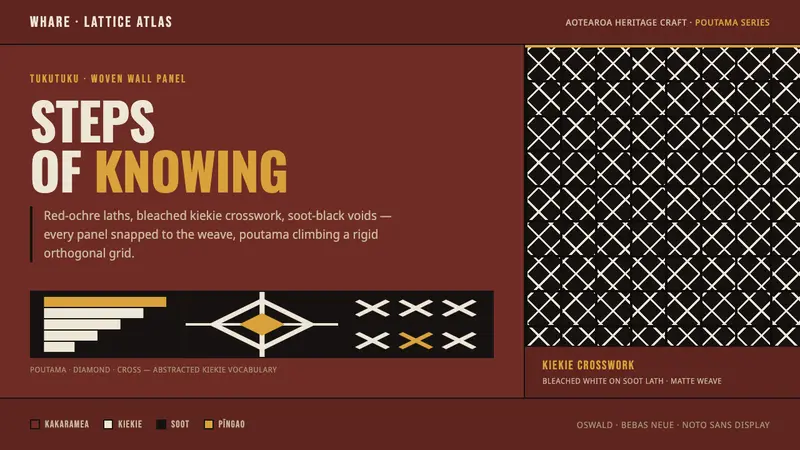 Māori Tukutuku PanelTukutuku weave, rendered strict. Bleached kiekie crosswork laces poutama steps on red-ochre lath.