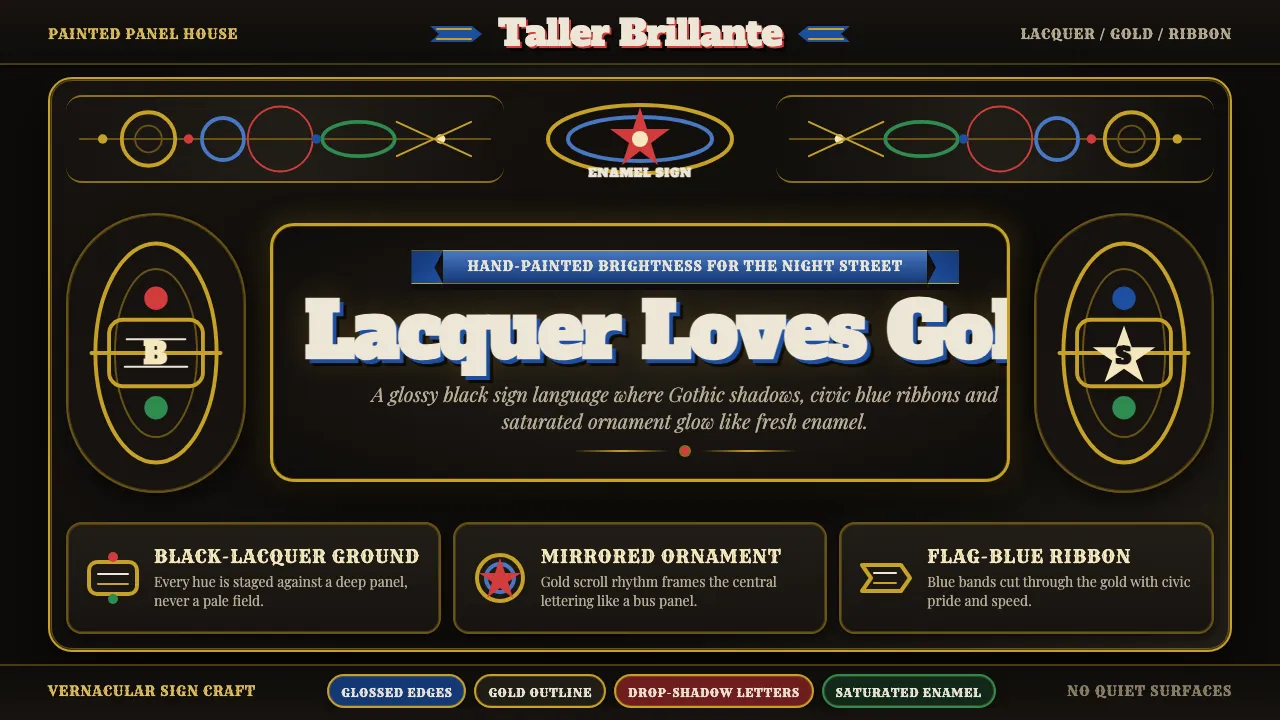
About Fileteado Porteño Sign Art
Filete porteño is the ornamental sign-painting language born on the buses and trucks of Buenos Aires around 1900, when Italian and Spanish immigrant craftsmen began decorating collectivos with scrolling acanthus leaves, ribbons and jewel-toned flourishes. What started as a way to personalize a vehicle became a full vernacular art form — symmetrical vine work framing bold Gothic lettering, all laid over glossy black-lacquered panels so the gold, blue, red and green glow like enamel. Declared UNESCO Intangible Cultural Heritage in 2015, filete porteño survives today on shopfronts, tango posters and street murals across the city. Its DNA is contrast: saturated pigment against lacquered black, hand-painted precision against Baroque exuberance, civic pride (the flag-blue ribbon) fused with immigrant craft technique.
- Origin
- Buenos Aires, Argentina
- Era
- c.1900–present, flourishing through the 20th century; UNESCO Intangible Cultural Heritage inscribed 2015
- Key figures
- the fileteadores (anonymous collective tradition of bus and truck sign-painters) · porteño transport-company painting workshops
- Movements
- filete porteño · Baroque-derived scrollwork and vernacular sign painting
Fileteado Porteño Sign Art design spec
Colors
Typography
The other 11 sections — buttons, cards, spacing, motion, techniques and more — open once you unlock. Download the DESIGN.md or send it to your AI in one click. Unlock once, yours forever.
Sign up nowStyles similar to Fileteado Porteño Sign Art
Also inspired by crafts & folk art, with a close feel.
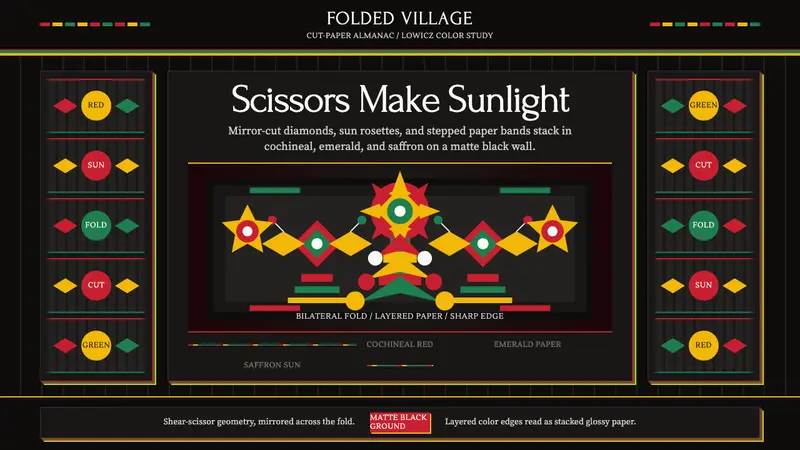 Polish Wycinanki (paper-cut folk art)Cuts sing in symmetry. Cochineal, emerald, and saffron layers blaze on black.
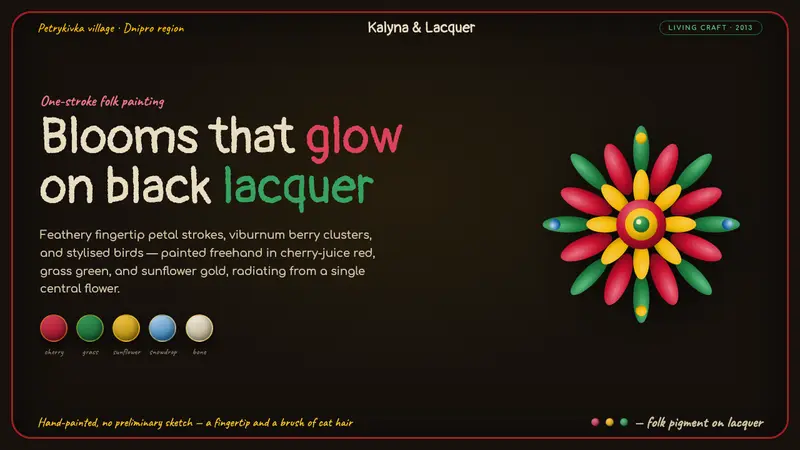 Petrykivka Folk PaintingFolk maximalism that glows. One-stroke red-green-gold blooms radiate from a center on black lacquer.
 Chinese New Year Spring FestivalThe new year arrives at full volume. Lantern red glows through lacquer night and gold sparks.
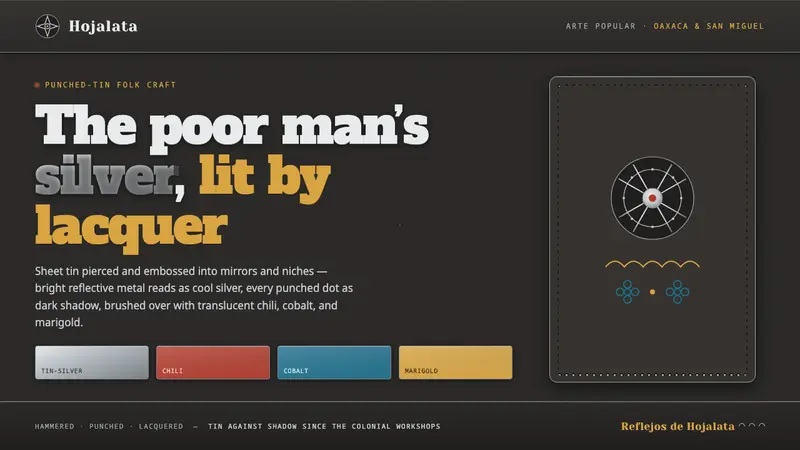 Punched Tin HojalataThe poor man's silver. Pierced tin on oxidized shadow, washed in chili, cobalt, marigold lacquer.