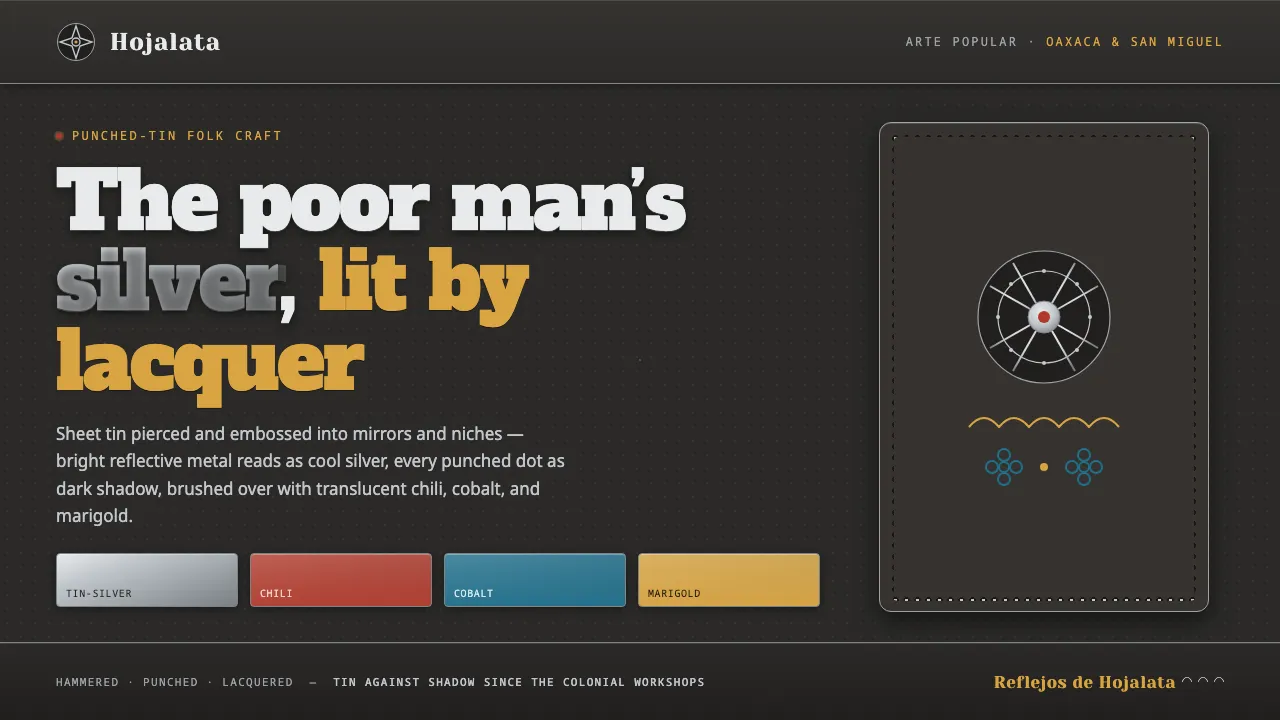
About Punched Tin Hojalata
Mexican hojalata — "the poor man's silver" — is the pre-1900 folk craft of piercing and embossing sheet tin into mirrors, frames, and ornaments, practised in Oaxaca and San Miguel de Allende. Bright reflective tin reads as cool silver; punched dots and recessed grounds read as dark shadow.
This design system translates that metalwork to screen: a dark oxidized-tin ground the pierced pattern reads against, bright tin-silver highlights, dotted repousse borders, and translucent chili, cobalt, and marigold lacquers laid over reflective metal.
- Origin
- Oaxaca and San Miguel de Allende, Mexico
- Era
- pre-1900 (Spanish-colonial tinwork continuing into the present)
- Key figures
- Oaxacan hojalatero workshops · San Miguel de Allende tinsmith families · Mexican arte popular folk-art guilds
- Movements
- Mexican folk art (arte popular) · Hojalata punched-tin work · Colonial-era tinsmithing
Punched Tin Hojalata design spec
Colors
Typography
The other 11 sections — buttons, cards, spacing, motion, techniques and more — open once you unlock. Download the DESIGN.md or send it to your AI in one click. Unlock once, yours forever.
Sign up nowStyles similar to Punched Tin Hojalata
Also inspired by crafts & folk art, with a close feel.
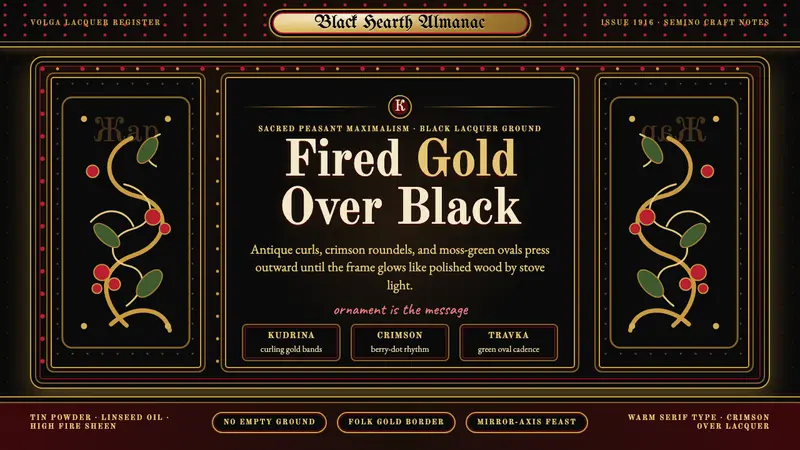 Russian KhokhlomaOrnament is the message. Antique gold curls and crimson dots crowd a black lacquer grid.
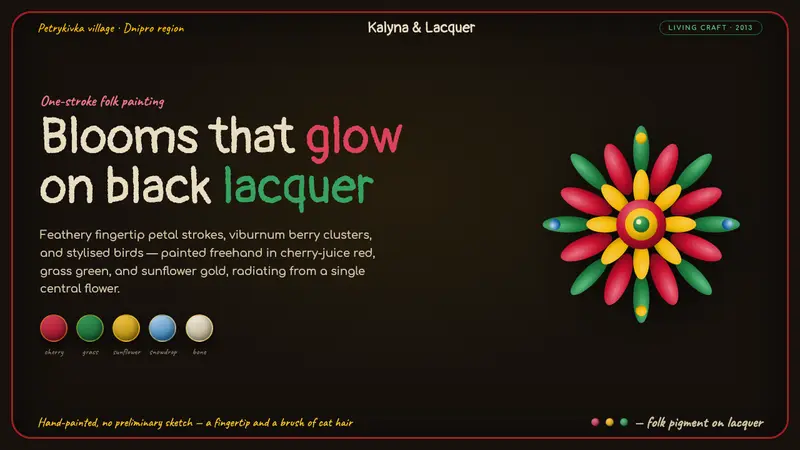 Petrykivka Folk PaintingFolk maximalism that glows. One-stroke red-green-gold blooms radiate from a center on black lacquer.
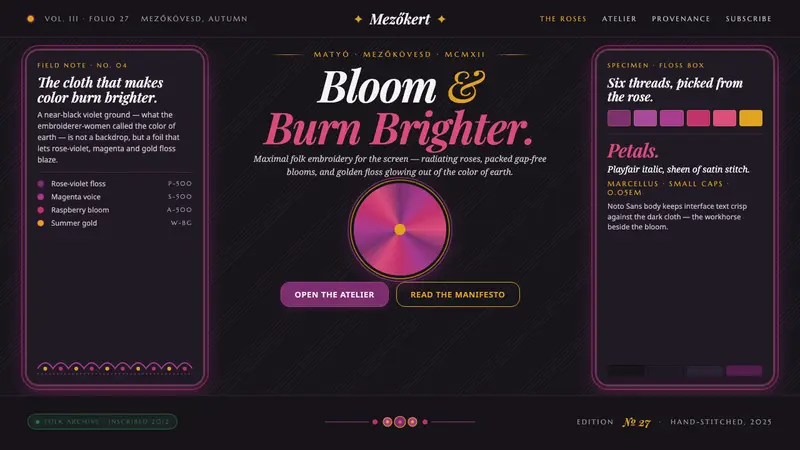 Hungarian Matyó VioletFolk embroidery, maximal. Rose-violet and gold blooms blaze gap-free on near-black violet cloth.
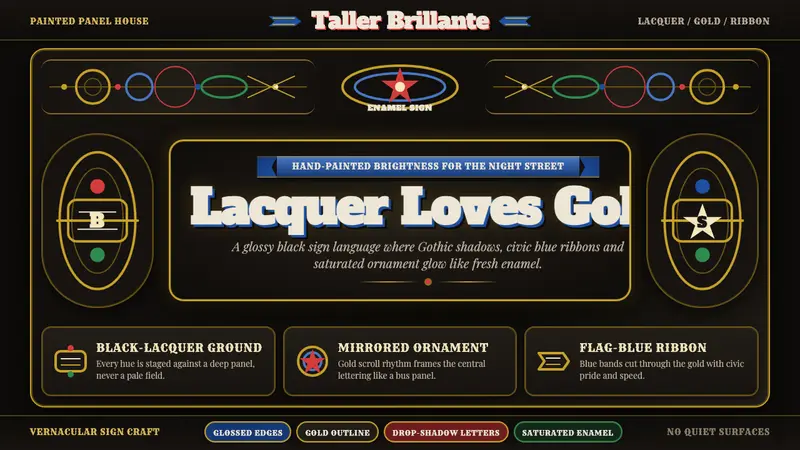 Fileteado Porteño Sign ArtBlack lacquer turns maximal. Gold scrolls, blue ribbons and Gothic shadows glow like enamel.