About Yoruba Aso Oke
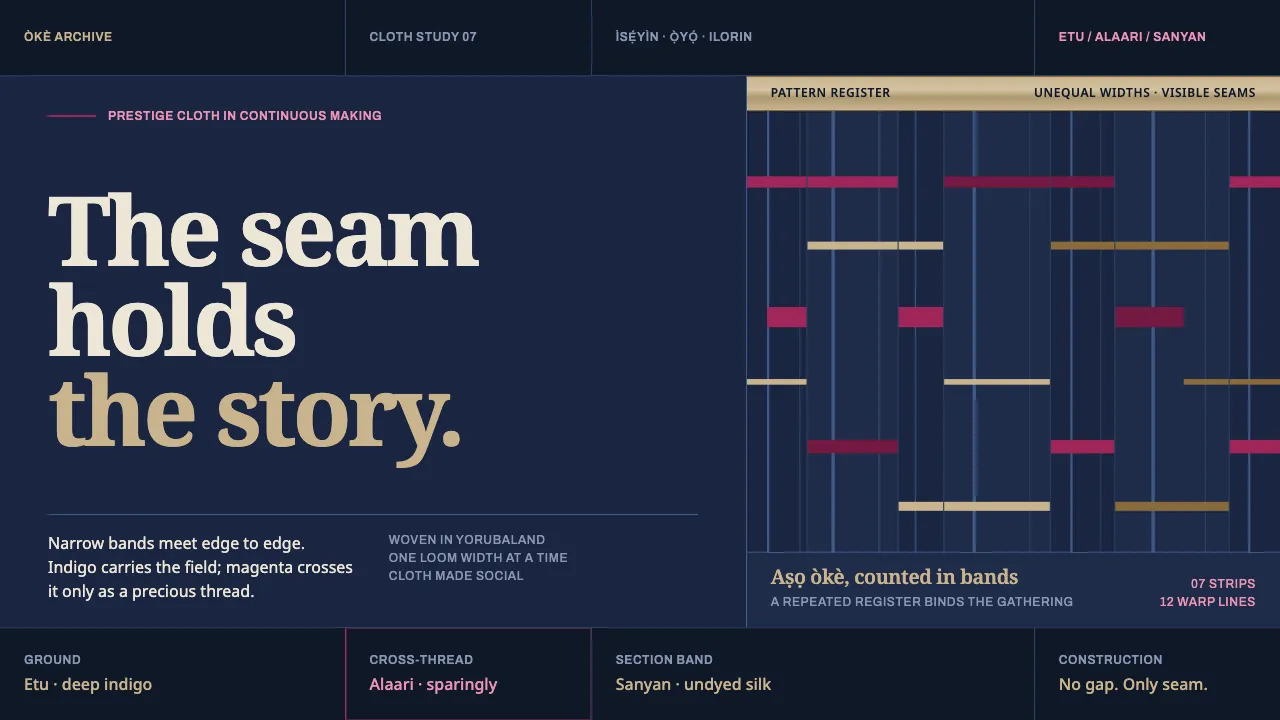
Aso oke is woven by men on narrow horizontal treadle looms, in strips four inches wide for a robe and up to eighteen for a woman's wrapper, then sewn edge to edge into a finished cloth. Etu, the indigo type, is dipped until it reads almost black, broken only by warp stripes a single thread wide.
This system builds every layout the same way: unequal narrow columns butted together with the seam left visible, magenta alaari entering only as stripe and weft-float brocade, sanyan beige carrying the section bands. No gaps, no shadows — separation is a seam.
- Origin
- Yorubaland — Iseyin, Oyo, Ilorin and Okene, south-west Nigeria
- Era
- pre-1900; in continuous production through today
- Key figures
- Duncan Clarke · the male narrow-strip weavers of Iseyin · the weavers of Ilorin
- Movements
- West African narrow-strip weaving · aso ebi family uniform dress · the etu / alaari / sanyan prestige triad
Yoruba Aso Oke design spec
Colors
Typography
The other 11 sections — buttons, cards, spacing, motion, techniques and more — open once you unlock. Download the DESIGN.md or send it to your AI in one click. Unlock once, yours forever.
Sign up nowStyles similar to Yoruba Aso Oke
Also inspired by crafts & folk art, with a close feel.
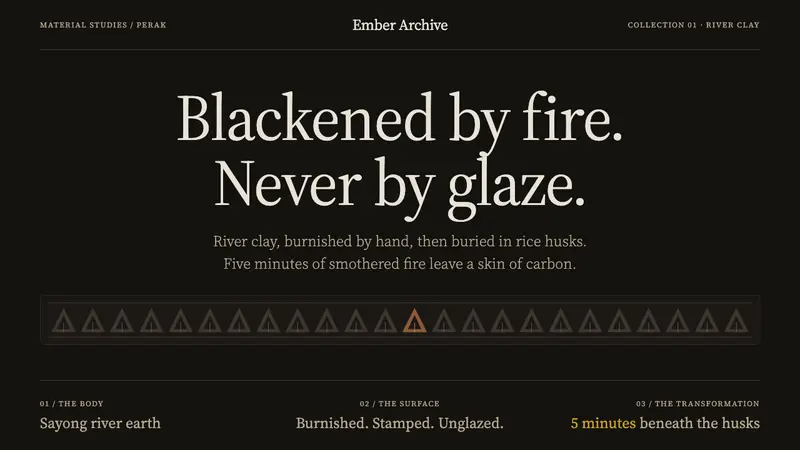 Labu Sayong Black ClayBlack by fire, not glaze. Matte carbon, warm clay and pressed triangles in quiet horizontal bands.
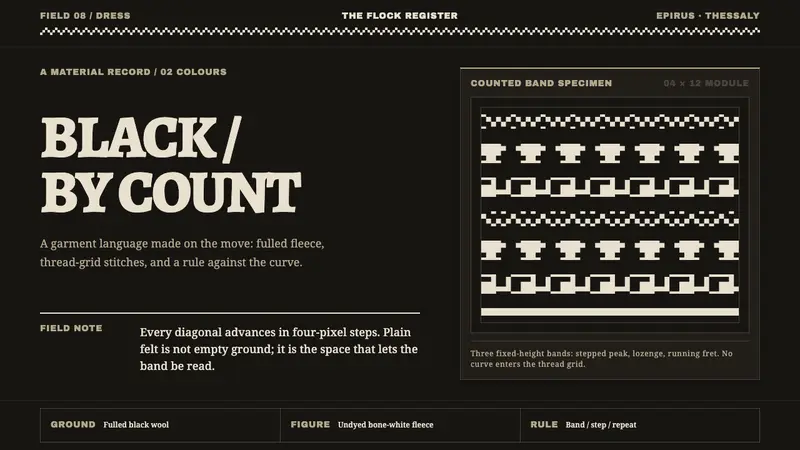 Sarakatsani ShepherdsDiscipline woven into darkness. Bone-white stepped bands count across matte black felt.
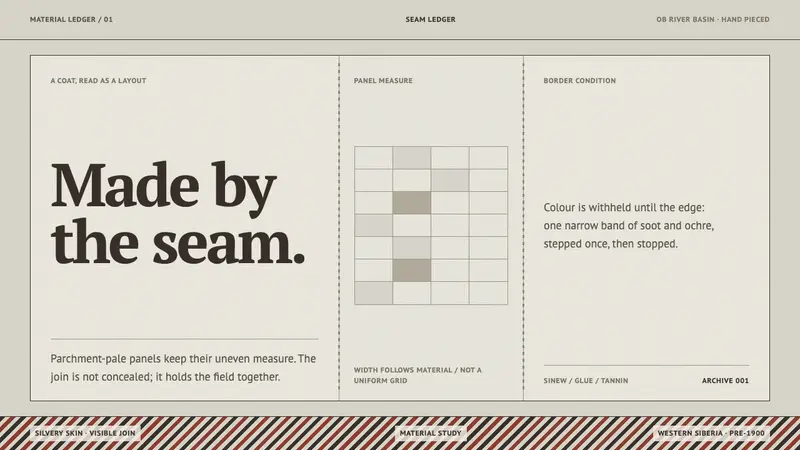 Khanty Fish-Skin CoatThe seam is the structure. Parchment panels and one soot-ochre border hold the field.
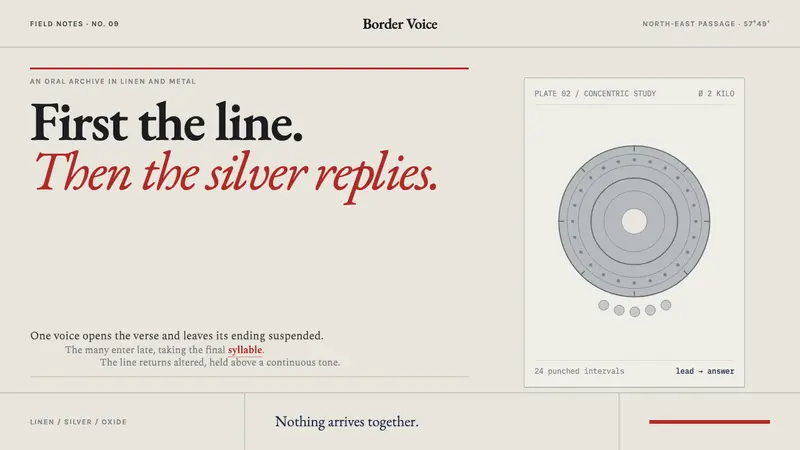 Setu Leelo SilverEvery line returns changed. Matte silver rings answer across linen, cut by one red band.