About Sarakatsani Shepherds
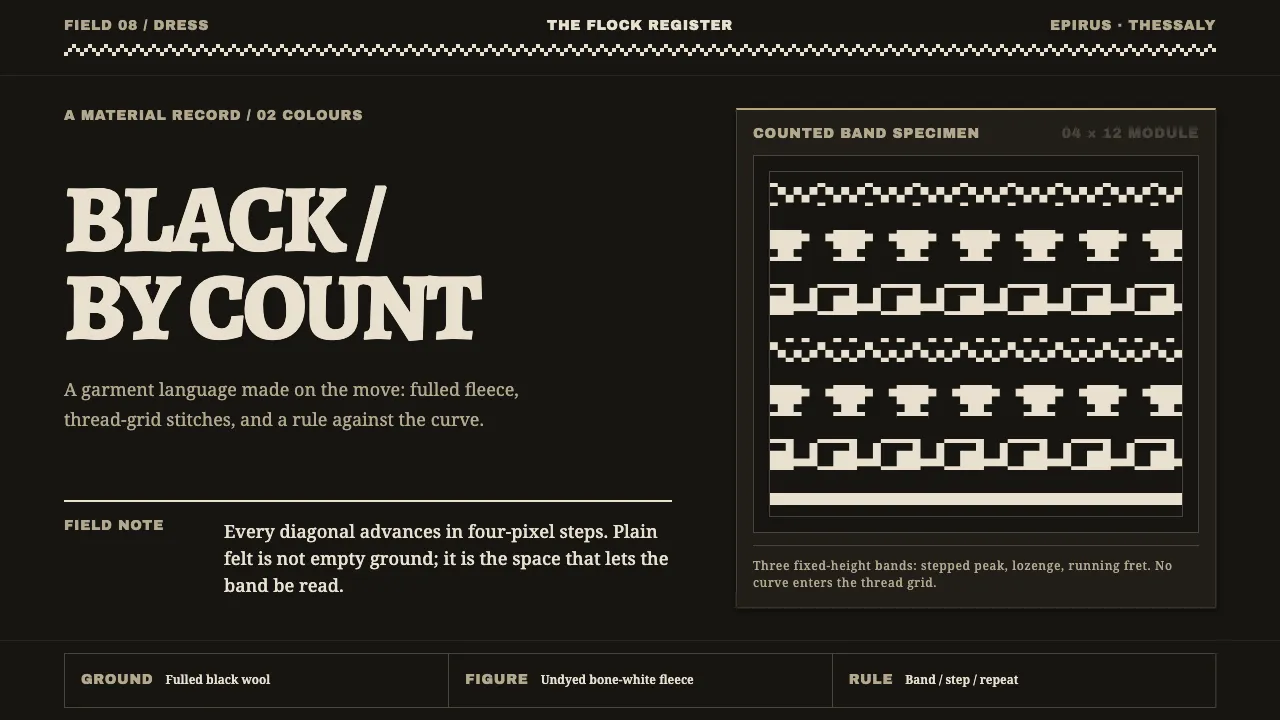
The Sarakatsani drove their flocks between Balkan summer pasture and winter lowland, and made their clothing from the animals they walked with. Everything reduces to two colours: fulled black wool for the cloak and the woman's fustani, undyed bone-white fleece for the chemise beneath it.
The ornament is counted cross-stitch on a thread grid — triangles, lozenges, chevrons, the running meander — packed into horizontal bands of fixed height with plain black between them. Scholars have put it next to Greek Geometric vase painting and found the same grammar. This system keeps that discipline: banded, stepped, matte, and short on colour.
- Origin
- Epirus, Macedonia and Thessaly, Greece; wider Balkans
- Era
- pre-1900 (nomadic-period dress, documented before mid-20th-century settlement)
- Key figures
- John K. Campbell · Benaki Museum
- Movements
- Balkan transhumant pastoralism · Greek folk textile art · Geometric-period ornament
Sarakatsani Shepherds design spec
Colors
Typography
The other 11 sections — buttons, cards, spacing, motion, techniques and more — open once you unlock. Download the DESIGN.md or send it to your AI in one click. Unlock once, yours forever.
Sign up nowStyles similar to Sarakatsani Shepherds
Also inspired by crafts & folk art, with a close feel.
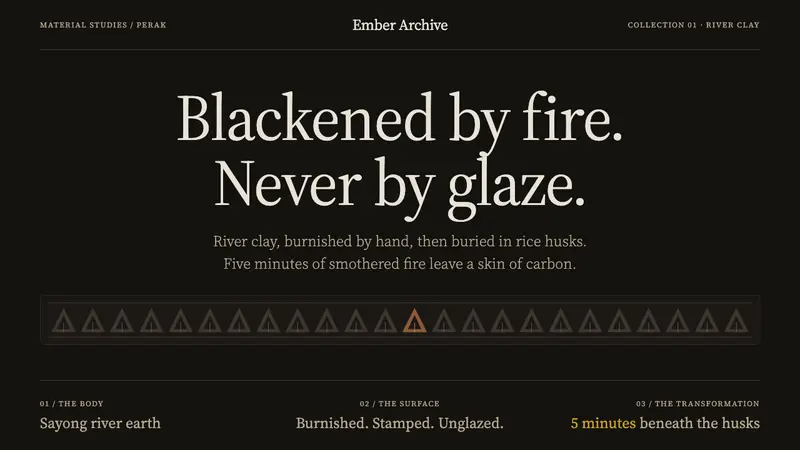 Labu Sayong Black ClayBlack by fire, not glaze. Matte carbon, warm clay and pressed triangles in quiet horizontal bands.
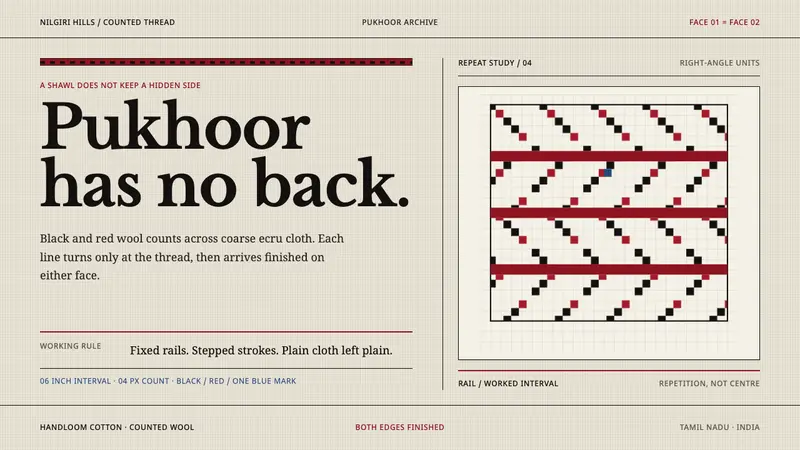 Toda PukhoorNo hidden side. Black-red stepped wool repeats across ecru rails, finished front and back.
 Edo Kimono TextilePattern becomes language. Indigo repeats, cream resist lines, one vermilion panel breaks the field.
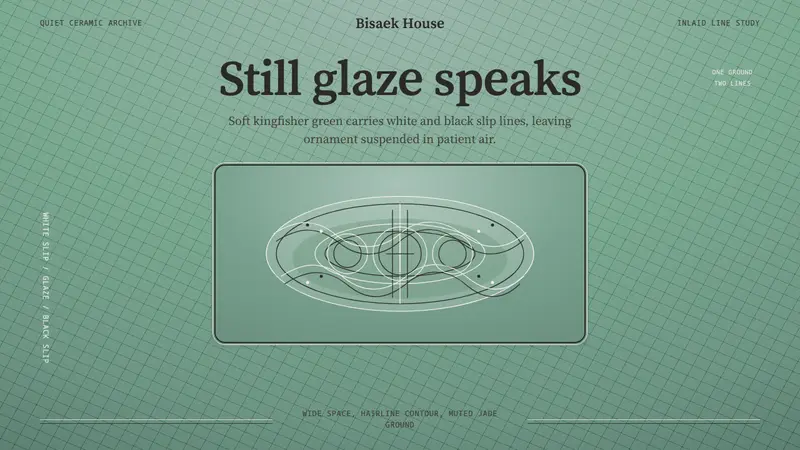 Goryeo Celadon 高麗青瓷Stillness carries ornament. Bisaek jade ground holds white and black hairline inlay.