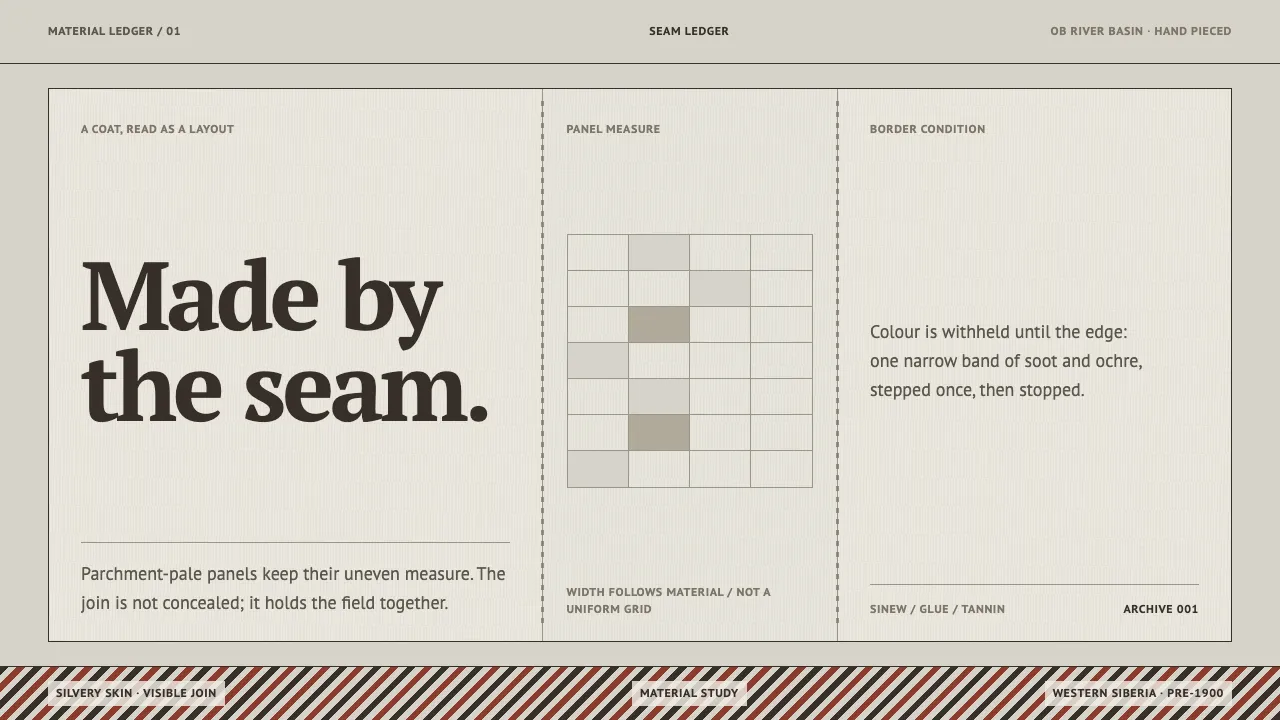
About Khanty Fish-Skin Coat
Along the Ob river, Khanty women tanned sturgeon, sterlet and burbot into a soft translucent leather, then pieced it into coats with fish-glue joins and sinew thread. The skin keeps its own colour — silvery, pale tan, lit through rather than opaque — and whatever else it carries comes from smoke, oil and alder tannin, not from pigment.
This system takes the coat literally. Panels are irregular because a fish decides their width. Seams stay visible and do the drawing. Colour is withheld until the border, where one narrow stepped band of soot black and ochre closes the composition and then stops.
- Origin
- Ob river basin, Western Siberia
- Era
- pre-1900 Ob-Ugric practice, documented into the twentieth century
- Key figures
- Khanty women tanners and sewers · Museum of Ethnography Budapest · Milwaukee Public Museum · Victoria and Albert Museum
- Movements
- Ob-Ugric fish-skin sewing · circumpolar fish-leather tradition
Khanty Fish-Skin Coat design spec
Colors
Typography
The other 11 sections — buttons, cards, spacing, motion, techniques and more — open once you unlock. Download the DESIGN.md or send it to your AI in one click. Unlock once, yours forever.
Sign up nowStyles similar to Khanty Fish-Skin Coat
Also inspired by crafts & folk art, with a close feel.
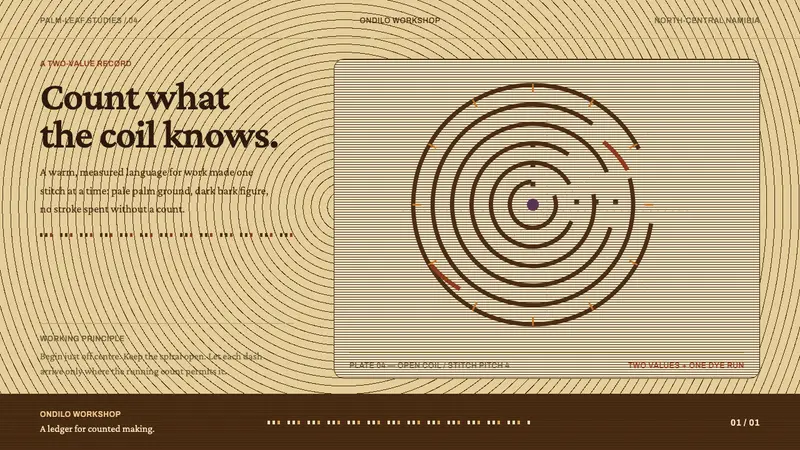 Ovambo BasketryPattern is counted, never drawn. Warm straw and omuve brown turn an open coil into order.
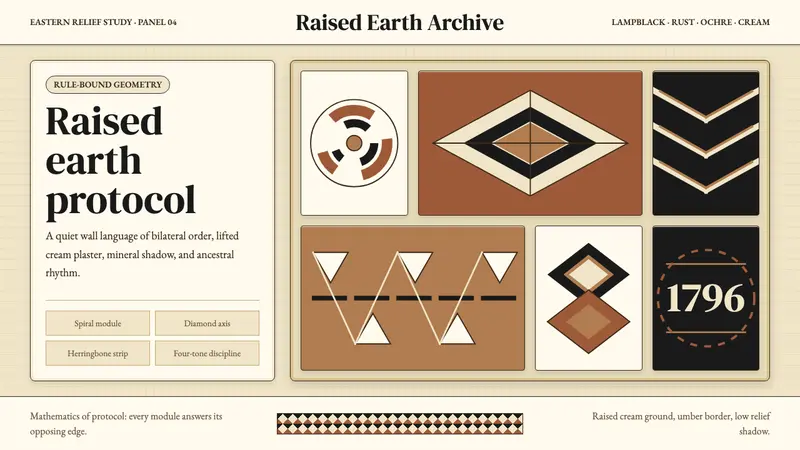 Imigongo (Rwanda Cow-Dung Geometric Art)Quiet precision. Cream relief grid sets lampblack, rust, and ochre into ancestral order.
 Beni Ourain Berber CarpetRestraint feels tactile. Greige wool field, Oswald type, and a loose charcoal lattice.
 Guérande Fleur de SelCrystal white is the exception. Mineral serif and hairline grids rise from wet clay-grey.