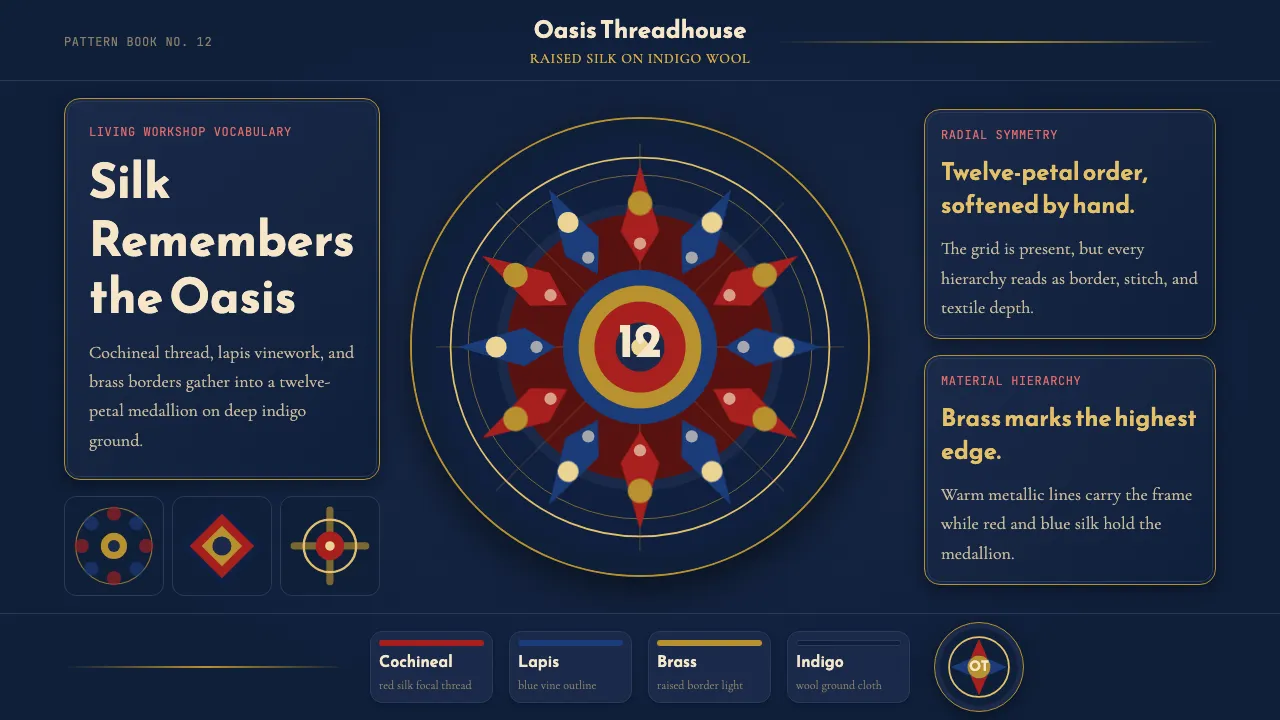
About Uyghur Xinjiang Suzani Embroidery
Born from the silk-thread workshops of Kashgar, Hotan, and Yarkand, this design system translates the radial medallion vocabulary of Uyghur suzani embroidery into digital surfaces. Cochineal reds and lapis blues glow against deep indigo wool ground, with brass metallic accents marking hierarchy.
Every element references the stitch itself — vine-border corners on cards, rosette-patterned radial compositions, and the raised texture of metallic thread on high-status borders. The system honors a living craft tradition spanning centuries of oasis workshop practice.
Learn more about the Uyghur Xinjiang Suzani Embroidery style
- Origin
- Southern Xinjiang oases — Kashgar, Hotan, Yarkand, Atush — China
- Era
- 18th-century Yarkand court textiles through modern Hotan cooperatives 2000–present
- Key figures
- Rahile Dawut · Lisa Ross · Aysulu · Abdusalam Heyit
- Movements
- Karakhanid arabesque tradition · 18th-century Yarkand court patronage · Hotan cooperative revival
Uyghur Xinjiang Suzani Embroidery design spec
Colors
Typography
The other 11 sections — buttons, cards, spacing, motion, techniques and more — open once you unlock. Download the DESIGN.md or send it to your AI in one click. Unlock once, yours forever.
Sign up nowStyles similar to Uyghur Xinjiang Suzani Embroidery
Also inspired by crafts & folk art, with a close feel.
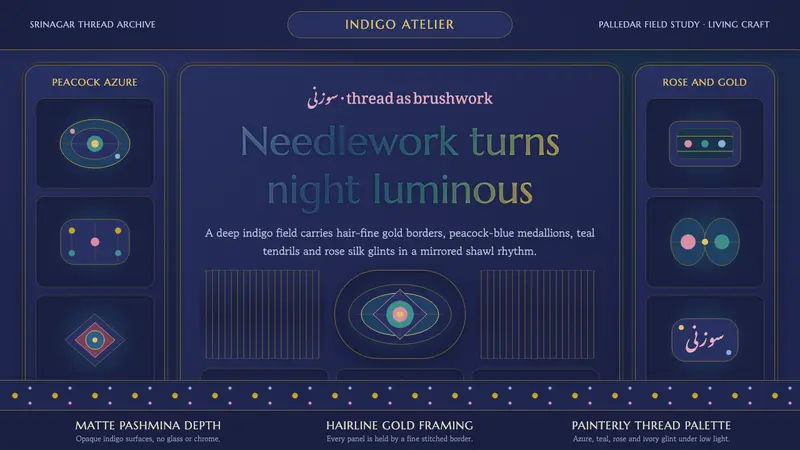 Kashmiri Sozni Shawl EmbroideryNight made luminous. Indigo ground, gold hairlines and silk medallions stitch the frame.
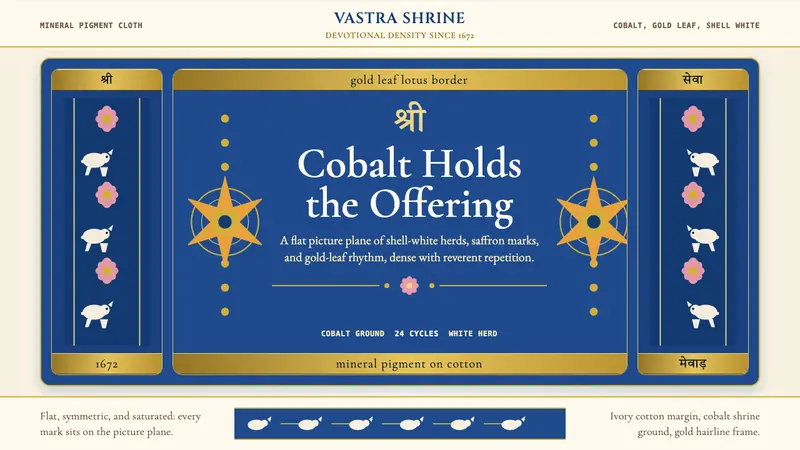 Rajasthani Pichwai (Nathdwara)Devotional density in cobalt. Gold borders, shell-white herds, lotus pink on ivory cotton.
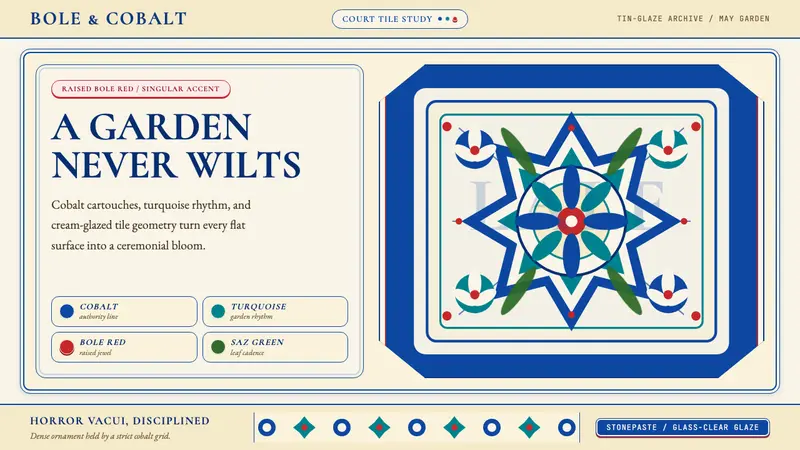 Turkish İznik CeramicBlooms with discipline. Cobalt grid and cream glaze hold turquoise motifs with one bole-red jewel.
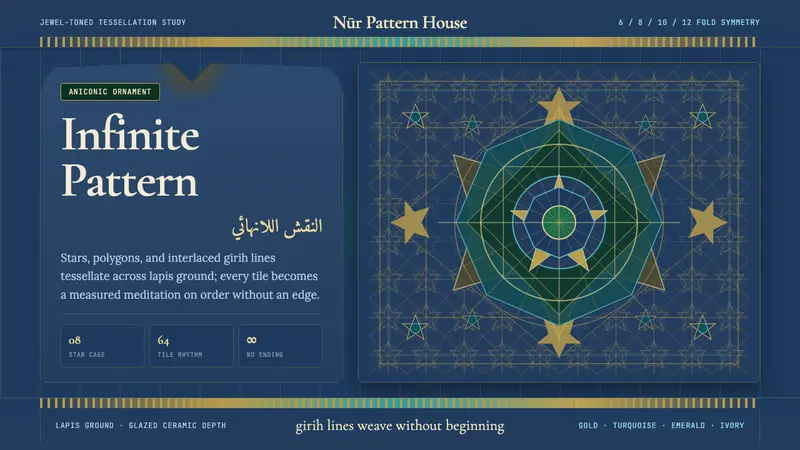 Islamic Geometric ArtInfinite order, fully tiled. Lapis ground with gold girih lines and turquoise star cells.