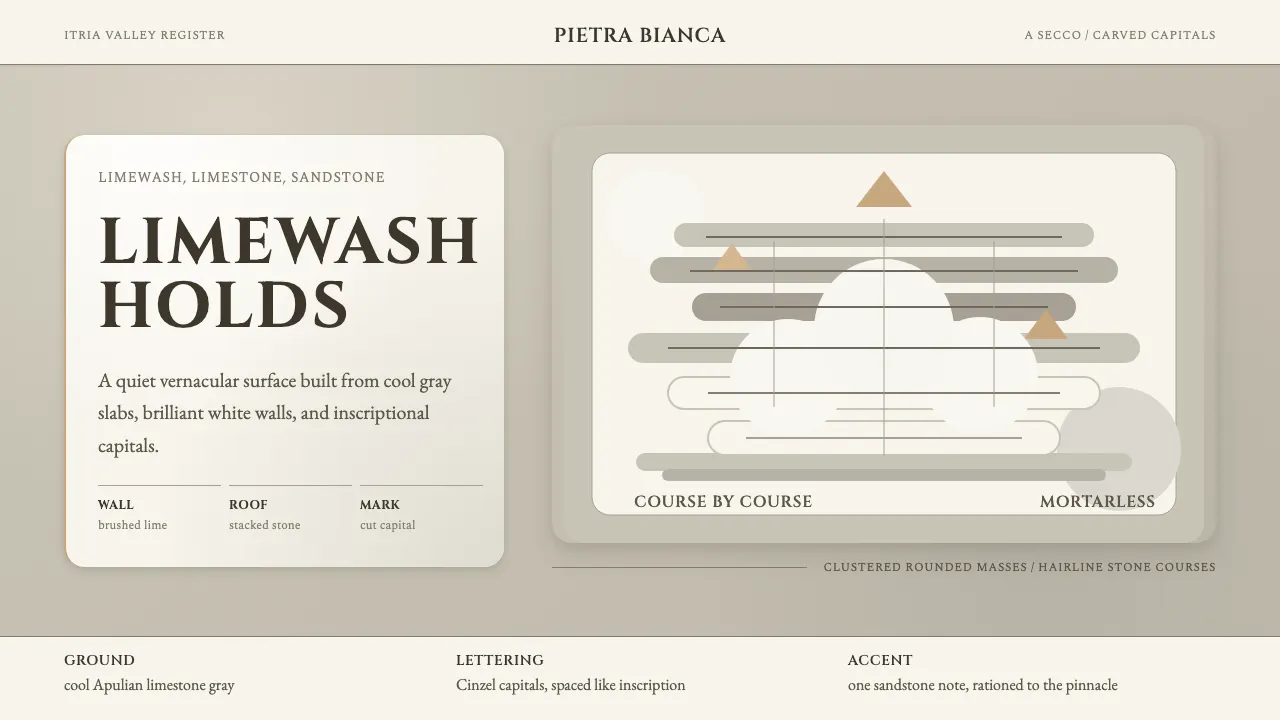
About Trulli Alberobello
The trulli of Alberobello are the dry-stone, conical-roofed dwellings of the Itria Valley in Puglia — a UNESCO-listed vernacular tradition predating 1900. Limewashed brilliant-white cylindrical walls sit beneath bare gray cones of stacked Apulian limestone slabs (chiancarelle), each crowned by a carved sandstone pinnacle and marked with hand-painted Christian symbols.
As a design register it is humble, handmade, and quietly monumental: cool gray stone is the ground, limewash white is the wall, and headings stand in carved Roman capitals as if cut into the pinnacle. Nothing is glossy; everything is rough, mortarless, and built by hand, course by course.
- Origin
- Alberobello, Itria Valley, Puglia, southern Italy
- Era
- pre-1900; vernacular dry-stone tradition formalized 17th–19th c.
- Key figures
- Anonymous Apulian dry-stone masons
- Movements
- Mediterranean vernacular architecture · a secco corbelled (mortarless) dry-stone construction
Trulli Alberobello design spec
Colors
Typography
The other 11 sections — buttons, cards, spacing, motion, techniques and more — open once you unlock. Download the DESIGN.md or send it to your AI in one click. Unlock once, yours forever.
Sign up nowStyles similar to Trulli Alberobello
Also inspired by architecture & places, with a close feel.
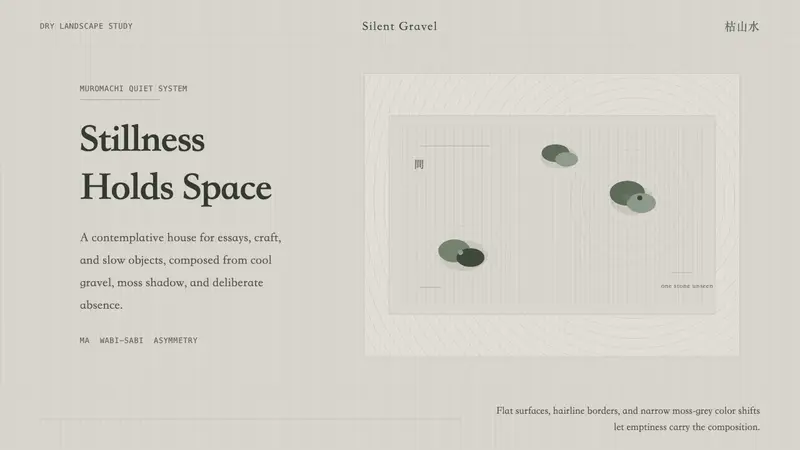 Zen Karesansui GardenEmptiness does the work. Cool grey rakes, moss stones, and off-center Mincho type.
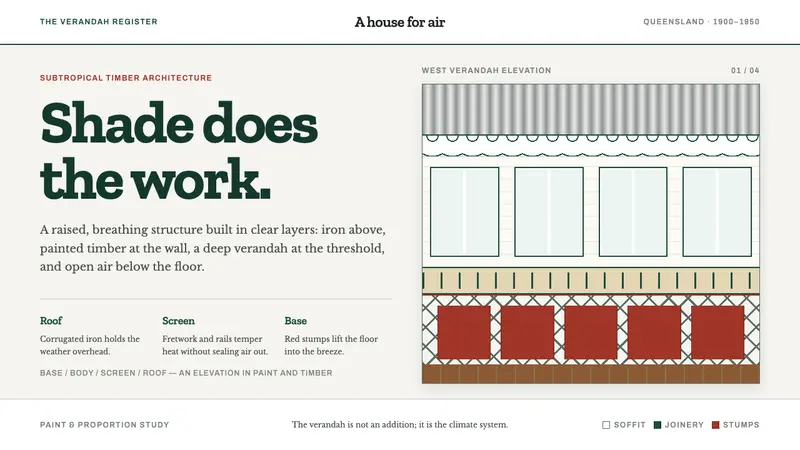 Queenslander HouseShade is the architecture. Iron, weatherboard and green joinery stack as a breathing elevation.
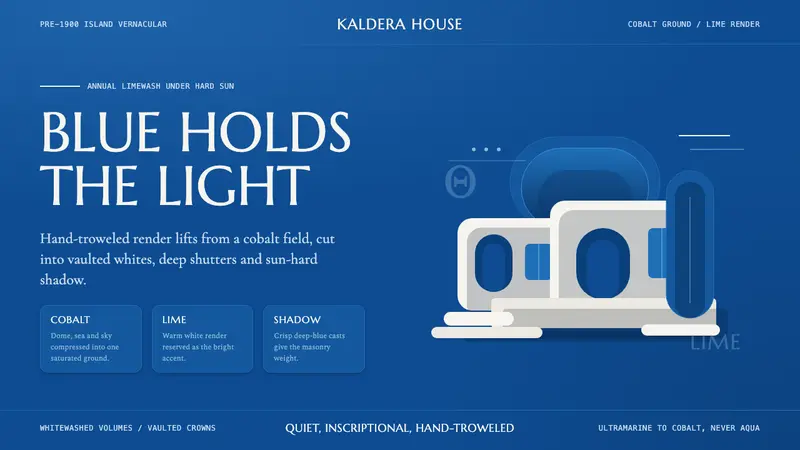 Cycladic SantoriniQuiet island gravity. Cobalt field, Marcellus capitals and white vaults hold hard sun.
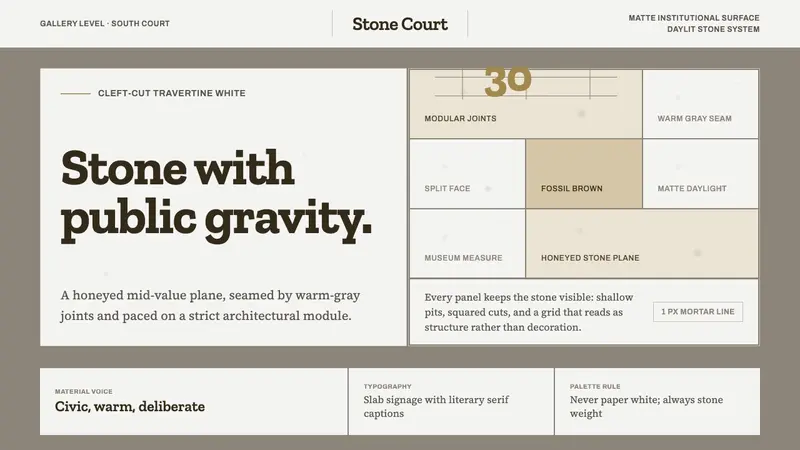 Getty Center Travertine WhiteStone has gravity. Honeyed travertine planes are cut by warm-gray modular seams.