About Titan Lake Explorer
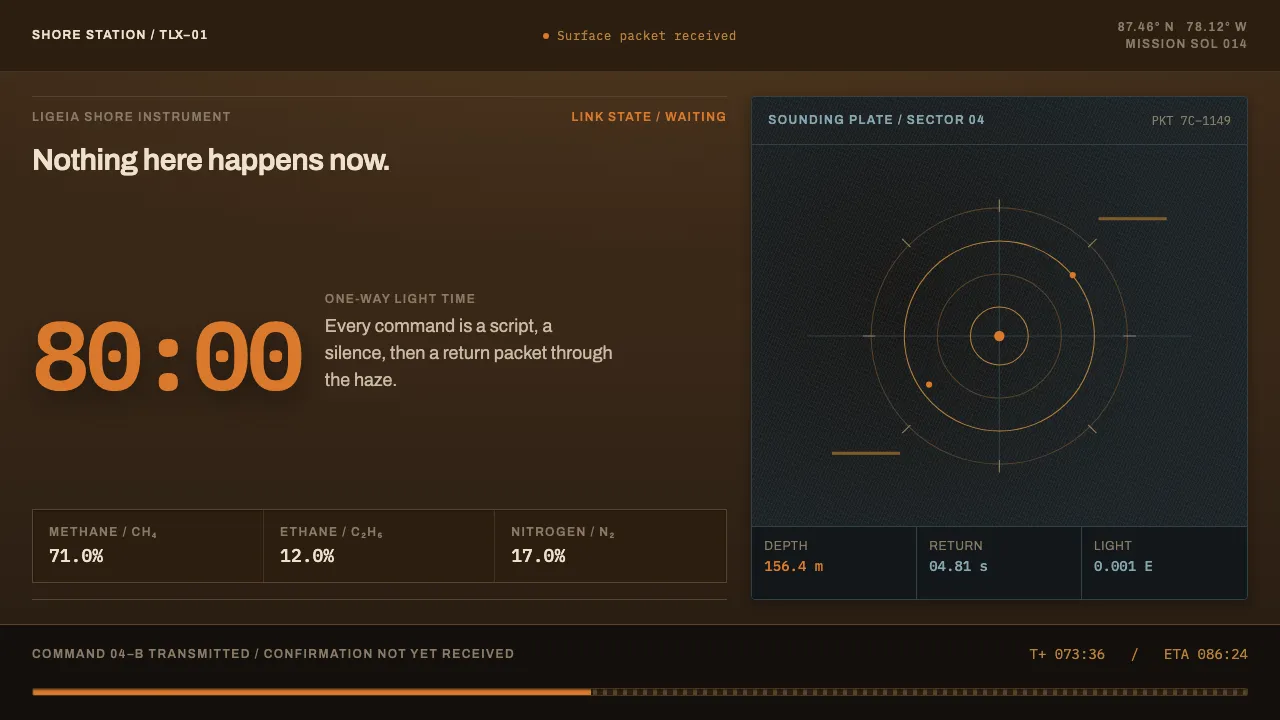
Huygens reached Titan's surface in January 2005 and returned a scene nobody had drawn in advance: a dark plain of rounded water-ice pebbles under an orange photochemical haze that goes all the way down. Daylight there is about a thousandth of Earth's, and the haze eats the short wavelengths, so everything arrives brown, soft-edged and dim.
This system dresses an instrument for that shoreline. Ligeia Mare is roughly 71% methane, 12% ethane, 17% nitrogen, and reads black to both radar and camera. One way light time is near eighty minutes, so a command and its confirmation are an hour and forty apart — and the interface says so, on every screen, all the time.
- Origin
- Titan — Huygens landing site and the northern maria (Ligeia Mare, Kraken Mare)
- Era
- Cassini–Huygens 2004–2017; Huygens landing 14 January 2005; near-future lake-mission speculation
- Key figures
- ESA Huygens DISR imaging team · NASA/JPL Cassini RADAR team · NASA/JPL Cassini VIMS team
- Movements
- Robotic in-situ exploration · Low-light planetary imaging · High-latency mission operations
Titan Lake Explorer design spec
Colors
Typography
The other 11 sections — buttons, cards, spacing, motion, techniques and more — open once you unlock. Download the DESIGN.md or send it to your AI in one click. Unlock once, yours forever.
Sign up nowStyles similar to Titan Lake Explorer
Also inspired by science & nature, with a close feel.
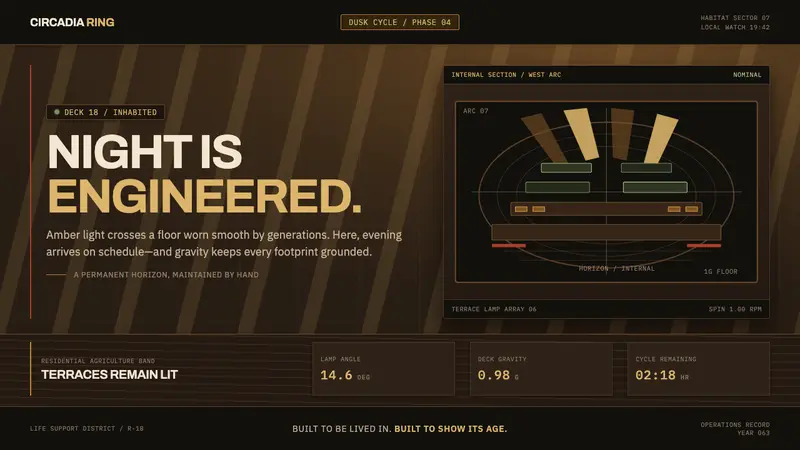 Generation Ship InteriorNight is engineered. Amber louvres rake across timber decks and stacked habitat bands.
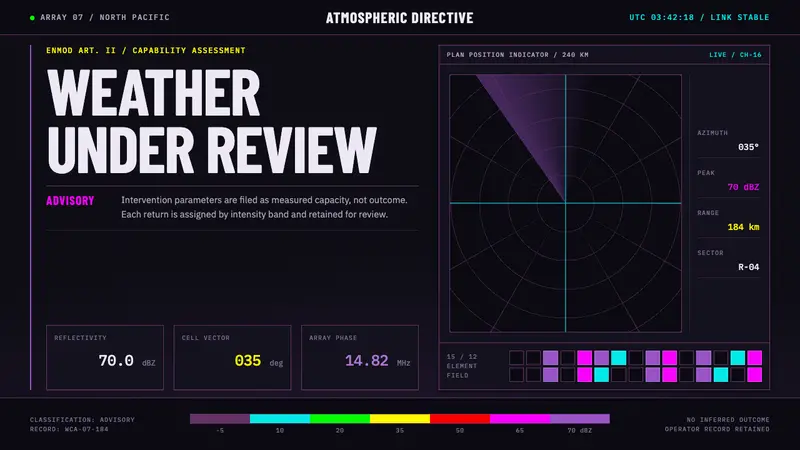 Weather Control ArrayControl remains contested. Warning-sign type and a stepped NEXRAD ramp make every reading accountable.
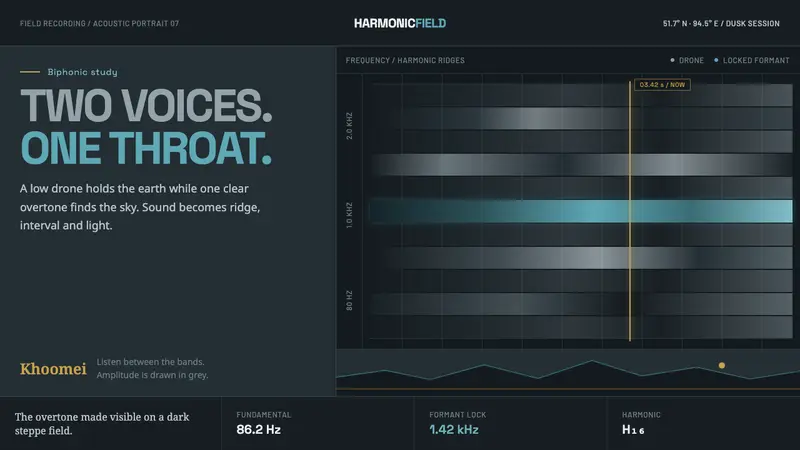 Tuvan Khoomei Throat-Song VizThe overtone becomes terrain. Grey harmonic ridges glow cyan over a slate-dark field.
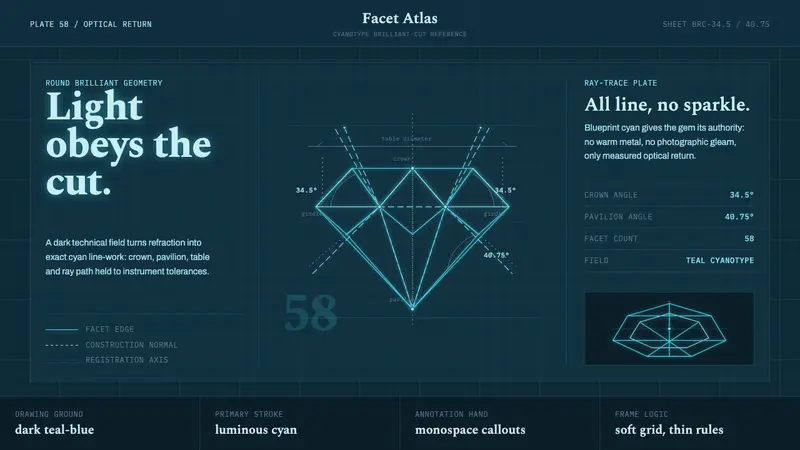 Brilliant Cut Facet DiagramOptics becomes blueprint. Cyan facet lines and ray paths glow on dark teal.