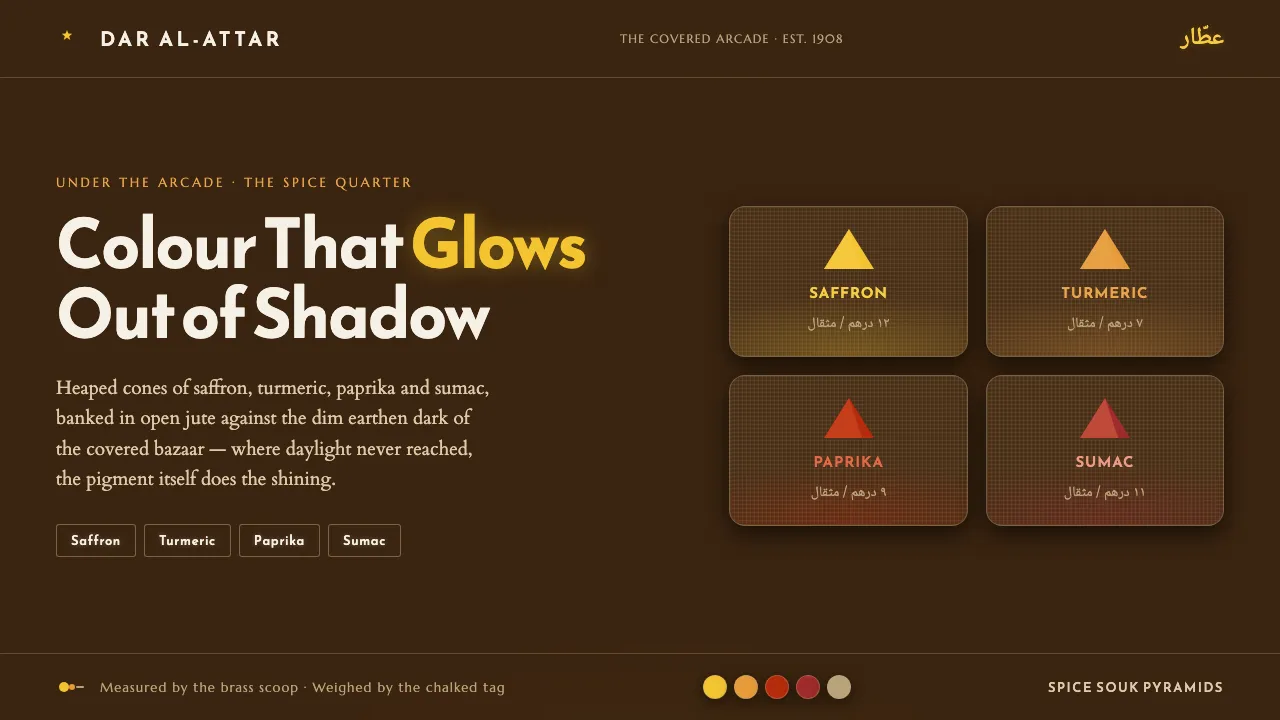
About Spice Souk Market Pyramids
Spice Souk Market Pyramids captures the covered spice bazaar of the early-twentieth-century Middle East: heaped cones of saffron-gold and turmeric piled high in open burlap sacks, with paprika and sumac-crimson mounds banked alongside. The whole scene glows under the dim earthen light of a narrow arcaded souk.
The warmth here comes not from daylight but from the deep shadow of the covered market, where the spice colour itself does the shining. Brass scoops, hand-chalked Arabic price tags, and dust-soft surfaces complete the picture — a design system where every saturated hue is set against earthen darkness.
- Origin
- Middle East — Gulf and Levantine spice markets (Dubai Spice Souk, Damascus, Cairo bazaars)
- Era
- 1900–1950 (the traditional covered souk and arcaded bazaar trade)
- Key figures
- Spice merchant guilds · Bazaar stall-keepers · Souk trade-route traders · Arabic chalk sign-letterers
- Movements
- Traditional Middle Eastern bazaar commerce · Arabic vernacular signage · Chalk price-lettering · Covered-arcade souk trade
Spice Souk Market Pyramids design spec
Colors
Typography
The other 11 sections — buttons, cards, spacing, motion, techniques and more — open once you unlock. Download the DESIGN.md or send it to your AI in one click. Unlock once, yours forever.
Sign up nowStyles similar to Spice Souk Market Pyramids
Also inspired by crafts & folk art, with a close feel.
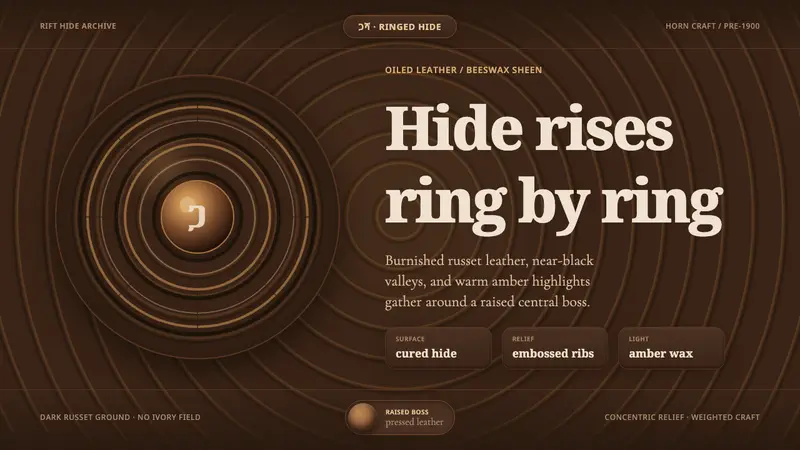 Ethiopian Hide ShieldDark hide speaks in relief. Russet rings and amber beeswax light rise from near-black leather.
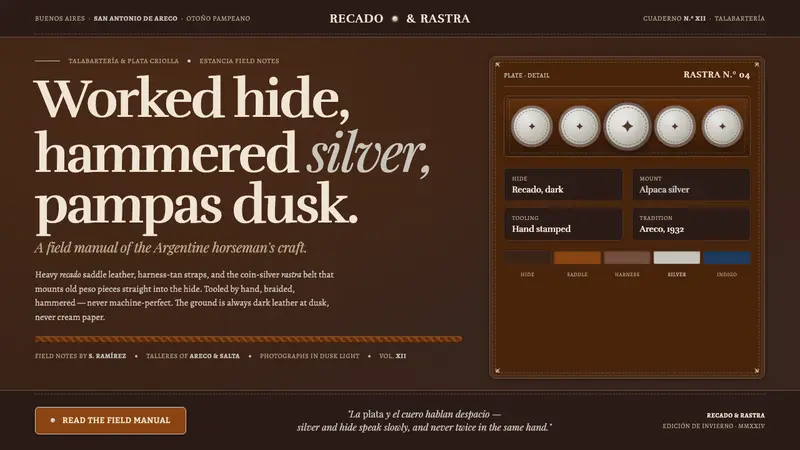 Gaucho LeatherHand-worked horseman craft. Dark recado leather, harness tan, coin-silver rastras at pampas dusk.
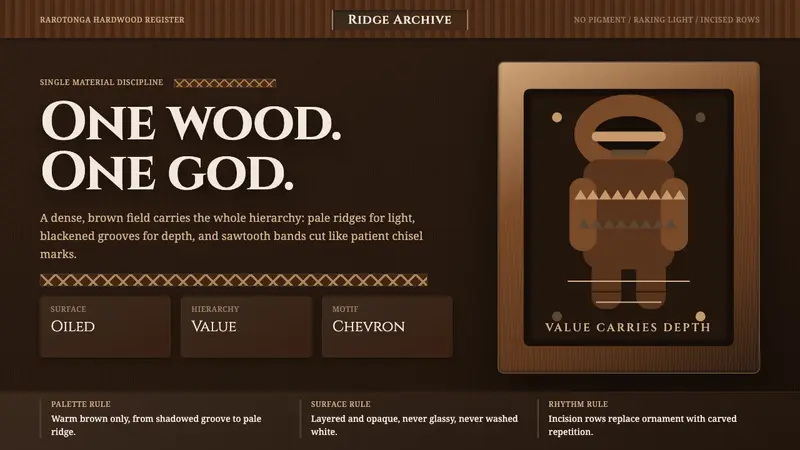 Cook Islands Tangaroa CarvingOne-material gravity. Warm browns, sawtooth rows, and raking light carve hierarchy from value.
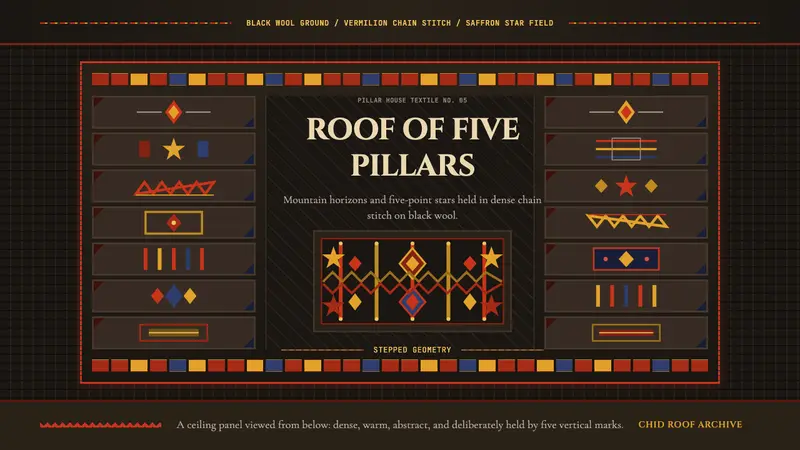 Tajik Pamir Needlework (Chid Roof)Cosmos stitched into wool. Vermilion diamonds and saffron stars hold a five-pillar grid.