About Szekely Gate
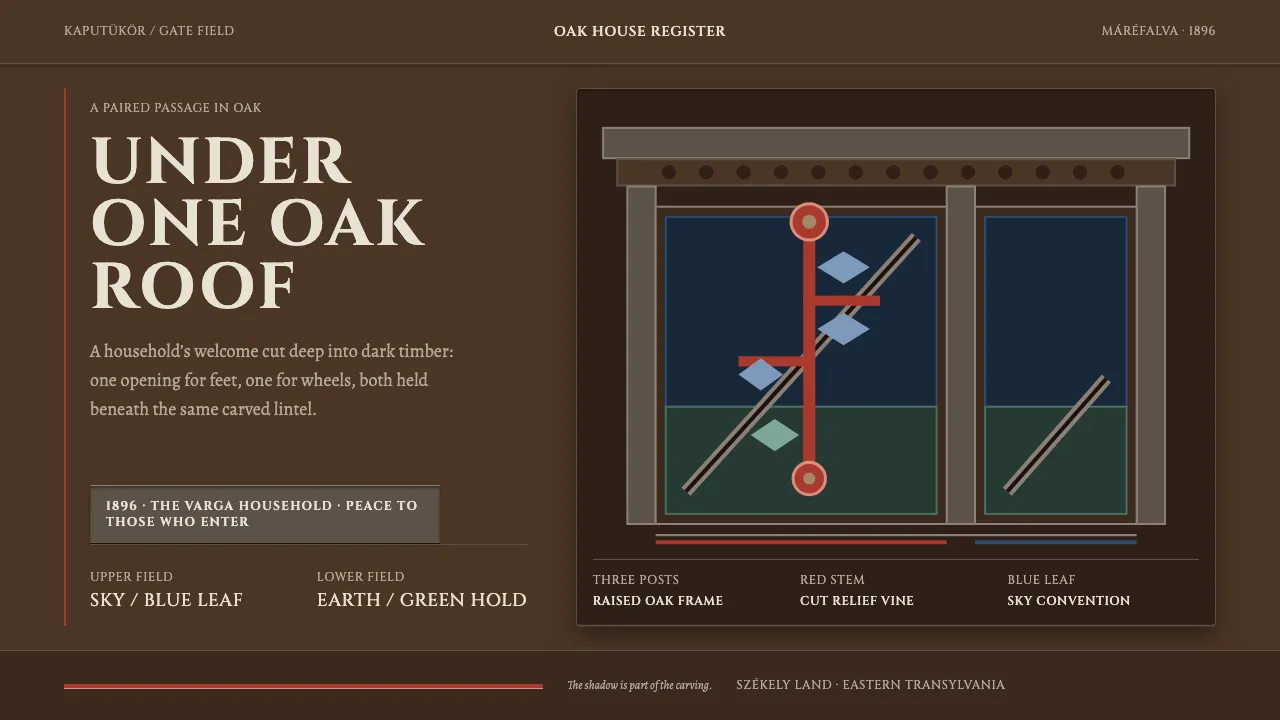
A székelykapu is not a door but a whole gatehouse cut from oak: three zábé posts under a kontyfa lintel with a dovecote punched through it, a scalloped shingle roof over the lot, and a carved kaputükör panel filling the field above two openings — the small one for people, the large one for wagons, always paired.
The ornament is flat and symbolic, not botanical. A thick-stemmed vine climbs in red, and in Máréfalva's convention its leaves are painted blue for the Sky, with green holding the lower Earth zone. Cut into the 45° brace, in clean Roman capitals, is the year and the owner's name.
- Origin
- Székely Land, eastern Transylvania, Romania — Máréfalva (Satu Mare) and Parajd (Praid), Harghita county
- Era
- 17th century onward; the surviving Máréfalva and Parajd gates largely pre-1900
- Key figures
- village kapufaragó gate-carvers · Máréfalva owner families named on the hónaljkötés braces · Kriza János Néprajzi Társaság
- Movements
- Hungarian folk woodcarving · Székely vernacular timber joinery · painted folk ornament of the Carpathian basin
Szekely Gate design spec
Colors
Typography
The other 11 sections — buttons, cards, spacing, motion, techniques and more — open once you unlock. Download the DESIGN.md or send it to your AI in one click. Unlock once, yours forever.
Sign up nowStyles similar to Szekely Gate
Also inspired by crafts & folk art, with a close feel.
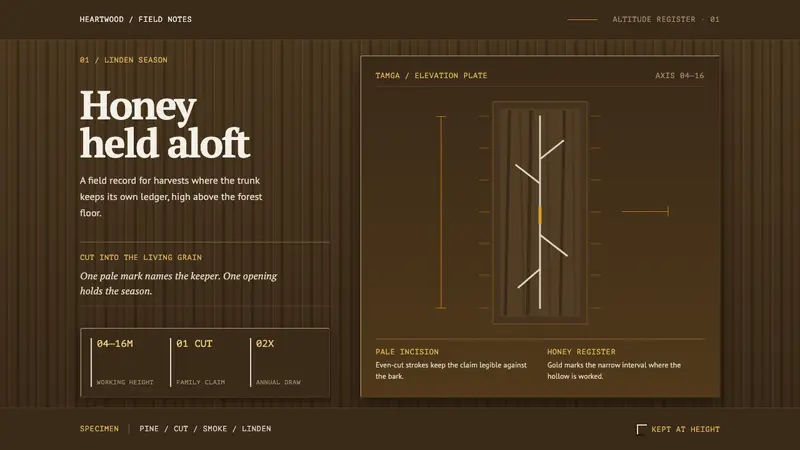 Bashkir Wild HoneyA working forest held on one axis. Pale tamga cuts and honey gold rise through deep bark.
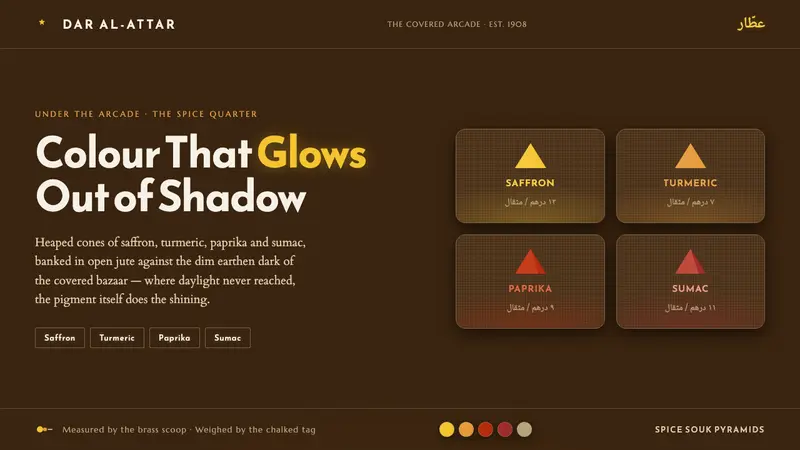 Spice Souk Market PyramidsColour glows out of shadow. Saffron-paprika-sumac heaps on dim earthen brown, Reem Kufi chalk tags.
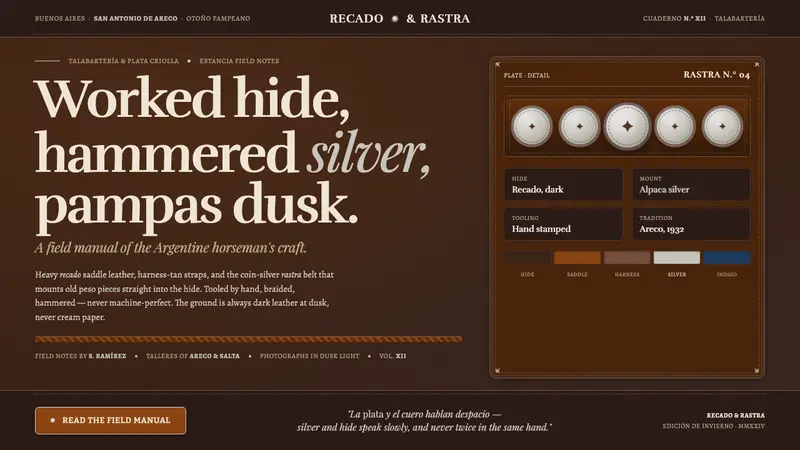 Gaucho LeatherHand-worked horseman craft. Dark recado leather, harness tan, coin-silver rastras at pampas dusk.
 Ethiopian Hide ShieldDark hide speaks in relief. Russet rings and amber beeswax light rise from near-black leather.