About Sittanavasal Jain Cave Fresco
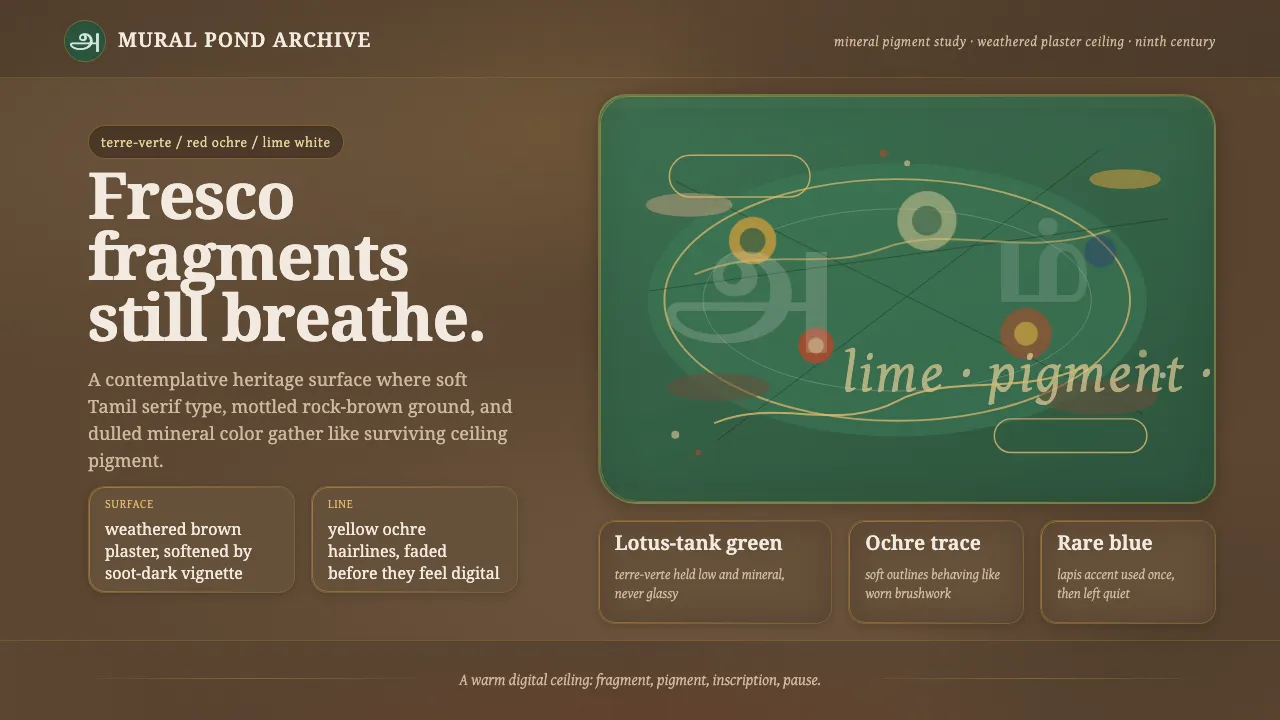
Deep in a Tamil Nadu hillside, the 9th-century Sittanavasal cave carries one of South India's great painted ceilings: a samavasarana lotus pond in terre-verte green, alive with dancers, elephants and geese drawn in soft ochre line over weathered brown lime plaster.
This design system translates that fresco-secco surface into digital form — a mottled brown rock ground, dulled mineral pigments of green, red and yellow ochre, lapis blue and lime white, and components that read as faded fresco fragments rather than crisp modern panels.
- Origin
- Sittanavasal, Tamil Nadu — South Asia
- Era
- 9th century (Pandya-period Jain cave painting)
- Key figures
- anonymous Pandya-era Jain painters · the Sittanavasal (Arivar Koil) rock-cut temple
- Movements
- Jain cave-temple mural painting · fresco-secco over lime plaster · Tamil rock-cut art
Sittanavasal Jain Cave Fresco design spec
Colors
Typography
The other 11 sections — buttons, cards, spacing, motion, techniques and more — open once you unlock. Download the DESIGN.md or send it to your AI in one click. Unlock once, yours forever.
Sign up nowStyles similar to Sittanavasal Jain Cave Fresco
Also inspired by art & artists, with a close feel.
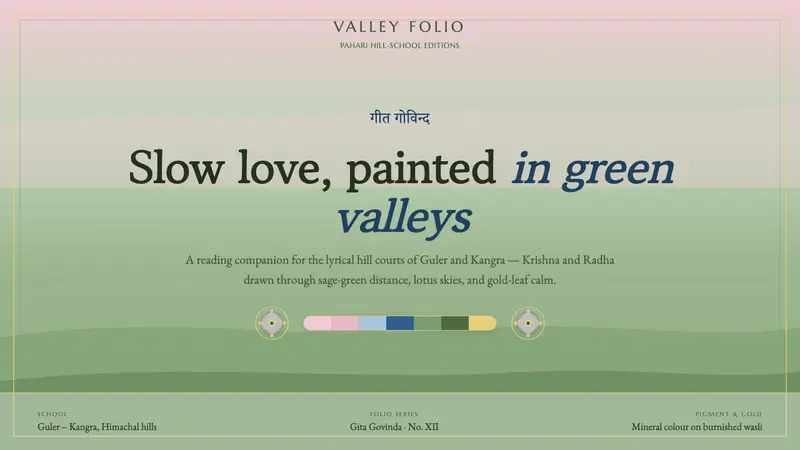 Pahari Kangra PaintingDevotional lyricism, painted slow. Sage-green hill grounds lighten to lotus-pink skies, soft serif.
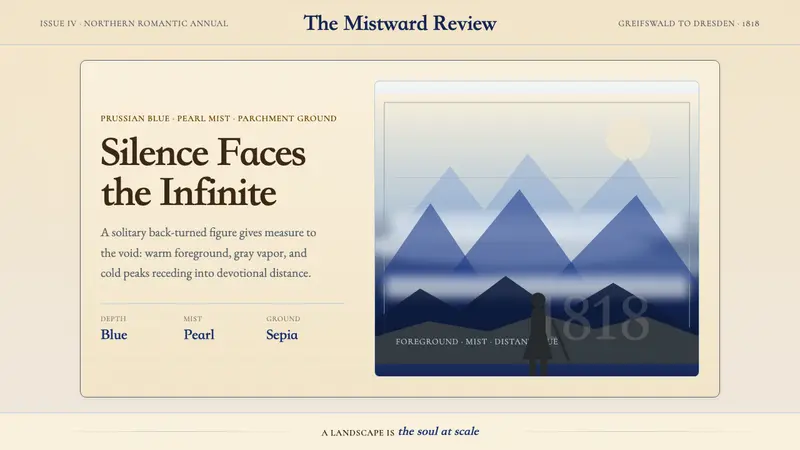 Caspar David FriedrichSilence becomes vast. Prussian blue depth, pearl mist, and parchment framing recede inward.
 Claude Monet ImpressionistLight becomes the subject. Buttercream, pastel dapples, and Cormorant serif soften the frame.
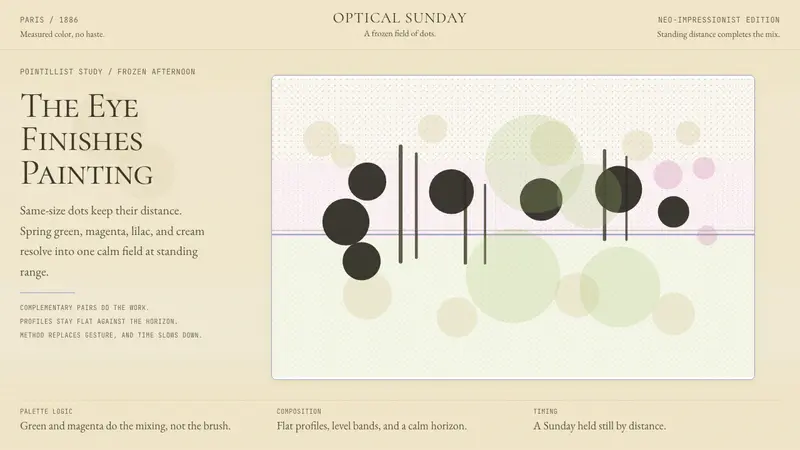 Seurat — Grande Jatte PointillismThe eye does the painting. Cream, green, magenta, and cobalt mix in a frozen dot-field.