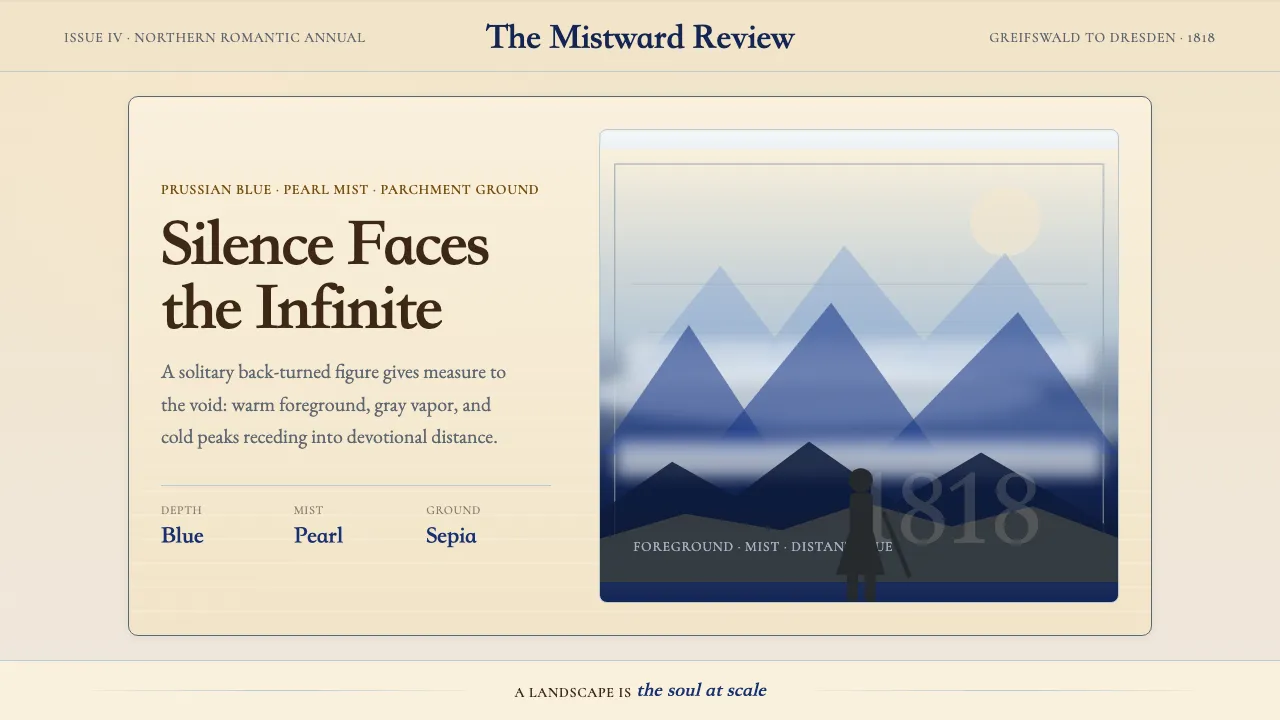
About Caspar David Friedrich
Caspar David Friedrich's paintings distill the German Romantic sublime into a single recurring image: a lone figure seen from behind, dwarfed by misty alpine voids and twilight forests. His palette of Prussian blue depths, pearl-gray atmospheric mist, and warm parchment grounds creates a contemplative gravity that treats landscape as spiritual encounter — the soul facing God through nature.
This design system translates Friedrich's atmospheric layering into digital surfaces: deep recession from warm foreground to cold distant peaks, hairline slate borders framing parchment panels, and period-appropriate serifs that echo early 19th-century German typography. Every element serves the Romantic principle that vastness humbles and silence speaks.
- Origin
- Germany — Greifswald, Dresden, Rügen Island
- Era
- 1774–1840; peak production 1810–1825 (Dresden years)
- Key figures
- Caspar David Friedrich · Carl Gustav Carus · Philipp Otto Runge · Goethe
- Movements
- German Romanticism · Northern Romantic sublime · Lutheran pietist landscape spirituality
Caspar David Friedrich design spec
Colors
Typography
The other 11 sections — buttons, cards, spacing, motion, techniques and more — open once you unlock. Download the DESIGN.md or send it to your AI in one click. Unlock once, yours forever.
Sign up nowStyles similar to Caspar David Friedrich
Also inspired by art & artists, with a close feel.
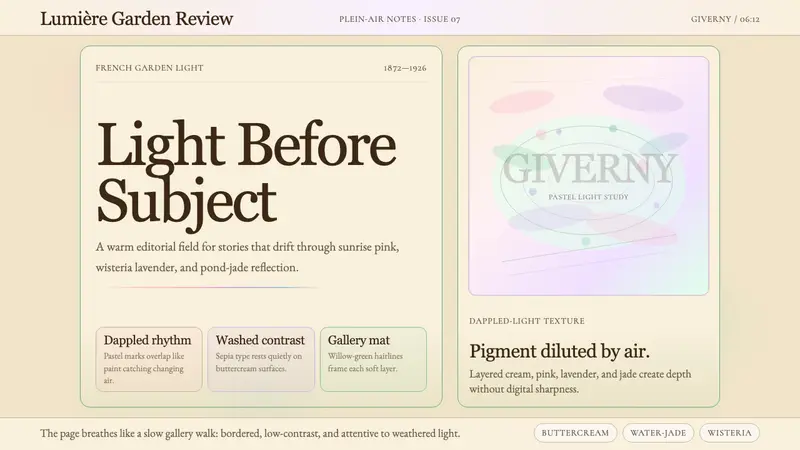 Claude Monet ImpressionistLight becomes the subject. Buttercream, pastel dapples, and Cormorant serif soften the frame.
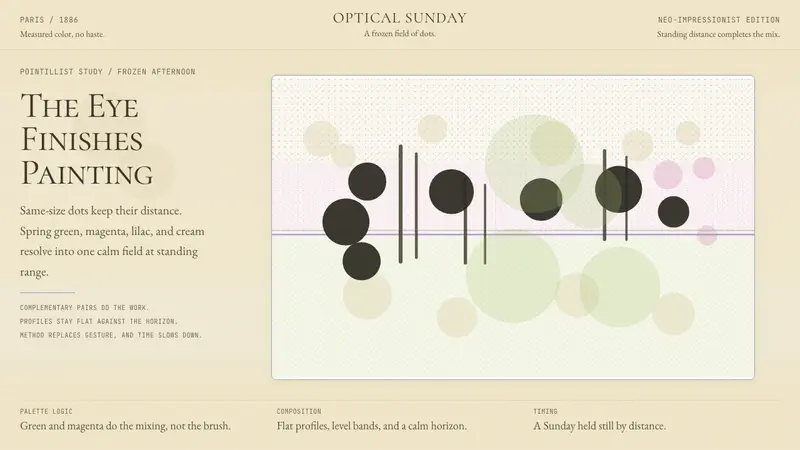 Seurat — Grande Jatte PointillismThe eye does the painting. Cream, green, magenta, and cobalt mix in a frozen dot-field.
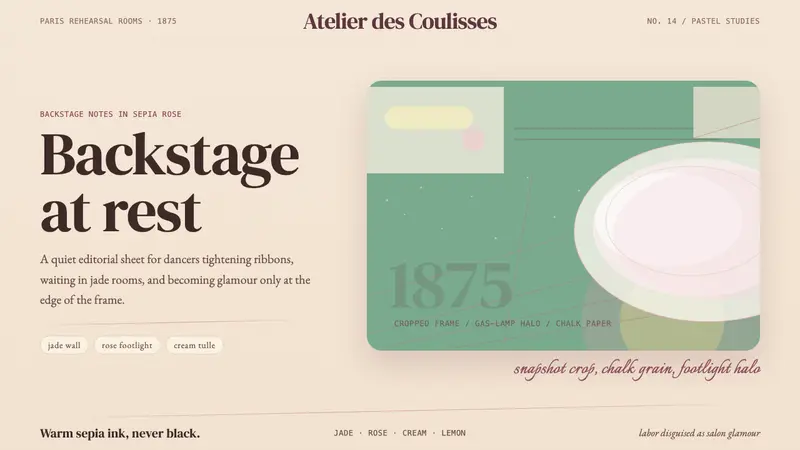 Degas Ballet PastelsBackstage glamour is labor. Jade walls, rose footlights, cropped serifs on cream paper.
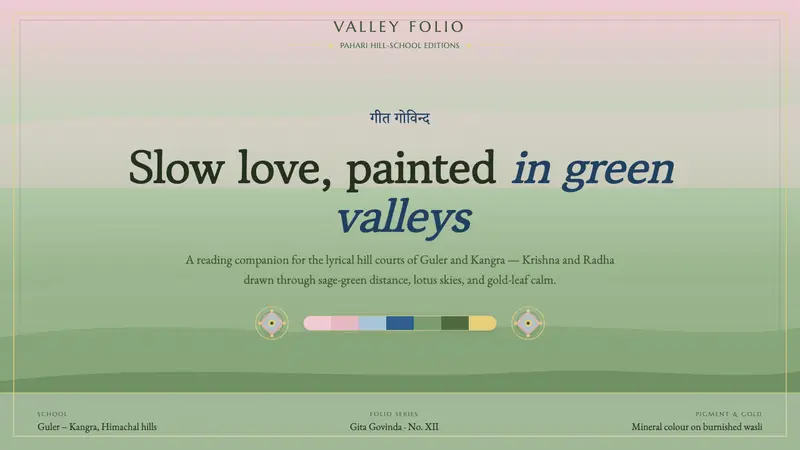 Pahari Kangra PaintingDevotional lyricism, painted slow. Sage-green hill grounds lighten to lotus-pink skies, soft serif.