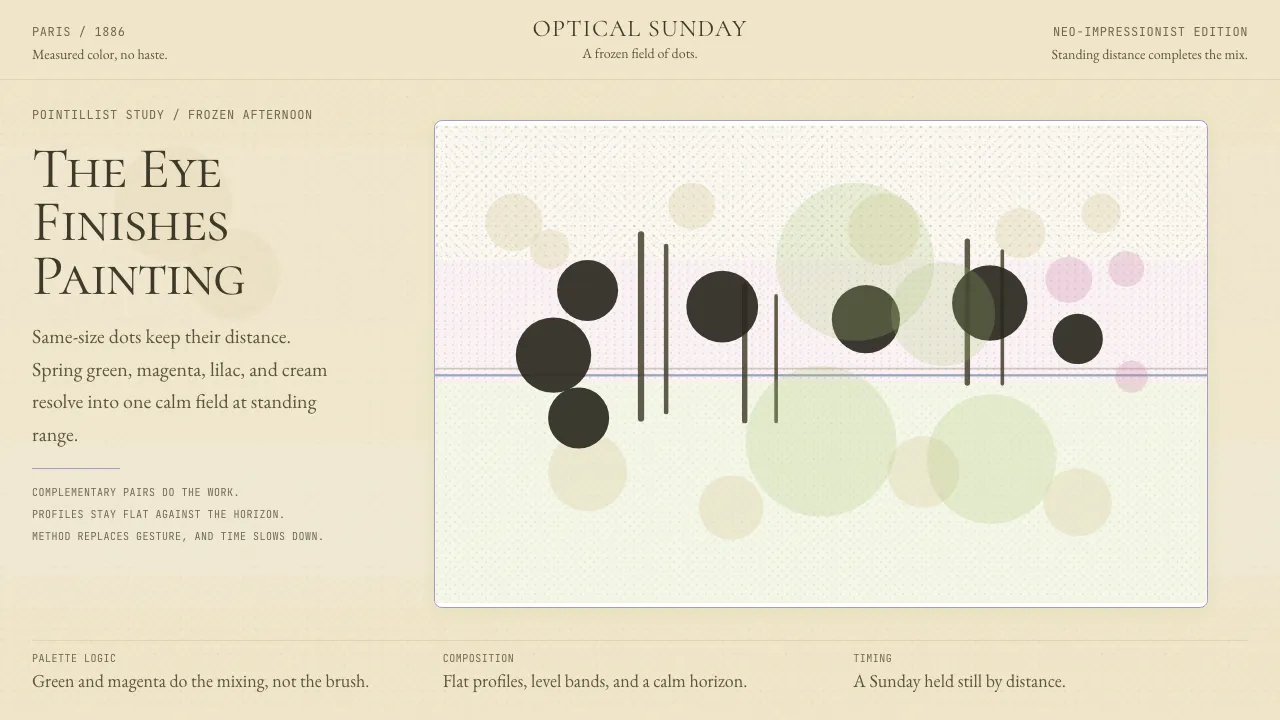
About Seurat — Grande Jatte Pointillism
Georges Seurat's pointillism was the moment painting tried to become physics. Every Impressionist's loose stroke was reduced to a deliberate array of same-size colored dots, calculated so the viewer's eye performs the optical mixing at standing distance.
The result is a 2m × 3m field of millions of dots — spring-green beside magenta-pink, lilac beside gold-cream — figures rendered as crisp profile silhouettes against the dot-field. Methodical, mathematical, theoretical. The Sunday afternoon feels frozen and timeless, not spontaneous.
Learn more about the Seurat — Grande Jatte Pointillism style
- Origin
- France (Paris), the Grande Jatte island on the Seine at Asnières
- Era
- 1884–1891 (Seurat's career); Neo-Impressionism continued via Signac, Cross until ~1910
- Key figures
- Georges Seurat · Paul Signac · Henri-Edmond Cross · Félix Fénéon
- Movements
- Neo-Impressionism · Pointillism · Divisionism
Seurat — Grande Jatte Pointillism design spec
Colors
Typography
The other 11 sections — buttons, cards, spacing, motion, techniques and more — open once you unlock. Download the DESIGN.md or send it to your AI in one click. Unlock once, yours forever.
Sign up nowStyles similar to Seurat — Grande Jatte Pointillism
Also inspired by art & artists, with a close feel.
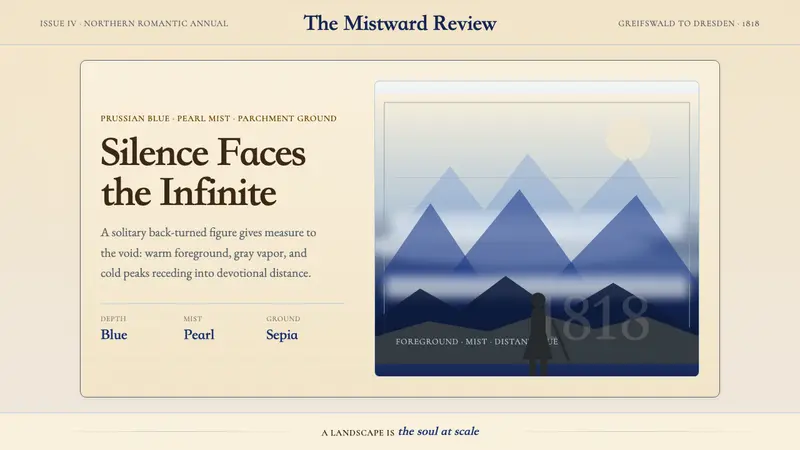 Caspar David FriedrichSilence becomes vast. Prussian blue depth, pearl mist, and parchment framing recede inward.
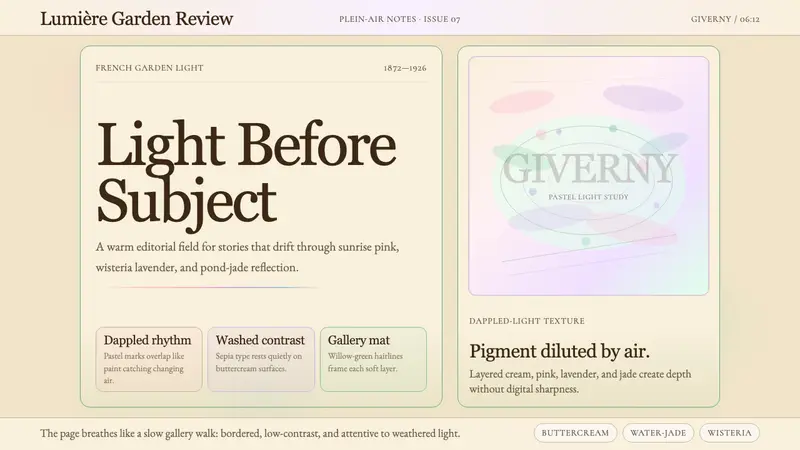 Claude Monet ImpressionistLight becomes the subject. Buttercream, pastel dapples, and Cormorant serif soften the frame.
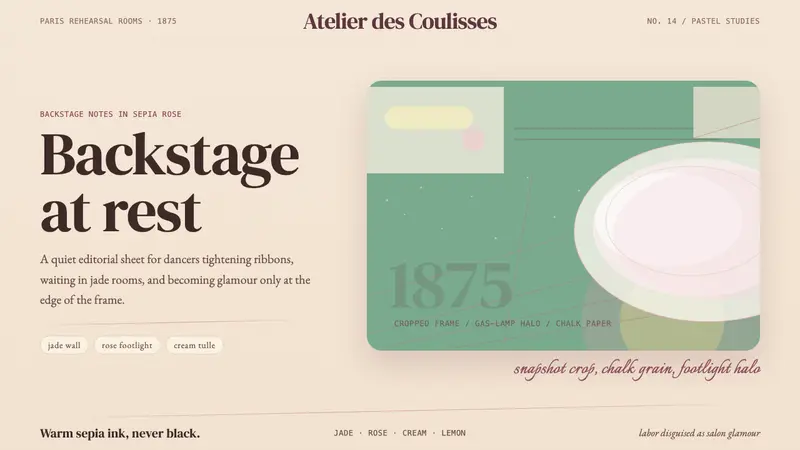 Degas Ballet PastelsBackstage glamour is labor. Jade walls, rose footlights, cropped serifs on cream paper.
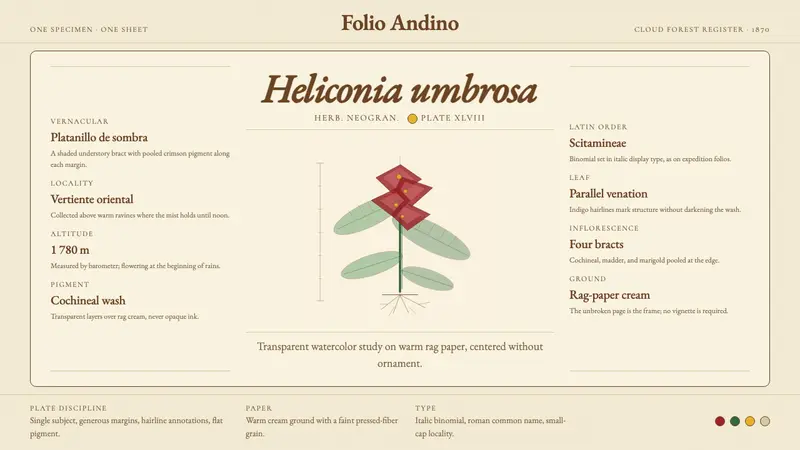 Colombian Botanical (Triana)Observation becomes ornament. Crimson watercolor specimen breathes on cream rag paper.