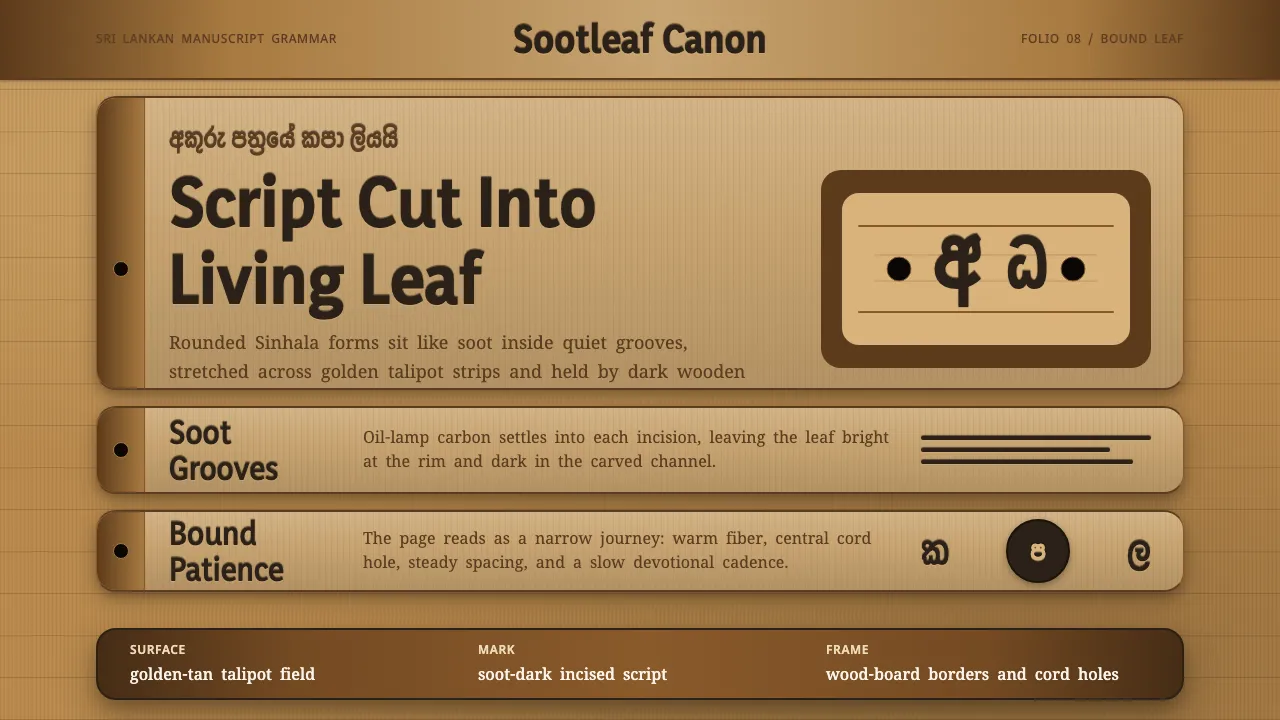
About Sinhala Ola-Leaf
The Sinhala puskola pot is a writing surface made of life itself: strips of dried talipot palm leaf, incised letter by letter with a sharp metal stylus and then rubbed with oil-lamp soot so the script blooms black inside the grooves. The page is never paper — it is a warm golden-tan leaf, fibrous and tonally uneven, threaded through a central binding hole and pressed between carved wooden cover boards.
This system carries that scribal patience onto the screen. Rounded Sinhala letterforms, soot-dark text on living leaf-brown, wood-board framing and the long horizontal rhythm of the leaf strip become the grammar of the interface — tactile, devotional and slow.
- Origin
- Sri Lanka, South Asia
- Era
- pre-1900; continuous Sri Lankan manuscript tradition across medieval and early-modern periods
- Key figures
- Theravada monastic copyists · Pali canon scribes
- Movements
- Theravada Buddhist textual transmission · South Asian palm-leaf manuscript culture
Sinhala Ola-Leaf design spec
Colors
Typography
The other 11 sections — buttons, cards, spacing, motion, techniques and more — open once you unlock. Download the DESIGN.md or send it to your AI in one click. Unlock once, yours forever.
Sign up nowStyles similar to Sinhala Ola-Leaf
Also inspired by crafts & folk art, with a close feel.
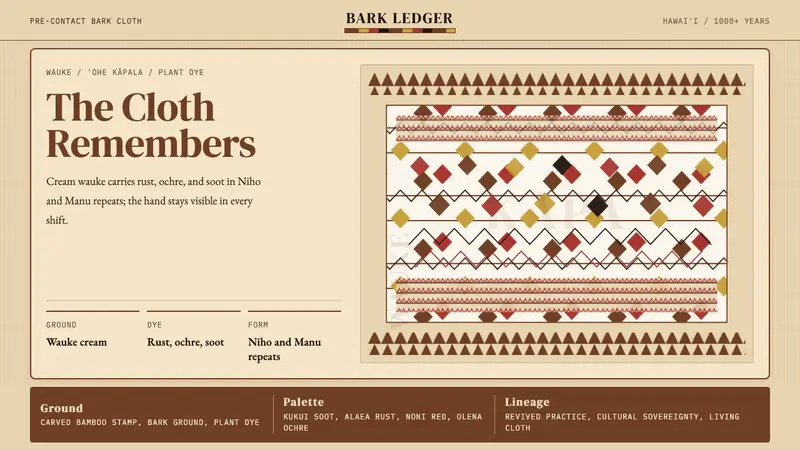 Hawaiian Kapa (Bark Cloth)Ceremonial geometry. Cream wauke, rust, ochre, and soot stamped in repeat.
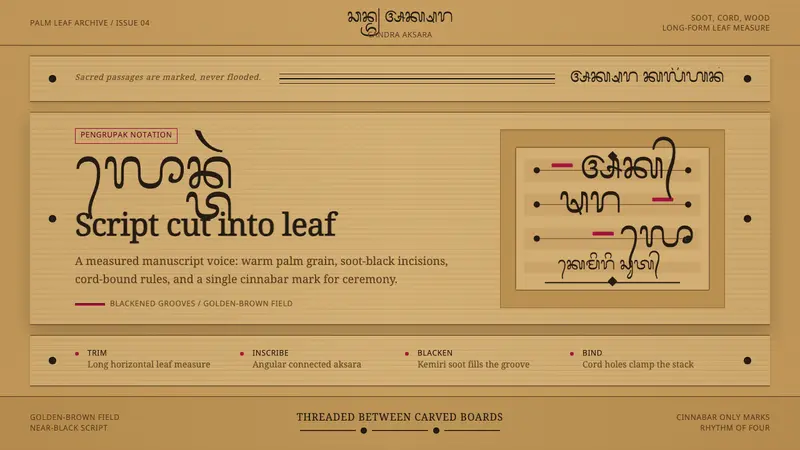 Balinese LontarHandmade memory, incised. Golden leaf strips carry soot script and spare cinnabar marks.
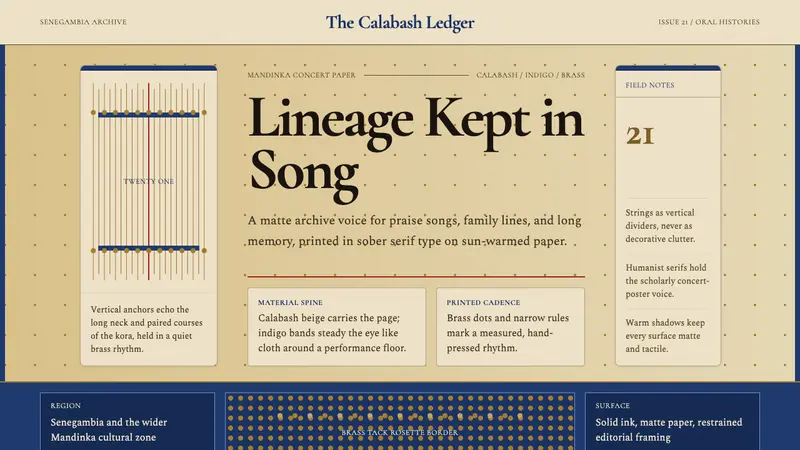 Gambian Griot Kora (21-string)Oral history feels tactile. Calabash beige, indigo bands, and 21 brass string lines.
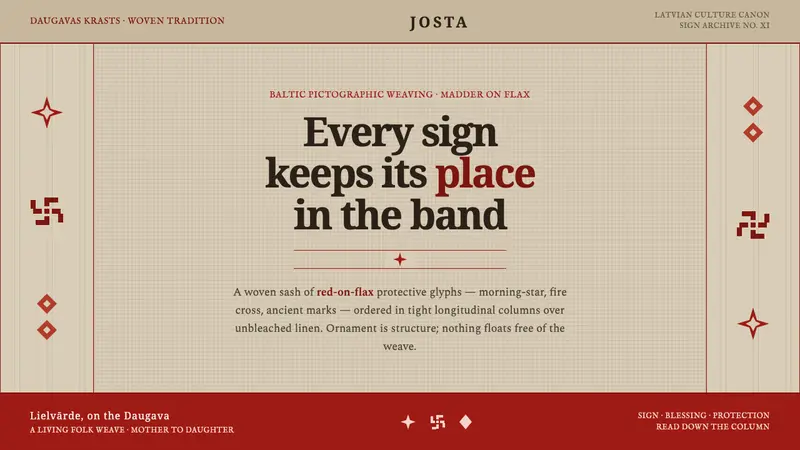 Latvian Lielvārde BeltOrnament is structure. Madder-red Baltic glyphs in tight longitudinal bands over unbleached flax.