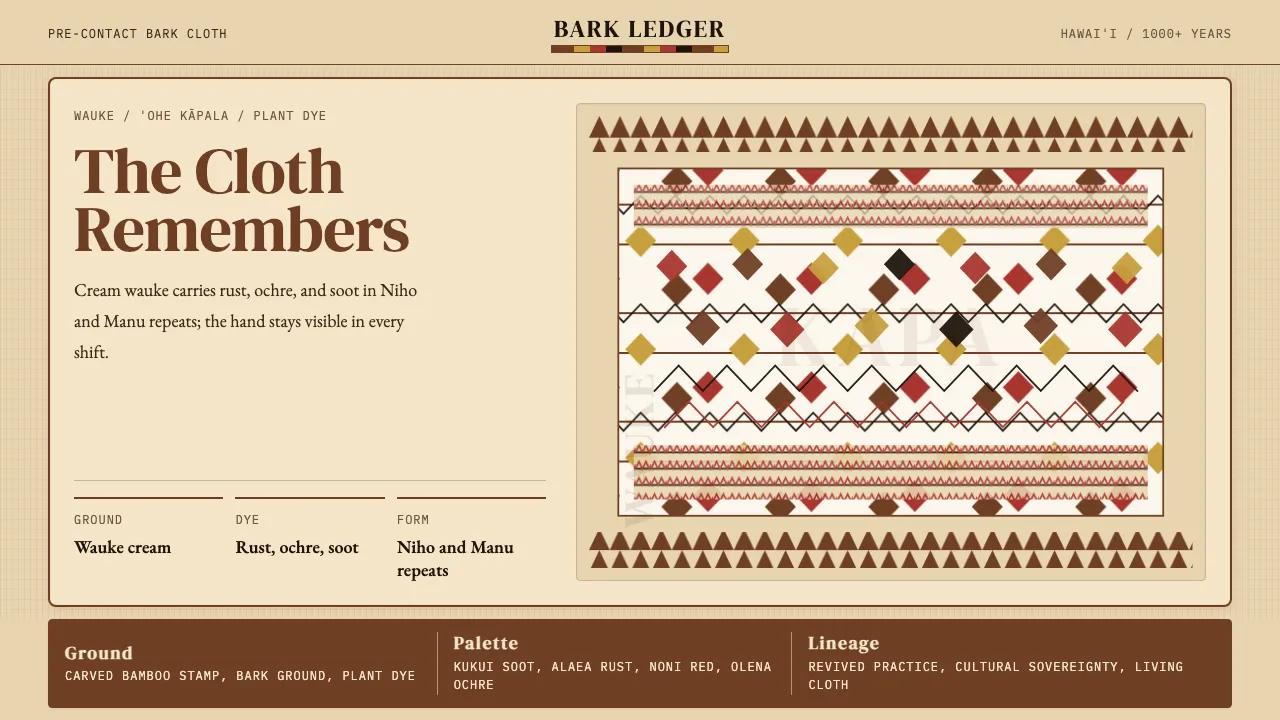
About Hawaiian Kapa (Bark Cloth)
Hawaiian kapa is the Polynesian bark-cloth tradition that, in pre-contact Hawai'i, produced the finest tapa of the entire Pacific. Wauke (paper mulberry) bark was pounded with carved ie kuku beaters into thin cloth, then stamped with hand-carved 'ohe kāpala bamboo tools in plant dyes — kukui-nut soot, noni, 'olena turmeric, 'alaea red earth.
The aesthetic reads as cream-tan wauke ground carrying bold geometric stamped patterns in warm earth-tones: triangles, paired zigzags, comb-tooth Niho, bird-vector Manu. Near-extinct under missionary suppression, kapa returned through the 1970s renaissance and now lives as cultural-sovereignty practice.
- Origin
- Hawai'i, Polynesian Pacific
- Era
- Pre-contact tradition (1000+ years); technical peak 1700s–1820s; near-extinct by 1900; revived post-1970s Hawaiian cultural renaissance; active contemporary practice
- Key figures
- Pua Van Dorpe · Marie McDonald · Roen Hufford · Edith McKinzie
- Movements
- Polynesian bark-cloth tradition · Hawaiian cultural renaissance · Pacific craft revival
Hawaiian Kapa (Bark Cloth) design spec
Colors
Typography
The other 11 sections — buttons, cards, spacing, motion, techniques and more — open once you unlock. Download the DESIGN.md or send it to your AI in one click. Unlock once, yours forever.
Sign up nowStyles similar to Hawaiian Kapa (Bark Cloth)
Also inspired by crafts & folk art, with a close feel.
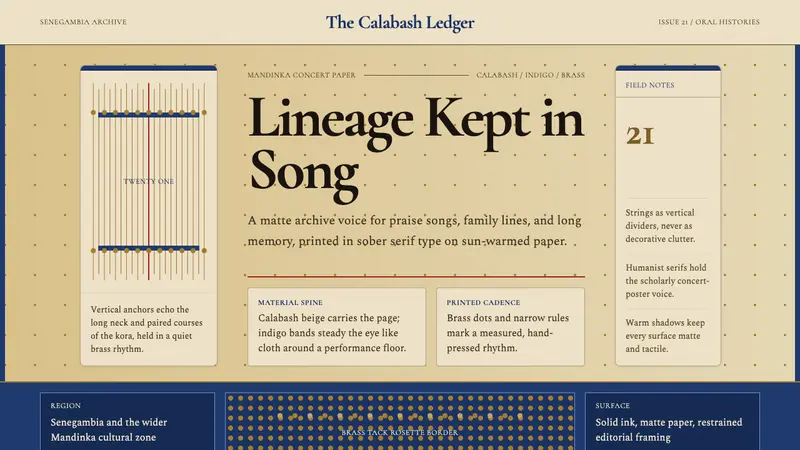 Gambian Griot Kora (21-string)Oral history feels tactile. Calabash beige, indigo bands, and 21 brass string lines.
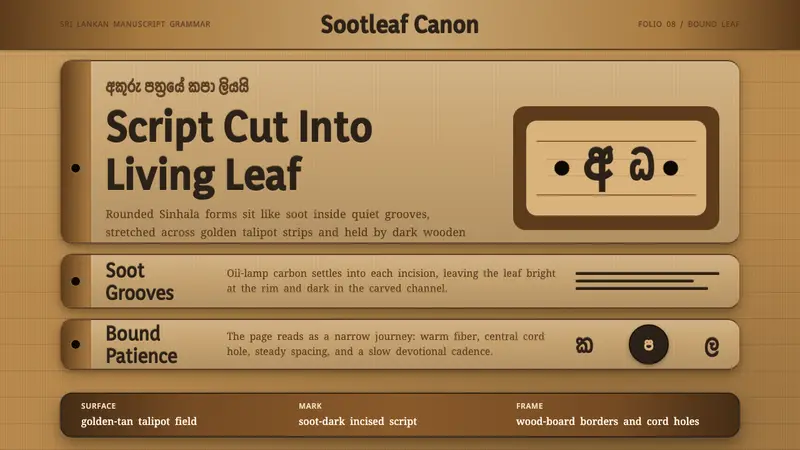 Sinhala Ola-LeafDevotion turns tactile. Soot text, Yaldevi curves, and palm-brown strips bind the page.
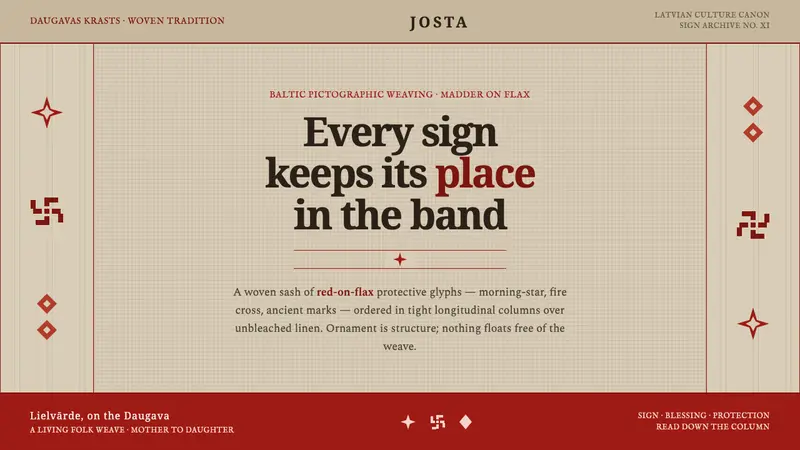 Latvian Lielvārde BeltOrnament is structure. Madder-red Baltic glyphs in tight longitudinal bands over unbleached flax.
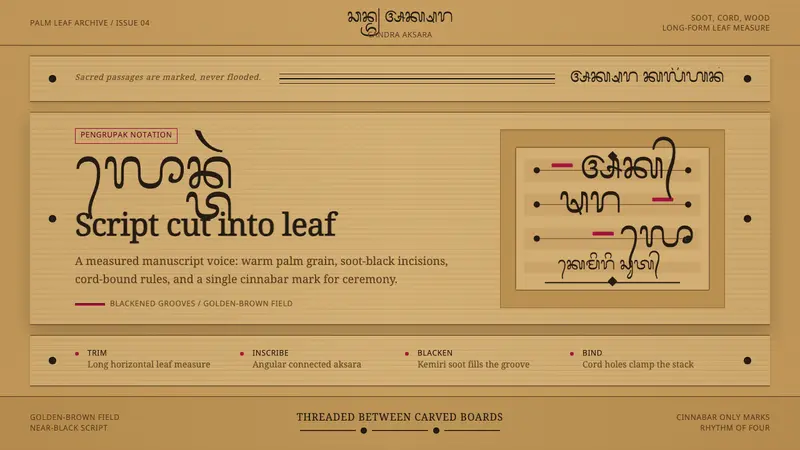 Balinese LontarHandmade memory, incised. Golden leaf strips carry soot script and spare cinnabar marks.