About Samaritan Torah
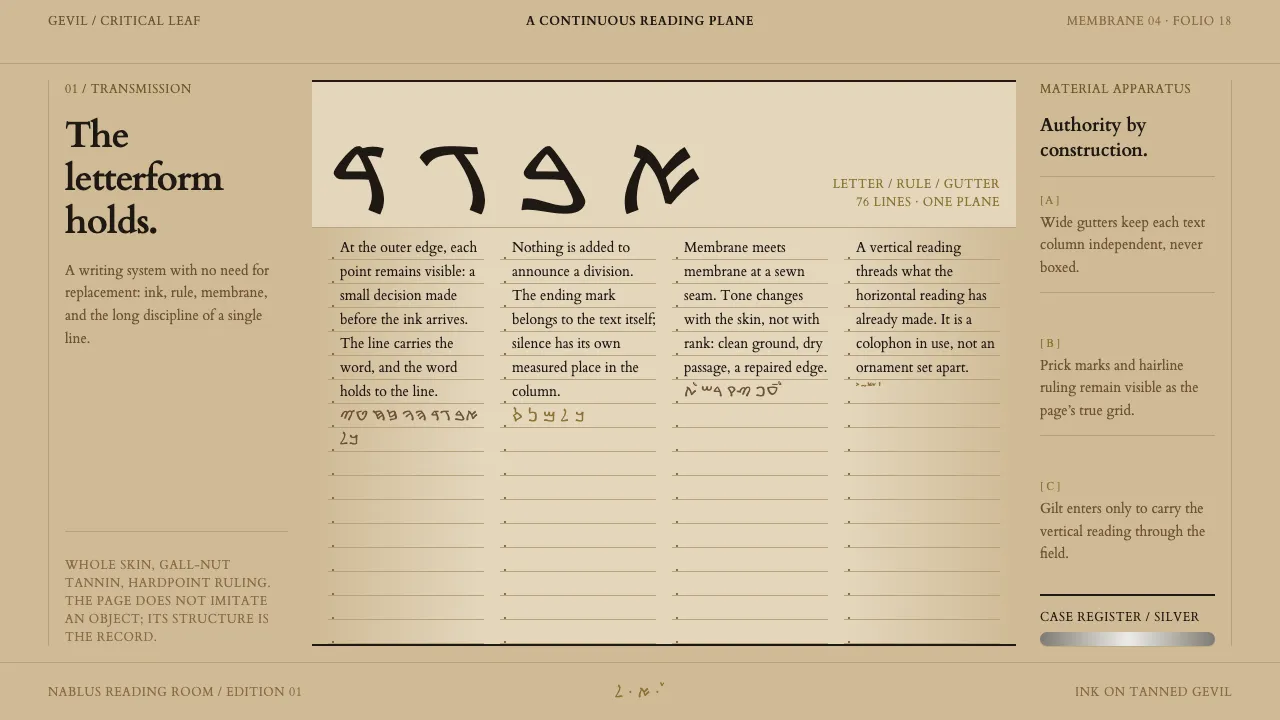
The Samaritan community kept the letterform everyone else abandoned. While other Jewish scribes moved to the square Aramaic script, the Samaritans went on writing the Torah in a majuscule descended straight from paleo-Hebrew, on gevil — ram skin tanned whole with gall-nut tannins — sewn into a continuous scroll and housed in a silver cylinder.
The design system takes its architecture from the scroll's own construction: strict ruled columns of seventy-five to eighty-nine lines, prick marks at the outer margin, generous intercolumnar gutters, and an uneven parchment ground that stains membrane by membrane. Divisions come from the script's end-of-section marker. Nothing here is decoration.
- Origin
- Nablus and Mount Gerizim; Holon, Israel
- Era
- pre-1900 (paleo-Hebrew lineage; reference scroll copied at Nablus c. 1160–66, repairs 17th–18th c.)
- Key figures
- Shalmah ben Abraham · Abisha ben Pinhas
- Movements
- Samaritan Pentateuch transmission · paleo-Hebrew scribal continuity · tashqil vertical colophon
Samaritan Torah design spec
Colors
Typography
The other 11 sections — buttons, cards, spacing, motion, techniques and more — open once you unlock. Download the DESIGN.md or send it to your AI in one click. Unlock once, yours forever.
Sign up nowStyles similar to Samaritan Torah
Also inspired by print & type, with a close feel.
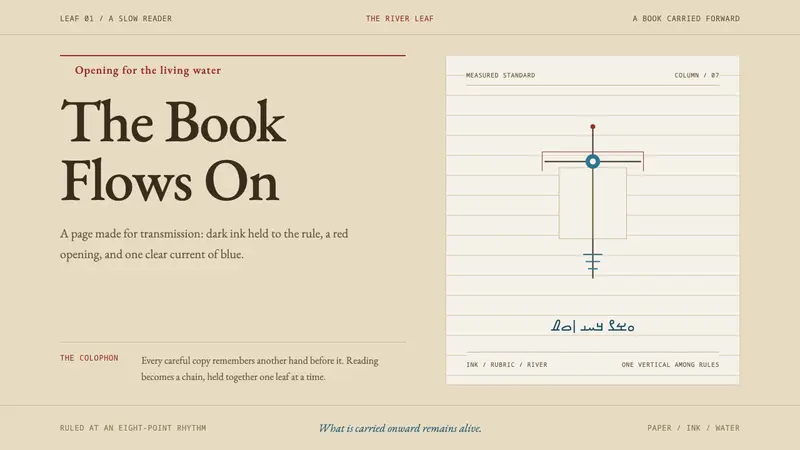 Mandaean Ginza RbaTransmission, held in a leaf. Buff paper, red rubrics, ruled ink, and river blue keep the measure.
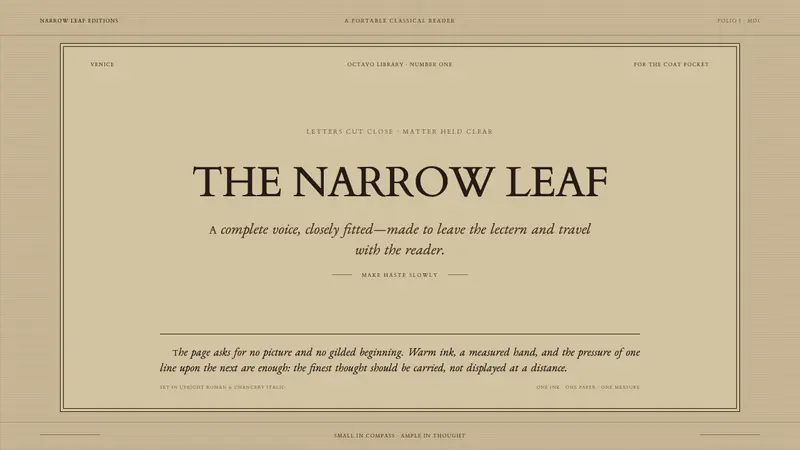 Aldine Press ItalicText needs nothing added. Tight chancery italic meets upright roman caps on mid-tan rag.
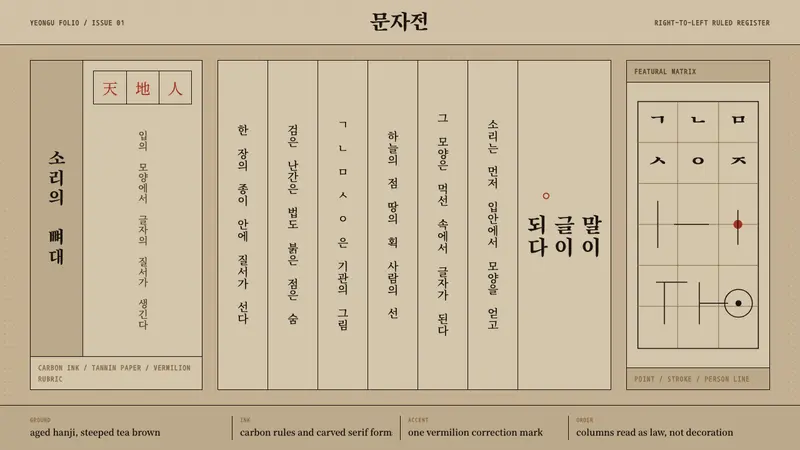 Hangul 訓民正音Ink obeys the grid. Carbon rules, vertical Myeongjo columns, and rare vermilion marks.
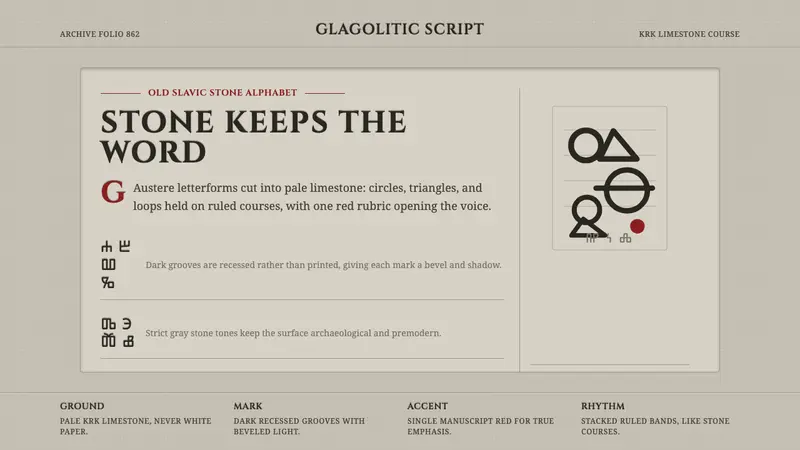 Glagolitic ScriptCarved faith in limestone. Cinzel capitals and red rubrics sit in shadowed grooves.