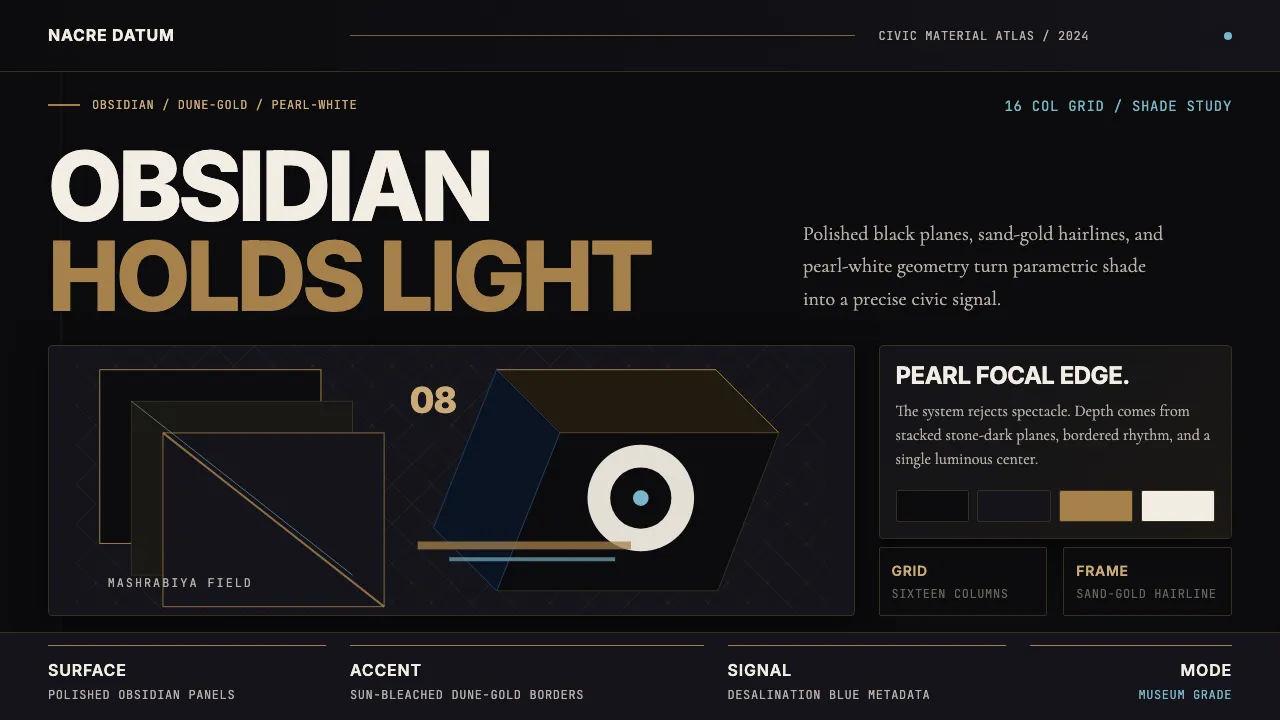
About Qatari Pearl Modern Architecture 2024
Qatar's post-2008 architectural boom fused Islamic geometric tradition with parametric engineering at civic scale. The National Museum's desert-rose cantilevers, the Museum of Islamic Art's octagonal volumes, and Doha Tower's Mashrabiya cylinder established a visual language of obsidian surfaces, dune-gold materiality, and pearl-white focal points that now defines the nation's digital and physical identity.
This design system distills that language: deep black panels recall polished stone façades, sand-gold borders echo sun-bleached dune surfaces, and steel-cobalt accents reference the mirror-finish cladding visible across West Bay's skyline.
Learn more about the Qatari Pearl Modern Architecture 2024 style
- Origin
- Doha, Qatar — Msheireb Downtown, West Bay, Education City, Lusail City, Pearl-Qatar
- Era
- 2010–present; peak 2019 National Museum, 2022 World Cup, 2024 Lusail
- Key figures
- Jean Nouvel · I.M. Pei · Sheikha Al-Mayassa Al-Thani · AECOM Lusail
- Movements
- Gulf modernism · Mashrabiya parametric daylighting · Qatari national identity branding
Qatari Pearl Modern Architecture 2024 design spec
Colors
Typography
The other 11 sections — buttons, cards, spacing, motion, techniques and more — open once you unlock. Download the DESIGN.md or send it to your AI in one click. Unlock once, yours forever.
Sign up nowStyles similar to Qatari Pearl Modern Architecture 2024
Also inspired by architecture & places, with a close feel.
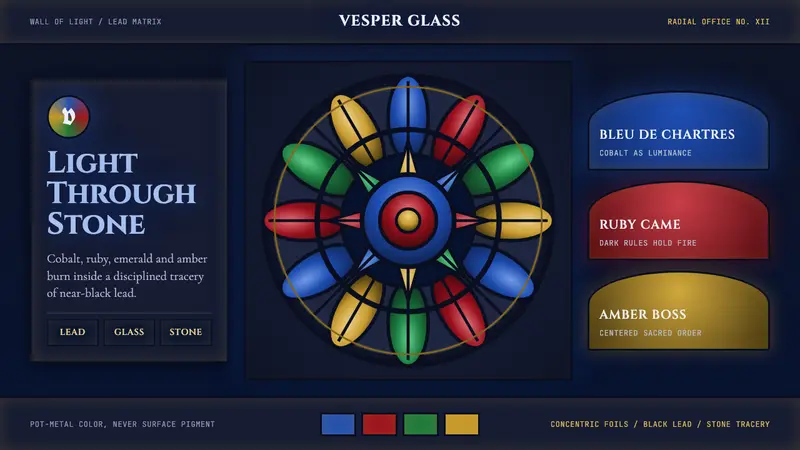 Gothic Rose WindowDarkness becomes light. Cobalt glass, ruby foils and black lead form a radial window.
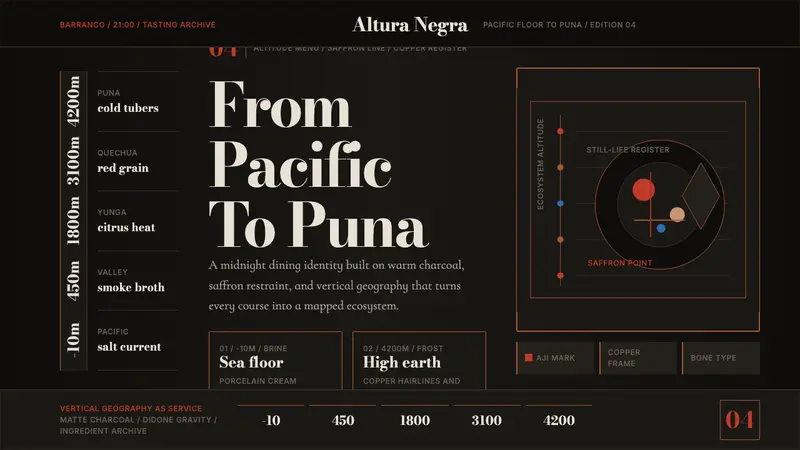 Lima Nuevo Andino CuisineAltitude turns luxurious. Charcoal fields, copper hairlines, and saffron-red vertical rhythm.
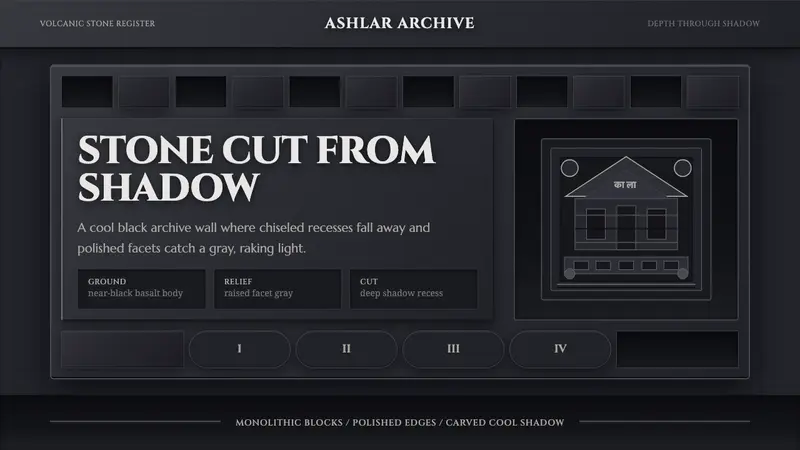 Deccan Basalt TempleMonumental shadow, carved. Near-black basalt, Cinzel capitals, and relief grids catch gray light.
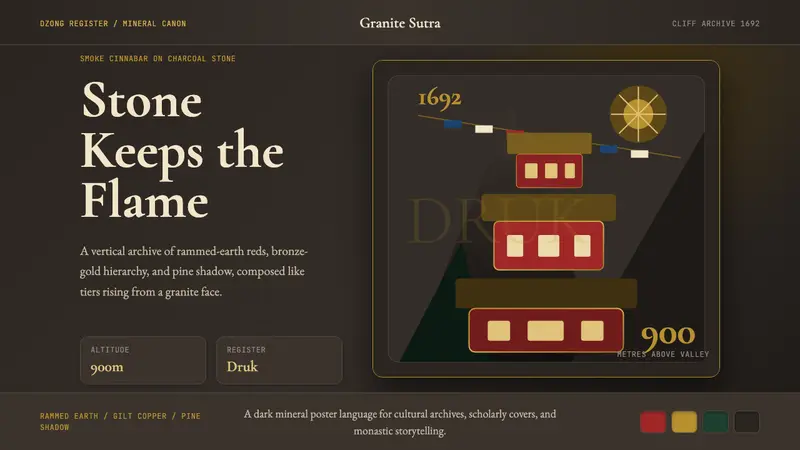 Bhutanese Tiger's Nest Cliff MonasterySacred altitude, mineral-dark. Cinnabar tiers and bronze rules climb charcoal granite.