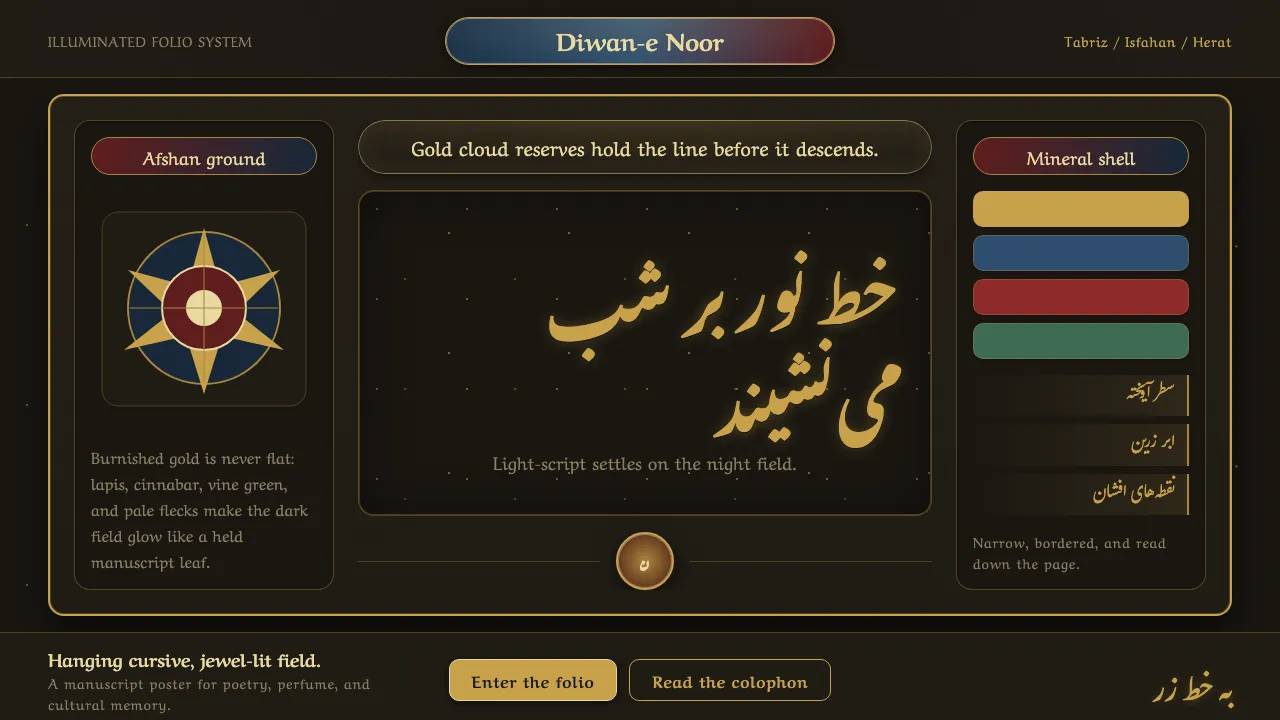
About Persian Nastaliq Calligraphy
Nastaliq is the "hanging" cursive of Persian book arts — lamp-black ink flowing down a diagonal slope, its letters swinging like dancers before settling on the line. Perfected in the Safavid ateliers of Tabriz and Isfahan by masters such as Mir Emad al-Hasani, it is the most prized of all Islamic scripts.
This design system reads Nastaliq at its deep presentation value: burnished gold letters and illuminated cloud bands glowing on a near-black, gold-flecked afshan ground, headed by gold-and-lapis cartouches and laced with vine and polychrome flowers.
- Origin
- Persia (Tabriz, Isfahan, Herat), Middle East
- Era
- c. 1500 (Timurid–Safavid perfection of Nastaliq); album arts flourish 16th–17th century
- Key figures
- Mir Ali Tabrizi · Mir Emad al-Hasani · Sultan Ali Mashhadi
- Movements
- Persian Nastaliq calligraphy · Safavid manuscript illumination (tazhib) · Album (muraqqa) arts
Persian Nastaliq Calligraphy design spec
Colors
Typography
The other 11 sections — buttons, cards, spacing, motion, techniques and more — open once you unlock. Download the DESIGN.md or send it to your AI in one click. Unlock once, yours forever.
Sign up nowStyles similar to Persian Nastaliq Calligraphy
Also inspired by crafts & folk art, with a close feel.
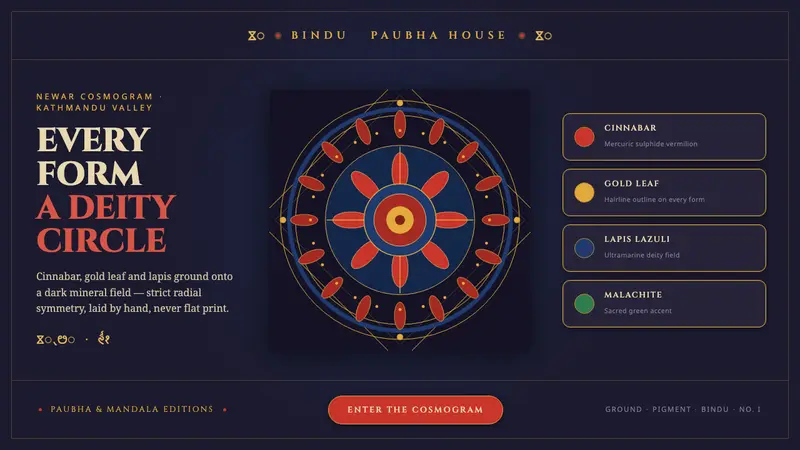 Kathmandu Tantric MandalaSacred geometry as interface. Cinnabar, gold and lapis rings radiate from one bindu on dark ground.
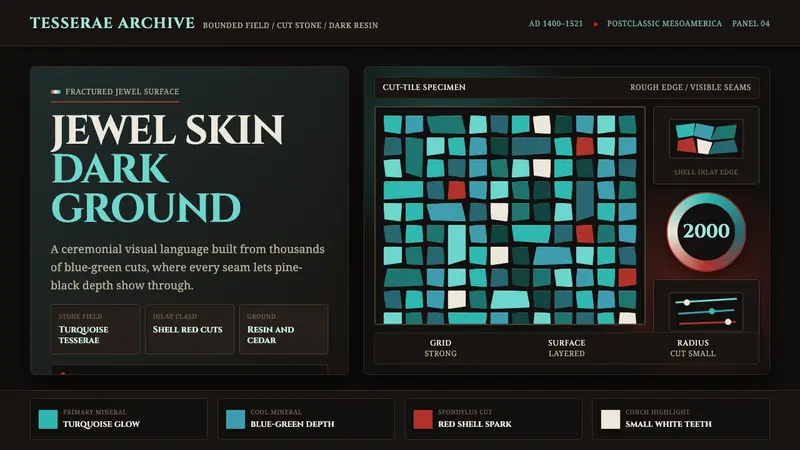 Mixtec Turquoise MosaicDarkness wears a jewel skin. Turquoise tesserae crack open with red and shell-white inlay.
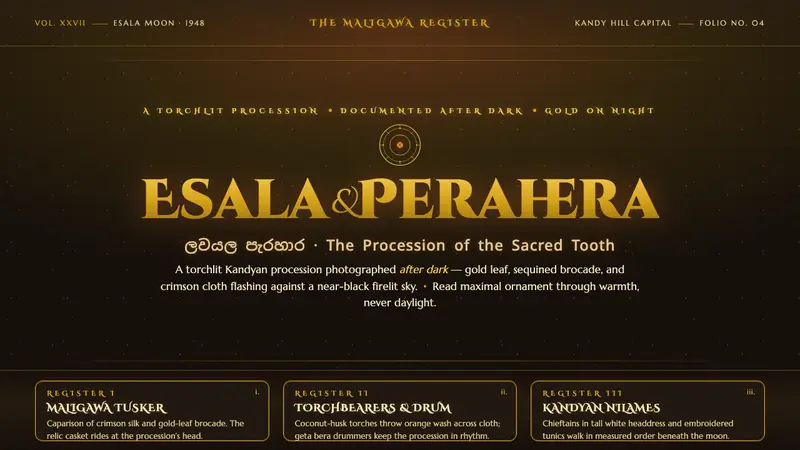 Kandy Esala PeraheraA torchlit night procession, not a poster. Gold flecks and crimson brocade flash on warm near-black.
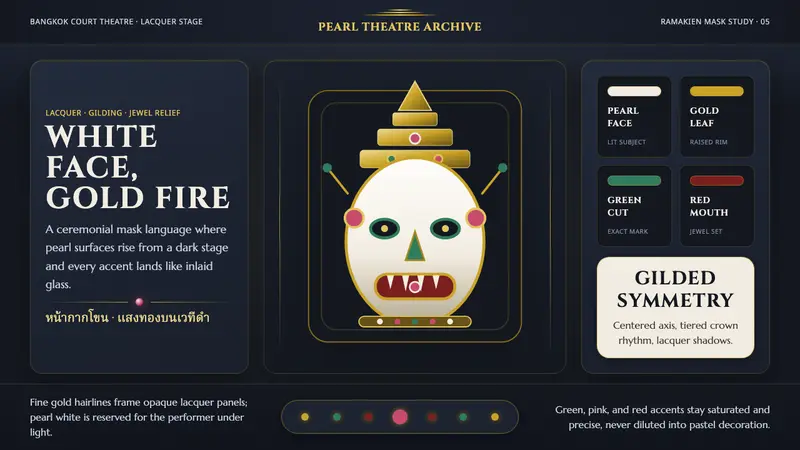 Thai Khon Hanuman MaskThai court theatre, digitized. A pearl-white mask and gilt coronet rise from dark lacquer.