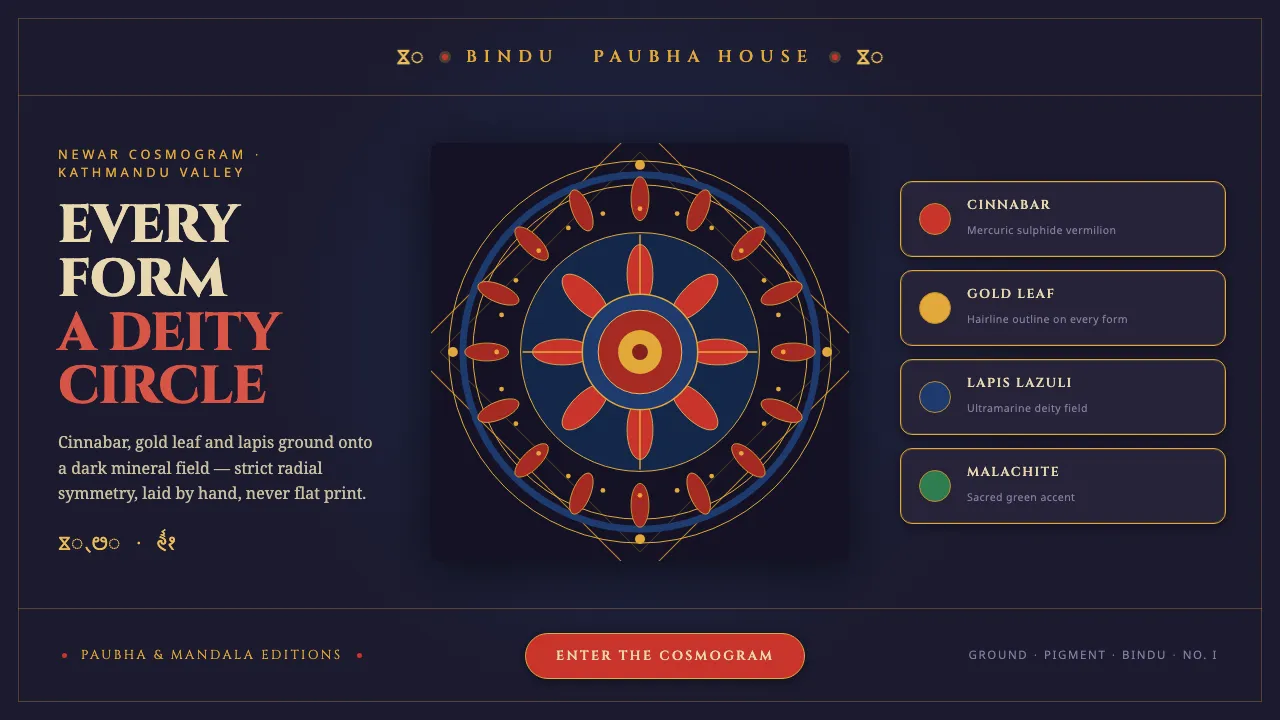
About Kathmandu Tantric Mandala
Kathmandu tantric mandala painting comes from the Newar paubha tradition of the Kathmandu Valley, where anonymous master-painters ground mineral pigments — cinnabar, gold leaf, and lapis lazuli — onto a dark indigo-black field. Every form is a deity-circle: a central bindu radiating outward through lotus rings, square toranas, and protective flame borders, lettered in Ranjana script.
This design system translates that sacred symmetry into a digital surface — matte mineral fills, hairline gold outlining, and strictly centred radial geometry that reads as a hand-laid stone-pigment cosmogram rather than a flat poster.
- Origin
- Kathmandu Valley, Nepal (Newar Buddhist/Hindu tantric milieu)
- Era
- pre-1900 (paubha cloth-painting tradition, centuries deep in the Kathmandu Valley)
- Key figures
- Anonymous Newar paubha master-painters · Chakrasamvara-mandala lineage workshops · Donor patrons
- Movements
- Newar art · Tantric / Vajrayana sacred geometry · Paubha & mandala painting · Ranjana / Newa calligraphy
Kathmandu Tantric Mandala design spec
Colors
Typography
The other 11 sections — buttons, cards, spacing, motion, techniques and more — open once you unlock. Download the DESIGN.md or send it to your AI in one click. Unlock once, yours forever.
Sign up nowStyles similar to Kathmandu Tantric Mandala
Also inspired by crafts & folk art, with a close feel.
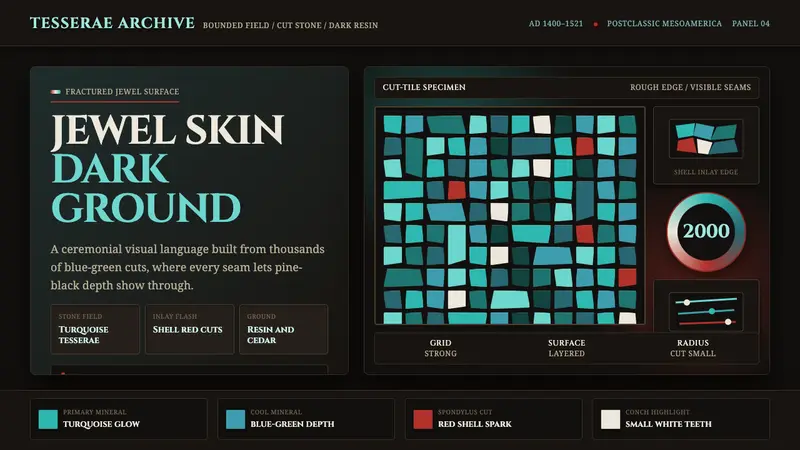 Mixtec Turquoise MosaicDarkness wears a jewel skin. Turquoise tesserae crack open with red and shell-white inlay.
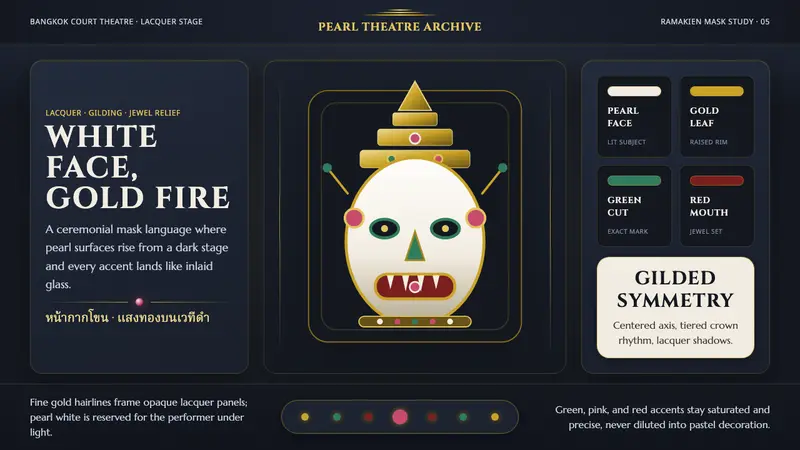 Thai Khon Hanuman MaskThai court theatre, digitized. A pearl-white mask and gilt coronet rise from dark lacquer.
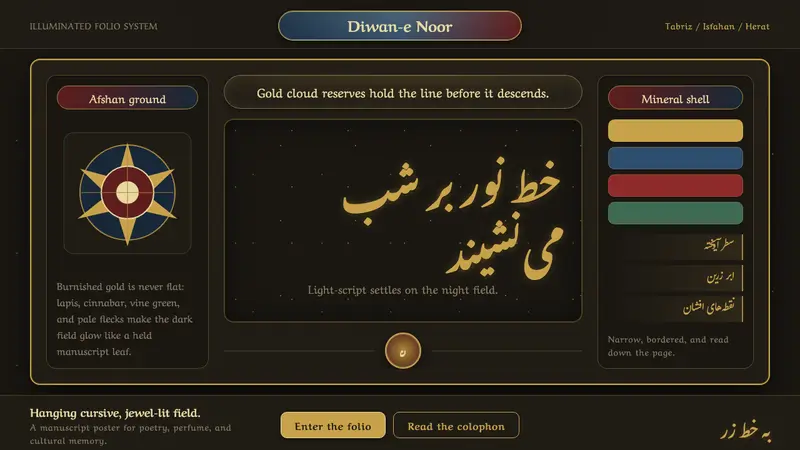 Persian Nastaliq CalligraphyGold script breathes in darkness. Afshan flecks, lapis cartouches, and sloped Nastaliq glow.
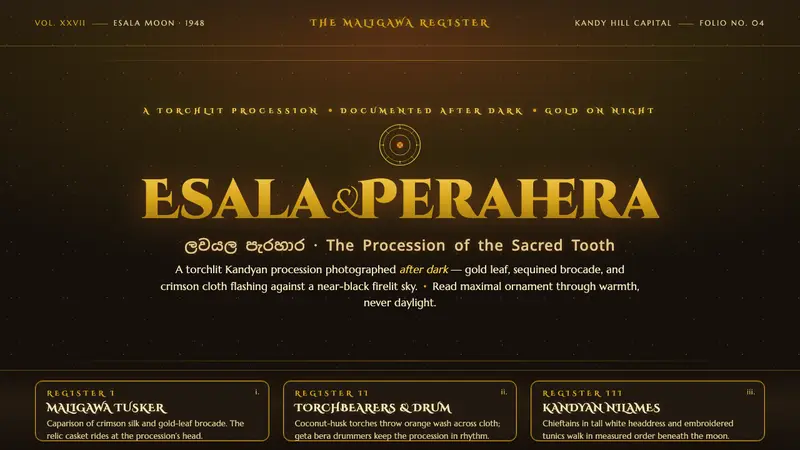 Kandy Esala PeraheraA torchlit night procession, not a poster. Gold flecks and crimson brocade flash on warm near-black.